


Can We Make Schools Safe Without Turning Them Into Fortresses? – Architecture Critic Morgan
Will Morgan, Architecture Critic
Can We Make Schools Safe Without Turning Them Into Fortresses? – Architecture Critic Morgan

In the wake of the latest mass school shooting–amidst the fetishizing of tragedy and the pornography of grief, the crocodile tears and the teddy bears, prayers and political posturing–let us ask if school safety is a design problem.
GET THE LATEST BREAKING NEWS HERE -- SIGN UP FOR GOLOCAL FREE DAILY EBLAST

Now, too many are calling for schools to look like fortresses.


A fortress is the very thing that a school needs not to be. It sends the wrong message. An elementary school particularly needs to feel home-like. Early childhood is the first time a girl or boy’s life is extended beyond home. As their tether gets longer, they need extra assurances and reinforcement provided by warm surroundings, not barbed wire and watchtowers. Parents, too, have to feel comfortable, and they need to trust the institution where their children will spend much of their day. The design of schools should suggest warmth, safety, and an essential openness that encourages exploration and creativity.

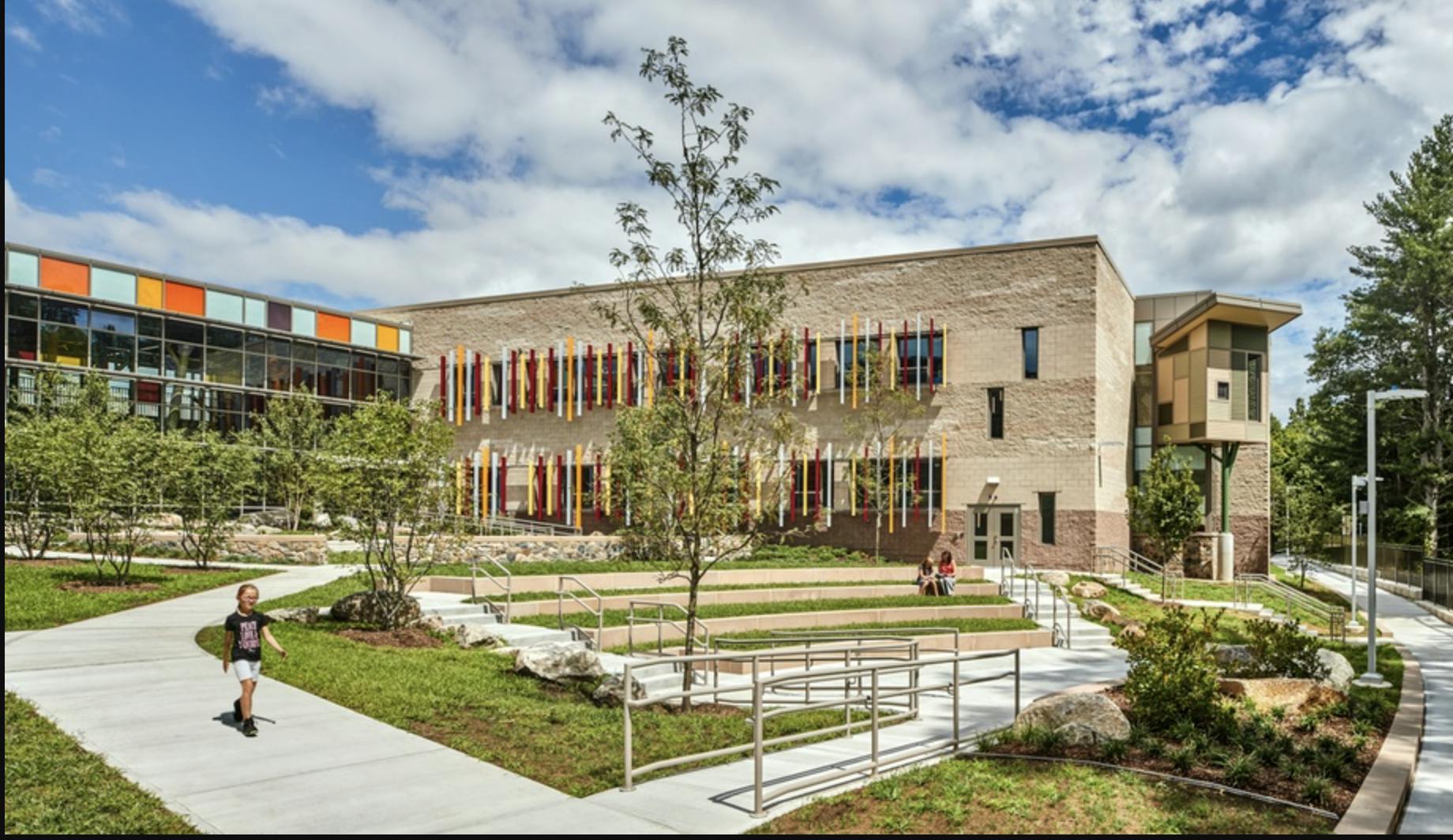
How do you make a school safe, attractive, and welcoming? One of the simplest ways is to create a large open space around schools, and to unobtrusively place barriers, whether plantings, trees, or artistically sited boulders to form a natural buffer.

Sandy Hook in Newtown, Connecticut, the site of the nation’s worst mass school shooting ten years ago, is now home to a brilliant example of how to design for safety and enrichment. The elementary school where 26 students and teachers died was razed and a new $50 million, 86,000-square-feet structure was built. In employing environmental design to deter crime, the new Sandy Hook Elementary has impact-resistant glass, sophisticated video monitoring, an elevated ground floor, and, there are footbridges to the entrances, reached after passing multiple checkpoints. Instead of prison-like fortifications, there are 20-feet-tall windows from which one has a clear view of the approach to the school.

Even so, the new building’s security is not so obvious. Rather, there is a whimsical, undulating wooden façade fronting joyous spaces, including interior treehouses. The New Haven firm of Svigals + Partners Architects was selected after a limited, invited competition, in part because of their experience as school designers. Their design process involves gathering teachers, children, parents, and the community into workshops to glean feedback that is actually incorporated into creating a happy and safe environment. There are no memorials to the slain students here, but the new school’s design honors them by serving as a model of what a school can be: a place to grow and be nurtured without fear of annihilation.
The Sandy Hook school demonstrates that, while security must be paramount, it can be achieved without locking down and arming up. As with all civic structures, safety considerations must also include the architectural, the humanitarian, and the aspirational.