


CEO’s Can’t Tweak Their Way To Innovation
Saul Kaplan, BIF
CEO’s Can’t Tweak Their Way To Innovation
Thriving in the midst of today’s frenetic pace of change requires a new set of approaches and tools. Incremental change may have been enough at the end of an industrial era marked by me-too products and services, process re-engineering, best practices, benchmarks, and continuous improvement. We have built institutions that are far better at share taking than at market making. We have become really good at tweaks. There are tons of books, experts, and tools to help us make marginal improvements in the way things work today and to fight it out with existing competitors for one more share point. But how do we become market makers? Incremental change may be necessary but it isn’t sufficient for the 21st century defined by next practices, disruptive technologies, market making, and transformation.
In the face of a serious disruptive threat most leaders do what they are comfortable with and know how to do, they strengthen and become even more entrenched in their current business models. They add new products and services to the current model. They deploy technology to strengthen current capabilities. They extend the current business model into new markets. And they try to create favorable laws and go to court to block new business models. These strategies may create value in the short-term but none of these efforts to strengthen existing business models are effective for long in the face of a disruptive competitor that is changing the way value is created, delivered, and captured through an entirely new business model. Disruption is now the norm instead of the exception.
GET THE LATEST BREAKING NEWS HERE -- SIGN UP FOR GOLOCAL FREE DAILY EBLAST

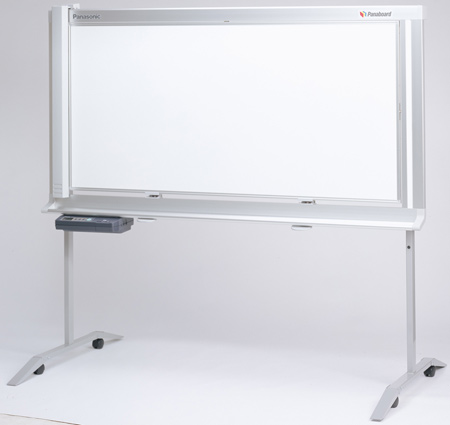
Transformation is hard. We have to make it easier by creating the conditions for ongoing experimentation. It’s easy to sketch a new business model on the whiteboard. It’s much harder to take the concept off of the whiteboard and put it in to the real world. We spend far too much time thinking and planning and nowhere near enough time experimenting in the real world to see what works. We need to try more stuff. We can’t possible know if a new business model idea will work sitting in a conference room. We have to create the conditions in the real world where we can do R&D for new business models. If we want to stay relevant in the 21st century we have to experiment all the time. Leading organizations will have several business model experiments going on at all times.
The real trick is creating a business model innovation factory where technologies and capabilities can be remixed in new combinations to deliver value. The imperative is to do R&D for new business models. Not just concepts on a whiteboard or in a consulting deck but R&D in the real world to explore the viability of a new business model in real market conditions. Not just tweaks of the current business model but entirely new ways to create, deliver, and capture value. Organizations need a business model innovation factory to explore new business models unconstrained by the current one.
It’s a great time to be a business model innovator. This is the innovator’s day. The good news is that during turbulent economic times everyone looks to innovators for new solutions. The bad news is that we have turned innovation into a buzzword. Everyone is an innovator and everything is an innovation. And of course when that happens no one and nothing is. We have to get below the buzzwords.
This post appeared on the Fortune site here and was adapted from my new book The Business Model Innovation Factory. Get a copy of the book - http://bmif.businessinnovationfactory.com/