


Guess Who Is Not Allowed to Participate in Mobile Sports Betting?
GoLocalProv News Team
Guess Who Is Not Allowed to Participate in Mobile Sports Betting?
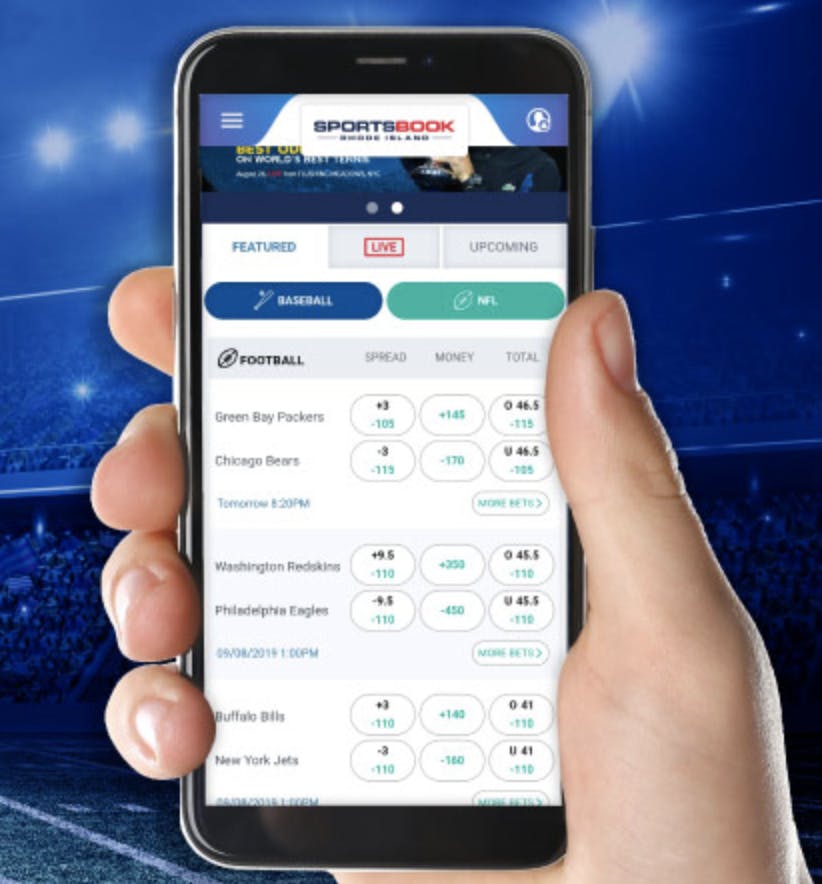
The first reported month of this fiscal year was also a bust. RI Lottery officials report just $827,579 in sports betting revenue.
While the push by state officials is on to get gamblers to download the app to their phone, one group can’t play — undocumented immigrants.
GET THE LATEST BREAKING NEWS HERE -- SIGN UP FOR GOLOCAL FREE DAILY EBLASTThe state’s mobile app requires bettors to travel to one of Twin River's locations to activate their account -- a requirement that has been criticized as being arduous and unnecessary.
“Bettors are required to provide only the last four digits of their [social security number] for the account set-up, just like cellphone companies, utilities, etc.,” said Paul Grimaldi spokesperson for the Rhode Island Department of Revenue.
“You do get a lot of undocumented immigrants who play the lottery -- but if they were ever to win big, you need to have a valid social security number to claim. They can claim, say, the $20 winnings [at the stores] -- but not the big jackpots,” says Joseph Molina Flynn, a leading immigration attorney in Rhode Island and contributor to GoLocalProv.com.
“Bettors who seek to cash out winnings above a certain dollar amount do have to provide their full SSN so that we can issue them a federal tax reporting form. That’s been the federal requirement for many, many years now and applies to table games, slots and tickets,” said Grimaldi.
“This creates a two-tiered system -- the money of the income [from undocumented immigrants playing the lottery] is good enough to place bets, but not collect winnings,” says Molina-Flynn who heads RI's Latino PAC.
“I’d say it's the same as the rest of the world. I've heard stories -- not locally -- for instance, if an undocumented immigrant wins big, the person [with a social security number] they use to collect their winnings takes off with all the money when they go to collect,” adds Molina-Flynn
“The other thing that happens, for instance, one time there was a big prize -- and the lottery commission where it happened matched up the video to who purchased the ticket -- with the person claiming the winnings -- and said you're not the same person. And the prize wasn't awarded,” adds Flynn.
The House Rules issued by Twin River for sports betting lists, the following as "Description of Prohibited Sports Wagering Participants:"
Twin River/Tiverton Casino self-excluded patron
Twin River/Tiverton Casino banned patron
Rhode Island Lottery employees
Employees of any Gaming Vendor doing business with the Lottery
Designated employees of Twin River/Tiverton Casino
Any person who has been convicted of any felony or misdemeanor involving breach of gambling laws or any person who has been convicted of the crime of bookmaking
Any person prohibited from placing sports wagers by the sports league or sports governing body with which they are affiliated.
“Prohibited sports wagering participant” also includes government officials or residents of certain embargoed countries and/or whose names are included on the U.S. Treasury Department's list of Specially Designated Nationals or the U.S. Department of Commerce Denied Person’s List or Entity List or successor or similar lists.
Over the years, there have been a number of cases in which undocumented won the lottery, but had their winnings taken from them.
The New York Times reported in September of 2011:
“On Feb. 3, a man walked into N&K Quick Pick in the Rockland County village of Spring Valley and purchased a $10 scratch-off instant lottery ticket. It was a $3 million winner, but it turned out to be anything but instant.
When the man, who speaks limited English, told a store clerk that he had stumbled upon a fortune, the clerk, according to the authorities, hatched a plan with the store’s owner and a third man. They told the man, an illegal immigrant working as a painter, that he would be deported if he tried to claim the winnings.
“When he presented the ticket, they scared the hell out of him,” said Thomas P. Zugibe, the Rockland County district attorney.
The three persuaded him that they would arrange for him to get some of the money if he gave the ticket to the clerk, Atif Ali according to Mr. Zugibe, who said Mr. Ali collected the first $150,000 annual payout and sold the rights to the rest for $600,000.
After waiting several months without receiving a dime, the ticket buyer hired a lawyer, Thomas Sassone.
“They basically defrauded him,” Mr. Sassone said. He asked the New York Lottery to investigate, the district attorney was called, and over the last two weeks, Mr. Ali, of Spring Valley, N.Y.; the store owner, Riaz Khan of Monroe, N.Y.; and Mubeen Ashraf, also of Monroe, were charged with first-degree grand larceny.
In another case, msnbc.com reported in August of 2011:
A Georgia man who was jailed for threatening his boss over a disputed $750,000 lottery ticket faces deportation, with authorities saying he is in the U.S. illegally.
Police say Jose Antonio Cua-Toc threatened his boss, Erick Cervantes, and his wife, calling them repeatedly and saying he would "kill each of them and their children if they did not give him some of the lottery winnings," according to local newspaper The Sun News.
Cua-Toc's attorney denied the allegations Wednesday on MSNBC-TV.
"Mr. Cervantes has 750,000 reasons to say these things. They haven't been proven," Julio Moreno said.
Cua-Toc, 25, says he is the one who bought the winning lottery ticket and that Cervantes, 31, cashed the ticket on his behalf but failed to give him the winnings. Unsure whether his immigration status would affect his chance to cash in, Cua-Toc had held off on turning in the ticket himself.
"Current immigration laws in the state of Georgia and in the U.S. made him afraid to go in by himself. He had a friend that was going to be trusted to go with him, but unfortunately he couldn't make it in time," Moreno told MSNBC. "Before he was able to make it, the employer showed up. He was able to cash that ticket."
To cash a lottery ticket, a winner must show ID and provide a signature. Lottery officials say they don't verify immigration status.