


Guest MINDSETTER™ Handy: ISO’s Visit & All That Gas
Guest MINDSETTER™ Seth Handy
Guest MINDSETTER™ Handy: ISO’s Visit & All That Gas
ISO NE’s CEO, Mr. Gordon van Welie, visited our State for a closed session produced by Rhode Islanders for Affordable Energy and the New England Coalition for Affordable Energy. He reportedly told those privileged to be invited that we should double down on natural gas infrastructure despite our “gas problem.” ISO runs our region’s electricity markets and transmission (big wires moving power long distances from large generators to consumers) and is expected to remain neutral on supply technologies. Gordon’s indiscretion offered in a closed meeting exposes ISO’s deep roots in centralized generation and transmission – its board affiliations include ESKOM, Delmarva Power, Connectiv, NV Energy, FL Power & Light, Bewag, WPD, VanZandt Transmission Consulting and Bonneville Power. ISO has long brought a sledgehammer to a surgeon’s job. Our transmission rates are double those of the next highest region in the country and are under investigation at the Federal Energy Regulatory Commission (Docket No. EL16-19-000).
Mr. van Welie’s opinion comes as CEO of an organization tasked with securing reliability of the region’s energy system. Reliability means the ability of the electric system, in all its increasingly diverse elements, on both the demand and supply side, to efficiently meet the demand for energy services to run our homes, businesses, and increasingly, transportation system. That is not how the head of the ISO, whose career has been on the big supply side of the system for decades now, sees things. ISO’s solution to the reliability problems of over-reliance on central station fuel-dependent power plants is more big power infrastructure. For those who see no problem in over-reliance on imported fuel and vulnerability to supply interruptions, this is no problem—they advocate for more reliability-threatening big power plants. Moreover, reliability is important, but is not our only concern. Security, cost and environmental impact are the elements of our energy plan. ISO’s focus under-accounts for the security, cost-saving and other benefits (e.g., jobs, air quality) offered by local alternatives - demand response, efficiency and distributed generation (DER). Its reliability-based outlook has drastically overbuilt our region’s infrastructure. Rhode Island’s Power Sector Transformation report (November 2017), informs us that “Rhode Island’s peak to average demand ratio is 1.98, meaning that nearly half of our utility’s capital investment is not utilized most of the time. . .For both Rhode Island’s electric distribution system and New England’s wholesale electricity supply market, the gap between peak and average demand means that capital assets are not fully utilized, increasing costs for customers.” We are reeling from past mistakes of building infrastructure to manage peak demand. Even if ISO’s CEO should advise us on energy technologies, why would Rhode Island listen?
GET THE LATEST BREAKING NEWS HERE -- SIGN UP FOR GOLOCAL FREE DAILY EBLAST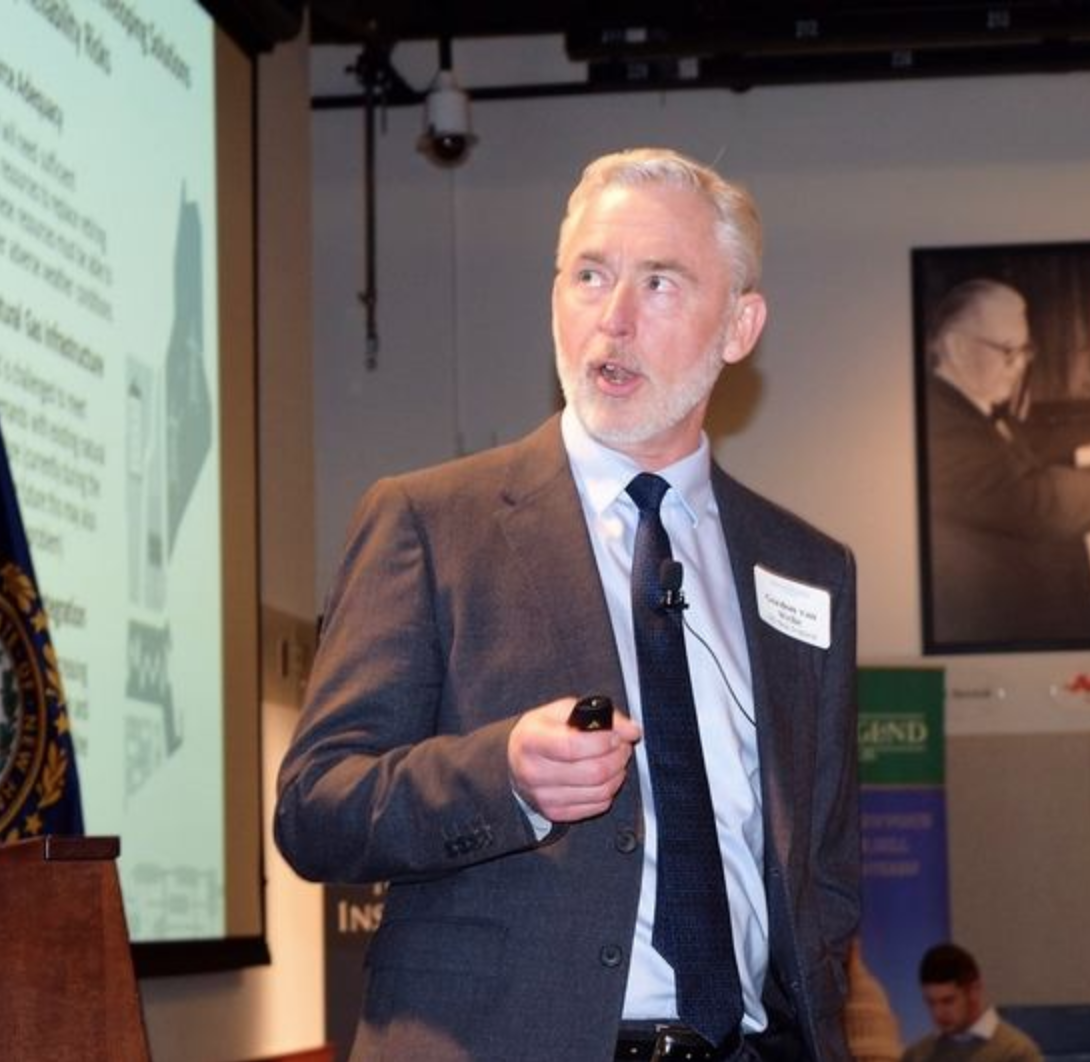
The Journal, ISO, TEC RI, Rhode Islanders for Affordable Energy and the New England Coalition for Affordable Energy and RIPEC’s “Business Coalition” are invited to actively participate in Rhode Island’s open, expert and stakeholder-driven energy planning processes. It serves no interest to ignore them and report inapt opinions from closed meetings.
Seth Handy practices law in Providence.
Author’s note: Once again the ProJo refused to publish this response. The same day that it posted it's editorial supporting the natural gas power plant it ran an ad saying “Trusted. . .we care about the same things you do…we attend city council meetings and we’re at the State House -- we’re wherever Rhode Islander’s gather. And then we report back to you (page C4).” I have not seen Journal reporters in any of our planning processes for Rhode Island’s energy future. Why do they ask for our trust? Why does our monopoly utility (not subject to competition) do so much advertising in the Journal?
GoLocal: Benchmark Poll, October 2017

Sponsor: GoLocalProv
Sample: N=403
Rhode Island General Election Voters Margin of Error: +/- 4.9% at 95% Confidence Level
Interviewing Period: October 9-11, 2017
Mode: Landline (61%) and Mobile (39%)
Telephone Directed by: John Della Volpe, SocialSphere, Inc.
Are you registered to vote at this address?
Yes: 100%
When it comes to voting, do you consider yourself to be affiliated with the Democratic Party, the Republican Party, Moderate, or Unaffiliated with a major party?
Unaffiliated: 49%
Democrat: 32%
Republican: 15%
Moderate: .4%
Next year, in November of 2018, there will be a statewide general election for Governor and many other state offices. How likely is it that you will vote in this election?
Will you definitely be voting, will you probably be voting, are you 50-50...
Definitely be voting: 78%
Probably be voting: 13%
50-50: 9%
In general, would you say things in Rhode Island are headed in the right direction or are they off on the wrong track?
Right track: 39%
Wrong track: 45%
Mixed: 10%
Don't know/Refused: .6%
What would you say is the number one problem facing Rhode Island that you would like the Governor to address?
Jobs and economy: 21%
Education: 12%
Taxes: 12%
Roads: 12%
State budget: 9%
Corruption/Public integrity: .8%
Healthcare: 3%
Governor: 3%
Homelessness: 2%
Immigration: 2%
Other: 7%
Don’t know: .9%
Over the past three years or so, would you say the economy in Rhode Island has improved, gotten worse, or not changed at all?
Changed for the better: 35%
Changed for the worse: 16%
Not changed at all: 43%
Don't know/Refused: 5%
Over the same time, has your family's financial situation improved, gotten worse, or not changed at all?
Changed for the better: 26%
Changed for the worse: 19%
Not changed at all: 54%
Don't know/Refused: 1%
Recently, a proposal has been made to permit the issuance of $81 million in bonds by the State to build a new stadium for the Pawtucket Red Sox. If there was an election today on this issue, would you vote to approve or reject issuing $81 million in financing supported moral obligation bonds to build the stadium?
Net: Approve: 28%
Definitely approve: 15%
Probably approve: 14%
Net: Reject: 67%
Probably reject: 19%
Definitely reject: 48%
Don't know: 4%
Could you please tell me your age?
18-24: 7%
25-34: 15%
35-44: 15%
45-54: 20%
55-64: 17%
65+: 25%
Don't know/refused: 1%
What was the last grade you completed in school?
0-11: 2%
High school grad: 16%
Technical/Vocational school: 1%
Some college: 23%
College grad: 34%
Graduate degree: 24%
Don't know/refused: 1%
The next question is about the total income of YOUR HOUSEHOLD for the PAST 12 MONTHS. Please include your income PLUS the income of all members living in your household (including cohabiting partners and armed forces members living at home).
$50,000 or less: 27%
More $50,000 but less than $75,000: 13%
More $75,000 but less than $100,000: 13%
More $100,000 but less than $150,000: 17%
$150,000 or more: 13%
Don't know/refused: 17%
What particular ethnic group or nationality - such as English, French, Italian, Irish, Latino, Jewish, African American, and so forth - do you consider yourself a part of or feel closest to?
American/None: 21%
English: 13%
Italian: 13%
Irish: 12%
Black or African American: 6%
Latino/Hispanic: 6%
French: 6%
Portuguese: 3%
Jewish: 3%
German: 1%
Would you say that Donald Trump has done an excellent good, fair or poor job as President?
Excellent: 13%
Good: 12%
Fair: 14%
Poor: 57%
Never heard of: 0%
Cannot rate: 3%
Would you say that Jack Reed has done an excellent good, fair or poor job as a United States Senator?
Excellent: 22%
Good: 29%
Fair: 23%
Poor: 15%
Never heard of: 6%
Cannot rate: 6%
Would you say that Sheldon Whitehouse has done an excellent good, fair or poor job as a United States Senator?
Excellent: 17%
Good: 22%
Fair: 21%
Poor: 28%
Never heard of: 6%
Cannot rate: 7%
Would you say that David Cicilline has done an excellent good, fair or poor job as a Member of Congress?
Excellent: 9%
Good: 29%
Fair: 21%
Poor: 27%
Never heard of: 6%
Cannot rate: 8%
Would you say that James Langevin has done an excellent good, fair or poor job as a Member of Congress?
Excellent: 7%
Good: 30%
Fair: 20%
Poor: 18%
Never heard of: 13%
Cannot rate: 11%
Would you say that Gina Raimondo has done an excellent good, fair or poor job as Governor?
Excellent: 6%
Good: 28%
Fair: 30%
Poor: 31%
Never heard of: 1%
Cannot rate: 3%
Would you say that Daniel McKee has done an excellent good, fair or poor job as Lieutenant Governor?
Excellent: 3%
Good: 16%
Fair: 21%
Poor: 8%
Never heard of: 26%
Cannot rate: 25%
Would you say that Peter Kilmartin has done an excellent good, fair or poor job as Attorney General?
Excellent: 3%
Good: 20%
Fair: 28%
Poor: 17%
Never heard of: 13%
Cannot rate: 19%
Would you say that Seth Magaziner has done an excellent good, fair or poor job as General Treasurer?
Excellent: 4%
Good: 18%
Fair: 24%
Poor: 13%
Never heard of: 21%
Cannot rate: 21%
Would you say that Nellie Gorbea has done an excellent good, fair or poor job as Secretary of State?
Excellent: 5%
Good: 21%
Fair: 21%
Poor: 10%
Never heard of: 20%
Cannot rate: 23%
Would you say that Jorge Elorza has done an excellent good, fair or poor job as Mayor of Providence?
Excellent: 4%
Good: 24%
Fair: 24%
Poor: 22%
Never heard of: 9%
Cannot rate: 15%
