


Guest MINDSETTER™ Steve Durkee: Why Providence Needs Superman
Steve Durkee, Guest MINDSETTER™
Guest MINDSETTER™ Steve Durkee: Why Providence Needs Superman
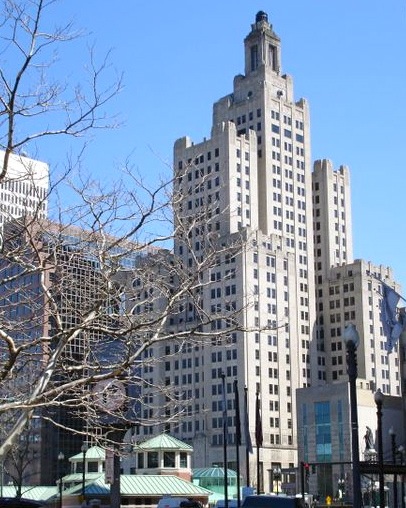
With its unique four-story lantern sitting at the top of its twenty-six stories, it is a stately, gracious example of an Art-Deco style skyscraper.
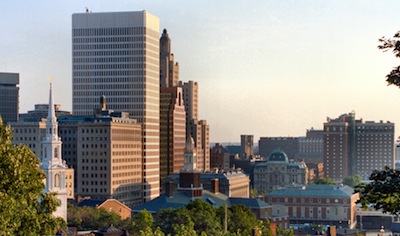
Built in 1928, the building was erected as a monument to the city and state’s economic might. As the tallest building in Rhode Island, and the most recognizable building in the region, the Industrial Trust Tower at 111 Westminster Street defines the Providence skyline and stands as a symbol to the city and state’s history.
GET THE LATEST BREAKING NEWS HERE -- SIGN UP FOR GOLOCAL FREE DAILY EBLASTOn these things, we can all agree. The question is, as the building sits vacant, where should we go from here?
Constructing the path for redevelopment
Cornish Associates was hired by the owner of 111 Westminster Street, High Rock Development, to help figure out the path forward with the redevelopment of this important and iconic building. We analyzed several different options, analyzing costs, benefits and impacts of each. Our study concluded that a mixed-use building, with a heavy emphasis on residential development is the most viable and most beneficial option.
The goal is to repurpose the 400,000 square foot building into 284 apartments of varying sizes and price points with 35,000 sf of office and retail space on the lower floors, with it’s stunning grand banking hall remaining publicly accessible. This important project requires political leadership and a commitment from the owner to save the building and ensure it contributes to our economy once again.
Supply and demand
Why rental apartments? Why not build office space? The answer is one of simple supply and demand and real life tax and real estate value consequences. Two separate economic impact studies both concluded the current office market in Providence is weak, with historically and consistently low absorption rates for office space. Restoring the building for office use would have a strong negative impact on surrounding office space in the city by flooding the supply and forcing rents down.
The apartment market in downtown Providence is very strong with current occupancy rates at approximately 97%. The redevelopment of 111 Westminster Street as largely residential units meets an immediate demand for housing downtown. Drawing from Cornish’s experience with nearly 200 apartments along Westminster Street, it is anticipated that these units will appeal to a diverse set of renters, from students to empty-nesters, young professionals and those moving into the downtown seeking a more urban lifestyle.
For any significant historic building renovation in Rhode Island to be successful - there must be a public investment in the project. Why is this the case? The challenges of renovating historic structures are multiplied by their size coupled with current market conditions that won’t support the huge cost of renovations - making any return on private investment alone untenable. However, any public investment in the renovation of historic projects is truly an investment with a positive return.
Recent history indicates that for every dollar invested in redeveloping historic buildings through the State Historic Tax Credit program, over five dollars of economic activity is generated for the local and state economy. This was true for the Masonic Temple project, the Arcade and many other projects. And it is true for 111 Westminster and the newly proposed South Street Power Station project. No owner can renovate 111 Westminster without this public investment. Another point worth mentioning is that this is not a “bail-out”. The current owner, who has no debt on the property, has recognized the building is worth significantly less then when it was purchased and has acknowledged a loss of approximately $30 million dollars, 75% of the buildings value. This is a separate matter from the actual cost to redevelop the building where state and city investment is required.
Investments in the community
There’s a long history in Rhode Island of the state working with building owners, developers and institutions to save historic buildings that can become an important part of our economy. These projects are investments in the community, provide jobs, increase local values, enhance the state economy and instill pride in what is great about this Rhode Island. Recent examples include the Peerless Building, the Hotel Providence, The Foundry, the Mercantile Block developed by AS220 and the Providence G project.
A generation ago, Governor Bruce Sundlun along with other state and city leaders refused to allow the Shepard’s Building to be demolished understanding the negative impact it would have on Providence - the same goes for PPAC and before that the Biltmore. Today, the two transformative projects that demand the same foresight and leadership are the renovation of the former South Street Power Station into a shared nursing education center with Brown University, Rhode Island College and the University of Rhode Island as partners with the city and state. The other is 111 Westminster Street. When completed both of these projects will be catalytic and have a seismic impact on markets, on people, on the city landscape and urban possibilities. These projects are worthy of public investment.
Vacancy creates perception issue
The negative perception and impact of having the largest buildings in the capital city remain vacant will have a chilling effect on future development and long term planning in Providence.
Bringing strong leadership to bear to transform these buildings sends the positive message necessary to attract much needed investment from outside the state and sends a strong message that big things are possible here.
The type of public investment needed to move this project forward is not comparable to risky subsidies that failed, such as 38 Studios. This investment isn’t a gamble; it is a proven winner, as we’ve seen with the history of the State Historic Tax Credit Program. And, the state doesn’t make any investment until the project is 100% complete.
111 Westminster Street needs to be redeveloped and no developer can do it without state and municipal support. Like every significant building before it, a public/private partnership with the state and the city is required. Leaving it empty will have a negative impact on the economic development of Providence for years to come.
7 Strategies for Rhode Island Economic Development in 2014

Governor Lincoln Chafee

Speaker Gordon Fox
"Among the many pieces of legislation the House will address will be issues of higher education affordability, expanding apprenticeship opportunities, and offering help to our manufacturers. We will also look closely at our tax structure to make sure we are competitive with our neighboring states, including the corporate tax and the estate tax, and I will carefully review the recommendations of the commission studying our sales tax.”

Senate Pres. Paiva-Weed
Greg Pare, spokesperson for the Senate President, said that the Senate is planning to issue recommendations soon on workforce development initiatives to address the skills gap among Rhode Island job seekers.
"An example of a proposal anticipated in that report is the elimination of state’s Indirect Cost Recovery on the Job Development Fund, which is about $1.2 million this year. Those funds would be directed towards job training and skills development programs to provide immediate impact and help workers gain the skills necessary to succeed in today’s economy."

Gen. Treasurer Raimondo
"To grow our economy, we need to make Rhode Island a leader in manufacturing again. Great things can happen at the intersection of government, higher education, and the private sector. Rhode Island is lucky to have thriving institutions in each of these three sectors, and we need to foster collaboration among them to find solutions to our challenges, and spark our economy.
By promoting partnerships in high-growth areas, [Rhode Island Innovation Institute] will help grow our manufacturing base, and create new, high-quality jobs."

Ken Block
"First, we need to fix Rhode Island’s broken Unemployment Insurance program. The state’s Unemployment Insurance tax, paid by employers, is ranked worst in the country by the Tax Foundation. It is one of the factors that makes Rhode Island an uncompetitive place to do business. Also, it is inherently unfair that a large group of businesses are effectively subsidizing the payrolls of a small group of businesses who misuse the system. There is a simple change to state law that can fix this problem."
"Rhode Island’s temporary disability tax (TDI) is broken, and places an unnecessarily high tax burden on Rhode Islanders. This tax, paid for by employees, will be reduced by changing the way we manage the program. As Governor, I will substantially reduce the cost of purchasing this insurance by requiring that Rhode Island’s program adhere to national norms."
"To best encourage new job creation, I propose the following tax incentive: exempt from future capital gains taxes any new investments in Rhode Island-based businesses. This change would create a powerful incentive for investors who are deciding where to locate a new business, or where they relocate an existing one. This proposal has the potential change the economic playing field for Rhode Island."

Minority Leader Newberry
“It would be overly ambitious to set being #1 as a goal right now, but we think 25, the middle of the pack, is a reasonable goal to set, one we think we should pursue, and one we can achieve,” said Newberry. "One of the initiatives is a requirement that every bill receive a fiscal evaluation before it can be heard by committee, better insuring that legislators know the real cost of the legislation they are acting on."
"Another proposal would exempt social security income from RI state income tax, making Rhode Island more tax-friendly for our seniors and keeping them here rather than migrating to more tax-friendly states."
“Strong action is way overdue here. Nearly 60% of Rhode Islanders now believe that the state is headed in the wrong direction. We think they’re right, and our central goal is to get it turned around."

Mike Stenhouse


