


Guest MINDSETTER™ VanderWeele: The I-195 Land - Subdivide & Conquer
Guest MINDSETTER™ Joel VanderWeele, Architectural Designer at Union Studio
Guest MINDSETTER™ VanderWeele: The I-195 Land - Subdivide & Conquer
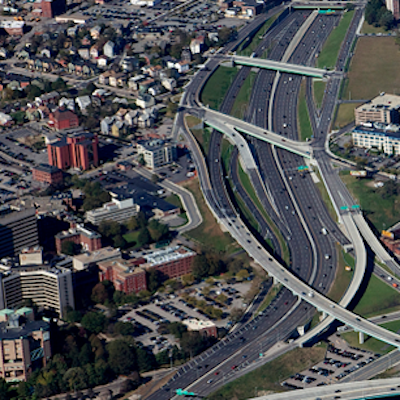
Brand new infrastructure? Built!
Taxes? Stabilized!
GET THE LATEST BREAKING NEWS HERE -- SIGN UP FOR GOLOCAL FREE DAILY EBLASTApprovals process? Streamlined!
Incentives? $25 million! And probably more if you know a guy… it is Rhode Island, after all.
You would think that developers would be kicking down the door for the opportunity to knit the city back together, but redevelopment has been s - l - o - w.
The powers-that-be did a competent job of knitting the street grid back together, creating a network of medium-sized, interconnected blocks. The new grid is not as fine-grained as the old city plan, and doesn’t have anything as sexy as the curves of Weybosset, but I would give it a solid B/B+.
But they neglected the crucial next step – lot subdivision. Nearly all of the 18 lots that are available on the I-195 land, plus 15 vacant lots adjacent to it, take up an entire city block, and that is bad news indeed.
Now, there may be a reason for this. According to the website, the I-195 Commission hopes to attract life science, research & development, and institutional buyers - splashy, big ticket projects that would have an obvious impact, fast. These uses typically occupy large-floor-plate buildings that can be packed with offices, laboratories, and long hallways – also the types of buildings that make for great ribbon-cutting ceremonies. Stacking the deck in favor of these large-scale developments, however, has not paid off in the short-term and will only hurt the city in the long run.
Why?
Large urban lots are expensive to buy and expensive to build on, so the list of potential buyers is pretty short. It includes mostly multinational real estate development companies looking to construct the one type of building they’ve perfected, make a quick profit for their shareholders, and get out of dodge. This development model extracts value from the city, rather than cultivating it – not ideal if you’re hoping for sustained economic growth.
Big building projects also bring with them big risk, and the government will be more inclined to throw bailout-level incentives at a large-scale project that is threatening to fail or walk away (38 Studios, anyone?). The city can maybe handle two or three of these projects, but definitely not 33 of them all at once.
Even if the commission did manage to attract the big time developers (which they’re struggling to do) and have them all succeed (which is unlikely), the results would be ugly. Literally ugly. Ugly and boring. Architecturally speaking, buildings that take up entire city blocks are difficult to design well, especially when you’re on a tight budget. I take the highly detailed design scenarios developed by the commission as an implicit acknowledgement of this difficulty. When every side of the building is essentially a “front,” the budget for the exterior is stretched pretty thin, usually resulting in a boring building with at least one “front” that looks very much like a back. By contrast, look at nearly every building on Westminster, or any commercial street built before 1950, for that matter. Thanks to party walls and alleyways, the exterior budget could be focused on one or two sides of the building, resulting in dignified buildings that contribute to the beauty of the city.
The building-as-block problem is especially difficult to overcome when you have 33 of them in a row. One or two big boring buildings can be absorbed into the urban fabric without too much trouble. 33 of them? Not so much. If the I-195 land is developed as it is currently designed, there will be 20 acres worth of boring and lifeless streets cutting through Providence for years to come.
To recap: Urban lots the size of city blocks will lead to out-of-town developers getting free money from the state to construct big boring buildings that create lifeless streets and extract value from the city instead of cultivating it.
Thankfully the problem is fixable, and it’s a quick fix. If the I-195 commission were to simply subdivide each lot into 20 - 30 foot widths and half the depth of the block – you know, the way American cities have developed since the days of westward expansion – they could lower the barriers to entry, encourage local investment, add more properties to the city’s tax rolls, give away smaller incentives, enable better architecture, and create a more interesting cityscape.
And because the land is owned by one entity, they could do all of this without jeopardizing the splashy big-time developments in the future. Large-scale developers could still buy several adjacent lots and combine them for a super-project, but instead of being surrounded by other super-projects, they would be surrounded by a wide variety of smaller, locally-owned and operated buildings designed by and for people with a vested interest in the future of Providence.
Joel VanderWeele is an architectural designer at Union Studio. This article was originally published on Outside the Deadlines in July of 2016.
I-195 Redevelopment: Key Players
Governor Lincoln Chafee
In 2011, Chafee signed into law a bill that established the process for the redevelopment of the Interstate 195 land. Chafee also appointed all members of the seven-member commission, with recommendations from Providence Mayor Angel Taveras and House Speaker Gordon Fox. Historically, the Governor’s support has been critical to the success of major development projects. Former Governor Bruce Sundlun spearheaded the construction of the new terminal at T.F. Green Airport and the support of both Sundlun and his successor Lincoln Almond was necessary in order for the Providence Place Mall development to get off the ground.
“The development of the 195 land in the heart of Providence has made tremendous progress specifically the work to prepare the land for development. All of the proper infrastructure is being put in place and has been aggressively pursued through state, city, federal and private partnerships. The permitting occurred because of quick work by DEM, RIDOT, DOA, NBC, CRMC and other government agencies and contributed to the fast pace in which we made the land pad ready,” Chafee told GoLocalProv this week.

Senate President M. Teresa Paiva Weed
The Senate, under the leadership of President M. Teresa Paiva Weed, confirmed Chafee’s nominees to the I-195 commission in October 2011. The commission began meeting immediately.
Paiva Weed, a Newport Democrat, has worked with Fox on a number of economic initiatives as well. “Economic development has been a Senate priority throughout the session. Working together with our partners in the House, the administration, and the private and nonprofit sectors, we have reshaped our approach to economic development in the state. This effort improves transparency and accountability, while focusing on the strategic economic and workforce development which is so essential to job growth in Rhode Island,” said Paiva Weed said last July, after the General Assembly overhauled the EDC.

Senate Majority Leader Dominick J. Ruggerio
Ruggerio, a Providence Democrat is widely regarded as one of the chief champions of the I-195 redevelopment legislation in the General Assembly. “The availability of this reclaimed land presents an exciting opportunity to attract new, high-quality jobs and bolster the economy of the city and the state,” said Leader Ruggerio. “This redevelopment district is a key advantage for our state. It bodes well for our ambitious goals that this collection of exceptional individuals will guide the development of this vital district,” Ruggerio said in October 2011, after the Senate confirmed the members of the commission. In a statement to GoLocalProv this week, he expressed confidence that the work was moving forward on the redevelopment project.

Providence Mayor Angel Taveras
As with the Governor, the support of the Mayor is critical to the success of a major redevelopment initiative. At least three members of the commission were Taveras’ picks, although Chafee made the final nominations to the Senate. The City of Providence remains an important player in the redevelopment process, approving a major re-zoning of the area in 2012 that grants flexibility to future development. As Mayor, Taveras also proposed—and successfully passed—a commercial tax property tax freeze. Taveras announced his run for Governor last October, ensuring that a new mayor will oversee the development of the former Interstate 195 land.

Colin P. Kane, I-195 Commission Chairman
Colin Kane is Principal of Peregrine Group LLC. Kane is Peregrine’s lead partner for project transactional activities, including structured workouts, payment settlements, deal origination, project planning, asset acquisition and sales, leasing, financial analysis, workout analysis, and debt/equity capitalization.
Prior to helping found Peregrine in 2001, Kane worked as a Development Manager for Gilbane Properties. Kane has broad experience in real estate development, including successful projects in Rhode Island, North Carolina, California, Maine, Nevada, Vermont, Virginia, Maryland, and Florida over the past 12 years. Projects include mixed-use campuses, historic rehabilitations, multi-family housing, hospitality venues, planned residential communities, large-scale corporate and institutional build-to-suits (including medical facilities), and brownfield redevelopment.
Kane is a combat veteran of Operation Desert Storm, a graduate of Harvard Business School (MBA), Georgetown University (MA), and the US Naval Academy (BS, with distinction), and serves on the Executive Committee of the RI Builder's Association. He is a resident of Wickford. (Nominated by Chafee.)

Barrett Bready, M.D. I-195 Commission Member
Barrett Bready, M.D., is President and CEO of NABsys, Inc., a start-up and an advanced DNA sequencing technology company located in the heart of the Knowledge District. Bready has headed NABsys since 2005, and has led the company’s acquisition of GeneSpectrum as well as the execution of its licensing deal with Brown University.
Bready has been named one of the top “30 under 30” in New England by Mass High Tech: The Journal of New England Technology and one of 25 “movers and shakers” in the State of Rhode Island by Rhode Island Monthly.
Bready teaches “Biotechnology Management” at Brown, where he holds the position of Adjunct Assistant Professor of Biotechnology. He received his M.D. from Brown Medical School and his Sc.B. in Physics from Brown. He co-chairs BioGroup, Rhode Island’s biotechnology industry organization, serves on the Board of Directors of the Brown Medical Alumni Association, and is a Trustee of the Providence Preservation Society and WaterFire. (Nominated by Chafee.)

Barbara A. Hunger, I-195 Commission Member
Barbara Hunger has been a registered nurse in the Labor and Delivery Unit at Women and Infants Hospital for 25 years. Prior to joining Women and Infants, Hunger worked as a nurse in hospitals throughout New England. She earned a BS from Southern Connecticut State University. Her civic involvement includes volunteerism with CityArts, Elmwood Neighborhood Housing, Community Music Works, and the Steel Yard. Hunger has been a resident of and homeowner in Providence’s Elmwood neighborhood for 25 years and raised two children who attended Providence Public Schools. (Recommended by Taveras.)

Diana L. Johnson, I-195 Commission Member
Diana Johnson is a self-employed art consultant. She served as Director of Brown University’s David Winton Bell Gallery and as Curator of Prints, Drawings and Photographs, Chief Curator, and Acting Director of the RISD Museum of Art.
Johnson also has served as Senior Vice President and City Executive with the Private Clients Group at Fleet National Bank-Bank of America, Senior Vice President and Portfolio Manager with the Providence Group Investment Advisory Company, and Vice President with the Trust and Investment Division of Fleet National Bank.
Johnson has served on the Boards of the RI Committee for the Humanities, Veterans Memorial Auditorium, and Trinity Repertory Company, and as Board Chairman of the RI State Council on the Arts, Travelers Aid Society of RI, and Planned Parenthood of RI. She received a BA in Government from Radcliffe College (Harvard University) and an MA in Art History from Brown. She is a resident of Providence. (Nominated by Governor Chafee.)

John M. Kelly, I-195 Commission Member
John Kelly has been the President and CEO of Meeting Street School for the last 14 years. Meeting Street serves over 3,000 Rhode Island children and families each year. During his tenure, Kelly has overseen the development of Meeting Street’s $25 million South Providence campus which resulted in over 180 jobs moving to South Providence (with an additional 40 jobs added since its relocation).
An attorney by training, Kelly previously focused his law practice in corporate and real estate law as a partner at Tillinghast, Collins & Graham. Kelly subsequently held a leadership position in a non-profit organization, The Coalition for Community Development, which was created to revitalize downtown Providence.
Kelly has served as Chair of the Board of Directors of The Genesis Center and the Providence Revolving Fund and has chaired four city boards and commissions: the Port Commission, the Zoning Board of Review, Adhoc Permitting Review and the Salary Review Commission. As Chair of the Adhoc Permitting Review group, he was tasked with streamlining Providence’s permitting process. To date, the city has implemented electronic plan review, concurrent plan review and launched of an expedited review process. He is a graduate of Franklin and Marshall College and earned a law degree from Boston College. Kelly is a resident of the city’s south side. (Recommended by Taveras and Fox.)
Photo: Flickr/spablab

Mark T. Ryan, I-195 Commission Member
Mark Ryan is a principal at Moses and Afonso, Ltd., where he concentrates his practice in the areas of corporate and business law. Ryan has extensive business and business law experience.
Prior to joining Moses and Alfonso, he was with the Providence Journal Company for nearly 25 years, where he served as Executive Vice President and General Manager, Senior Vice President – Legal and Administration, and Vice President – Legal and Administration. During his time at the Journal, Ryan was also responsible for litigation management, environmental issues and labor and employment matters country wide, and oversaw digital operations.
Ryan is a Director and Member of the Nominating and Legislative Committees of the Greater Providence Chamber of Commerce, First Vice Chairman and Trustee of the Providence Performing Arts Center, a Member of the Rhode Island Commodores, and a Member of the Rhode Island Bar Association. Ryan is a graduate of the University of Rhode Island and New England School of Law. (Recommended by Taveras.)

Michael S. Van Leesten, I-195 Commission Member
Michael Van Leesten is CEO of OIC of Rhode Island, a non-profit that provides training, employment, and minority business development services. He also heads Van Leesten Group, LLC, a community development consulting firm.
Van Leesten has over 40 years of community and business development experience, including: Executive Director of the Providence Planning and Development Department, Director of Fleet National Bank, Chairman of the RI Home Mortgage & Finance Corporation, public affairs management with the Mashantucket Pequot Tribal Nation, and, currently, Chairman of the Providence Black Repertory Company. He has directly managed and developed various types of commercial and residential real estate projects in Rhode Island and Connecticut.
Van Leesten is a member of the RI Heritage Hall of Fame. A graduate of Rhode Island College with a degree in education, he has also completed the University of Pennsylvania’s Executive Management program and did course work in Community Planning at the University of Rhode Island. (Nominated by Chafee.)

Jan Brodie, Executive Director, I-195 Commission
Hired in May 2013, Jan Brodie serves as the executive director for the I-195 commission—one of just two staff positions on the commission. Brodie was hired after a six-month search in which over 200 candidates for the job were reviewed.
Prior to her appointment, Brodie has served as the Northeast Regional Director of The Community Builders, a real-estate development organization in Boston, Massachusetts. Previously, she was the Vice President of the Armory Revival Company in Providence.
Brodie received her MBA from The Wharton School, her masters in architecture from the University of Pennsylvania GSFA and her bachelors of arts degree from Williams College.
Photo: Flickr/Dougtone

James S. Bennett, Providence Economic Development Director
As its Director of Economic Development, Bennett is the city’s point person for any economic development effort in Providence. Bennett was appointed by Taveras in August 2011, months before the commission was established. According to his official city bio, “In this position, Mr. Bennett oversees all economic development initiatives and leads efforts to support existing businesses, attract new businesses and create jobs in Rhode Island's capital city.”
Bennett previously was the chairman of the Rhode Island Convention Center from 1995 to 2001. He was reappointed as chairman in June 2011 by Chafee. “His leadership of the board has been credited with the Convention Center's successful efforts to market Providence as a national convention destination and increase convention business and tourism in the capital city,” his city bio states. Bennett has also launched three startup companies and run several large companies. He is a 1979 graduate of Brown University.
Brown University
It’s hard to imagine Brown University—which opened its new medical school in the Jewelry District three years ago and is the sixth largest employer in the city—not playing a role in the redevelopment of the former Interstate 195 land. Brown is a critical partner in local and state officials’ vision for a new “Knowledge District” in Providence. In recent years, President Ruth Simmons was the university’s chief liaison to the community. That role now falls to new President Christina Paxson, who has a background in economics. Brown has already expressed an interest in the I-195 land, but no formal proposal has been submitted to the commission.
Johnson and Wales University
Johnson and Wales is also deeply involved in the redevelopment of the I-195 land. In November 2012, the university purchased two parcels from the former highway area to expand its downtown campus. “This area is integral to the future economic development of our city and state, and I am very pleased our plans for these parcels of land will bring jobs and activity to the old Route I-195 corridor and serve as a catalyst for other private development to follow,” said JWU Chancellor John Bowen, according to remarks reported in the Providence Business News. Johnson and Wales has expressed interest in buying up more land from the I-195 commission.


