


Lardaro Report: Rhode Island’s Momentum Both Mediocre and Disappointing
Len Lardaro, URI Professor of Economics
Lardaro Report: Rhode Island’s Momentum Both Mediocre and Disappointing

Unfortunately, Rhode Island employment peaked all the way back in December of 2006 - over eight years ago. As of January, we have now replaced only about two thirds of the jobs lost since that peak. Furthermore, Rhode Island’s labor force has been in a well- defined downtrend since late 2012, which apparently intensified after June of 2014, which helps to explain part of the dramatic recent “improvement” in our state’s Unemployment Rate. Ironically, resident employment was revised lower as well. Because of these two revisions to the household survey, I choose to view the downward revisions to our state’s Unemployment Rate somewhat skeptically.
In light of the newly released labor market data, Current Conditions Index values throughout 2014 were not as satisfactory as we had previously been led to believe. Revised months are indicated at the bottom of this report with arrows. Three months were revised higher while three were lower. While this sounds like a “wash,” it indicates that we failed to sustain the string of 75 values from July through September, attaining that value only once last year, in September. This is the type of economic performance that inevitably emerges from a state such as ours that is in dire need of major structural reforms, most notably to taxes, fees, regulations, energy costs, and the lack of skills of our Labor Force. Fortunately for us, Governor Raimondo is addressing all of these areas in her upcoming budget.
GET THE LATEST BREAKING NEWS HERE -- SIGN UP FOR GOLOCAL FREE DAILY EBLAST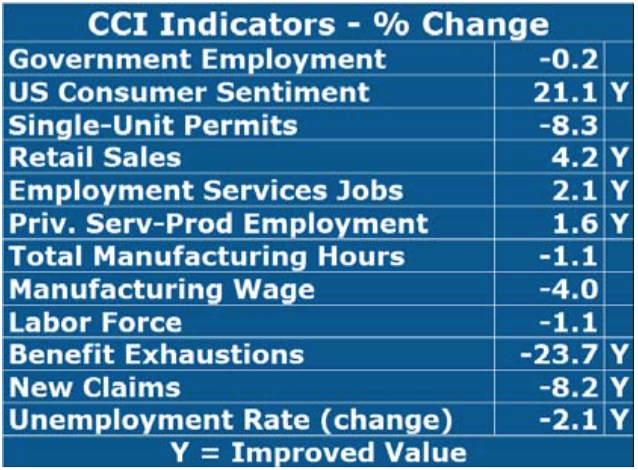
Total Manufacturing Hours, a measure of manufacturing sector strength, fell by 1.1 percent in January, its second decline in the last three months, the result of a sharp decline in the length of the workweek. Along with this, the Manufacturing Wage declined for the eleventh consecutive time, by a difficult to comprehend 4.0 percent. Single-Unit Permits, a volatile indicator that reflects new home construction, fell by 8.3 percent following improvement last month. Viewed along with our state’s January manufacturing performance, the momentum provided by Rhode Island’s goods-producing sector continues to fluctuate.
Retail Sales improved for the twelfth time in the last thirteen months, increasing by 4.2 percent compared to a year ago, following a 9 percent rise in November and 5.4 percent in December. Private Service-Producing Employment increased by 1.6 percent in January, its most rapid growth rate since last August. Not surprisingly, Government Employment failed to improve again, declining by 0.2 percent for January, remaining around 60,000. Benefit Exhaustions, which reflects longer-term unemployment, fell by 23.7 percent relative to a year ago.
Finally, Rhode Island’s Labor Force fell for the twenty-first consecutive month (year-over-year) while our Unemployment Rate declined to 6.5 percent.
