


Modern Master: Ira Rakatansky –– Architecture Critic Morgan
GoLocalProv
Modern Master: Ira Rakatansky –– Architecture Critic Morgan
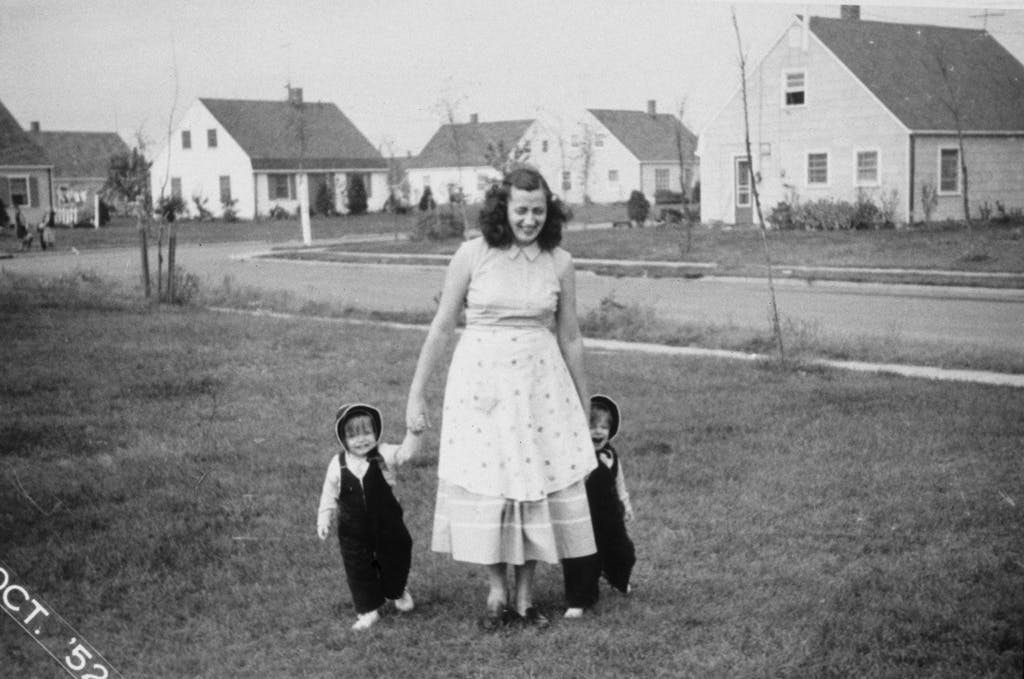
Let us return to those days of single-story Modern houses in the post-World War II suburbs–houses without historical decorative flourishes, and erected with an eye to the future. Modern architecture promised easy living, new technology, kidney-shaped coffee tables, and butterfly chairs, in a home perhaps designed by Mike Brady, the architect dad of the Brady Bunch.
GET THE LATEST BREAKING NEWS HERE -- SIGN UP FOR GOLOCAL FREE DAILY EBLAST

Modernism never quite took hold in the way environed by the European émigré proselytizers who fled the Nazis and dominated our architectural pedagogy. Those designers and their protégés still exert a powerful influence on commercial architecture and on industrial and graphic design. But on the domestic front, Americans wanted the Cape Cod, the Colonial, and the familiar, rather, than the echoes of a social democratic worker paradise.
We can explore Modernism's facets in Come Back to the Future, a conference sponsored by the Rhode Island Historical Preservation & Heritage Commission, to be held virtually April 21-23 (https://preservationconferenceri.com). One of the topics to be addressed in regard to preserving Rhode Island's recent past will be the work of Providence architect Ira Rakatansky.

Rakatansky was one the most significant Modern architects to practice here, and one of the most prolific (the project database of work in the state compiled by his son, architect Mark Rakatansky, runs to over 300 entries). From 1946, when Ira returned from architecture school at Harvard, until his death in 2014, he designed everything from offices (and their furniture) to churches. But he is best known for his houses, of which he designed more than fifty in Providence alone.
The son of a local contractor, Rakatansky studied at RISD. But he picked up his Modern credentials, training, and idealism at Harvard, under the tutelage of Walter Gropius, the founder of the revolutionary Bauhaus design school. In an essay in Ira Rakatansky: As Modern As Tomorrow, a book published by RISD in 2010, Columbia University educator Joan Ockman praises the architect's "careful aesthetic economy while striving for domestic comfort and spatial expansiveness."

Despite the promise of standardization, new materials, and an aesthetic purity, Modern architecture was never as popular as Rakatansky hoped. Nevertheless, the architect stayed true to his principles throughout his nearly seven-decade career. As Ockman writes, Rakatansky's clients came from a narrow band of society she labels "upper middle class." Modern architecture here was thus supported by the "well educated, socially progressive, and [those] engaged in civic and professional activities."
This was not enough to offset the overwhelming taste for traditional homes. Yet the houses Rakatansky designed for his often Jewish clientele added a raffish quality to the East Side. Instead of conservative, crowd-pleasing houses, these straightforward, flat-roofed cubes suggested that Providence had an avant-garde side. Rakatansky's own house, built over sixty years ago, now lovingly restored, is an understated classic.
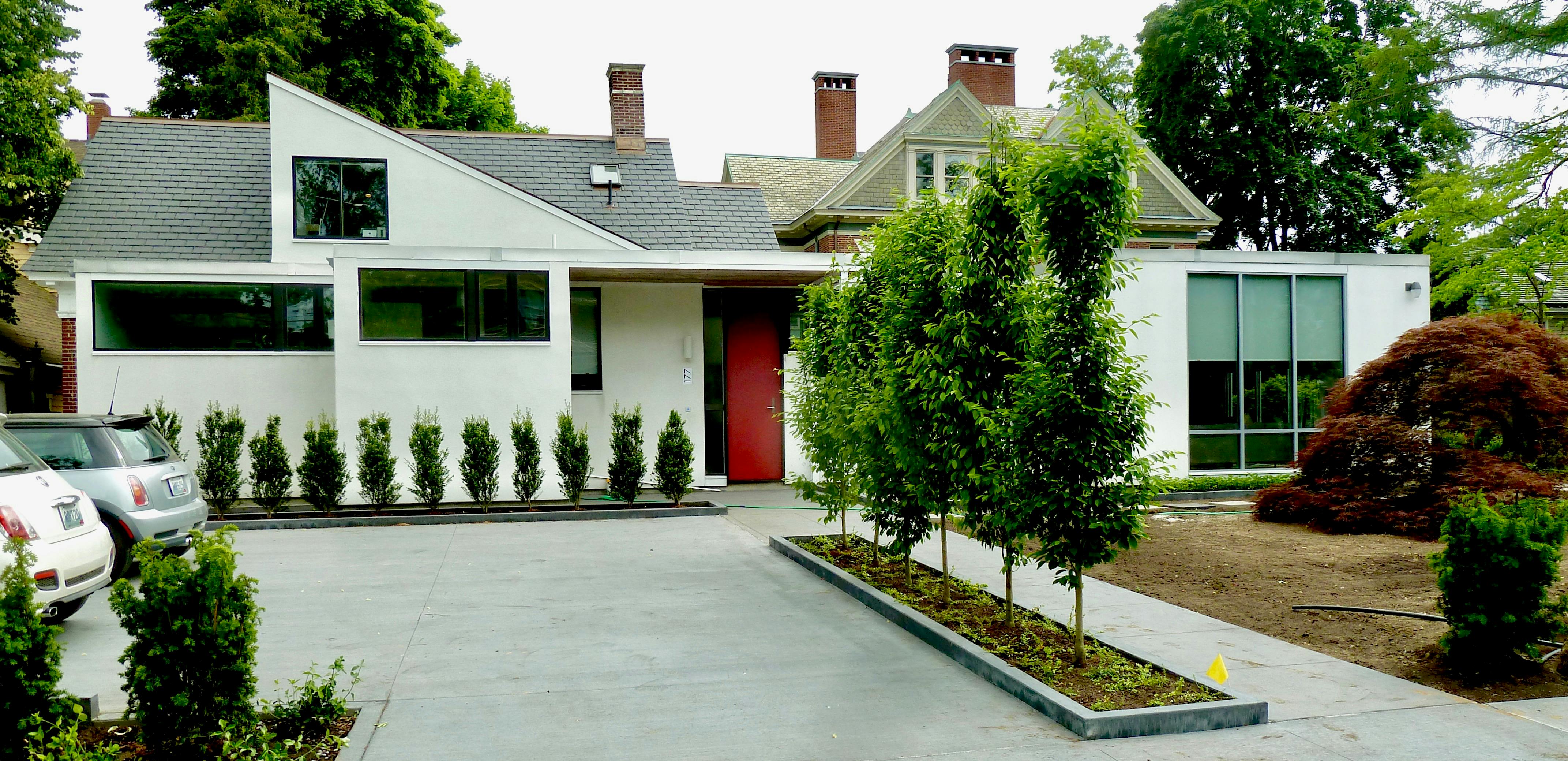
Despite most people's negative knee-jerk response to Modernism, Rakatansky's domestic work hardly raises an eyebrow nowadays; it seems almost old-fashioned. Overall, his designs respected the New England vernacular: he built in wood and his scale-appropriate dwellings fit in well into the East Side townscape.

The build quality and aesthetic integrity of Rakatansky's houses are especially noteworthy when compared to most of the new houses being built on the East Side. Rarely selling for less than a million dollars, the typical speculative home is a cheaply made mish-mash of traditional details, such as carriage lamps, porticos, and far too many roof pitches. Unlike these stunted in-town McMansions, Rakatansky domestic designs bespeak a quiet dignity.

Ignoring such lessons, preservationists wail and gnash their teeth when a modern architect such as Friedrich St. Florian proposes a flat roof, mullionless fenestration, or vertical siding. With the passing of half a century, Rakatansky's homes dwell comfortably in their neighborhoods. But studying the houses of Ira Rakatansky should remind us that you cannot erect tomorrow's landmarks by restricting an architect's creativity.
