Parcel 2: More Junk From the I-195 Commission – Architecture Critic Morgan
Will Morgan, Architecture Critic
Parcel 2: More Junk From the I-195 Commission – Architecture Critic Morgan
The agita over trying to build on Parcel 2 along the east bank of the Providence River should tell us that it is time for a reset on the entire 195 development. Perhaps it is even time to remove most of the I-195 Commissioners and appoint members who would have the courage to follow the original remit of creating a true Providence Innovation & Design District, with incubators, start-ups, researchers, engineers, and designers.
Instead, the glorious opportunity created by the removal of the interstate highway has so far been squandered piecemeal filling up parcels with an abundance of undistinguished apartment blocks–not to mention the prospect of an absurdly wrongheaded Fane Tower. Beds instead of brains.
Since when did this significant chunk of Providence become about non-descript upscale (read over-priced) housing.
GET THE LATEST BREAKING NEWS HERE -- SIGN UP FOR GOLOCAL FREE DAILY EBLAST
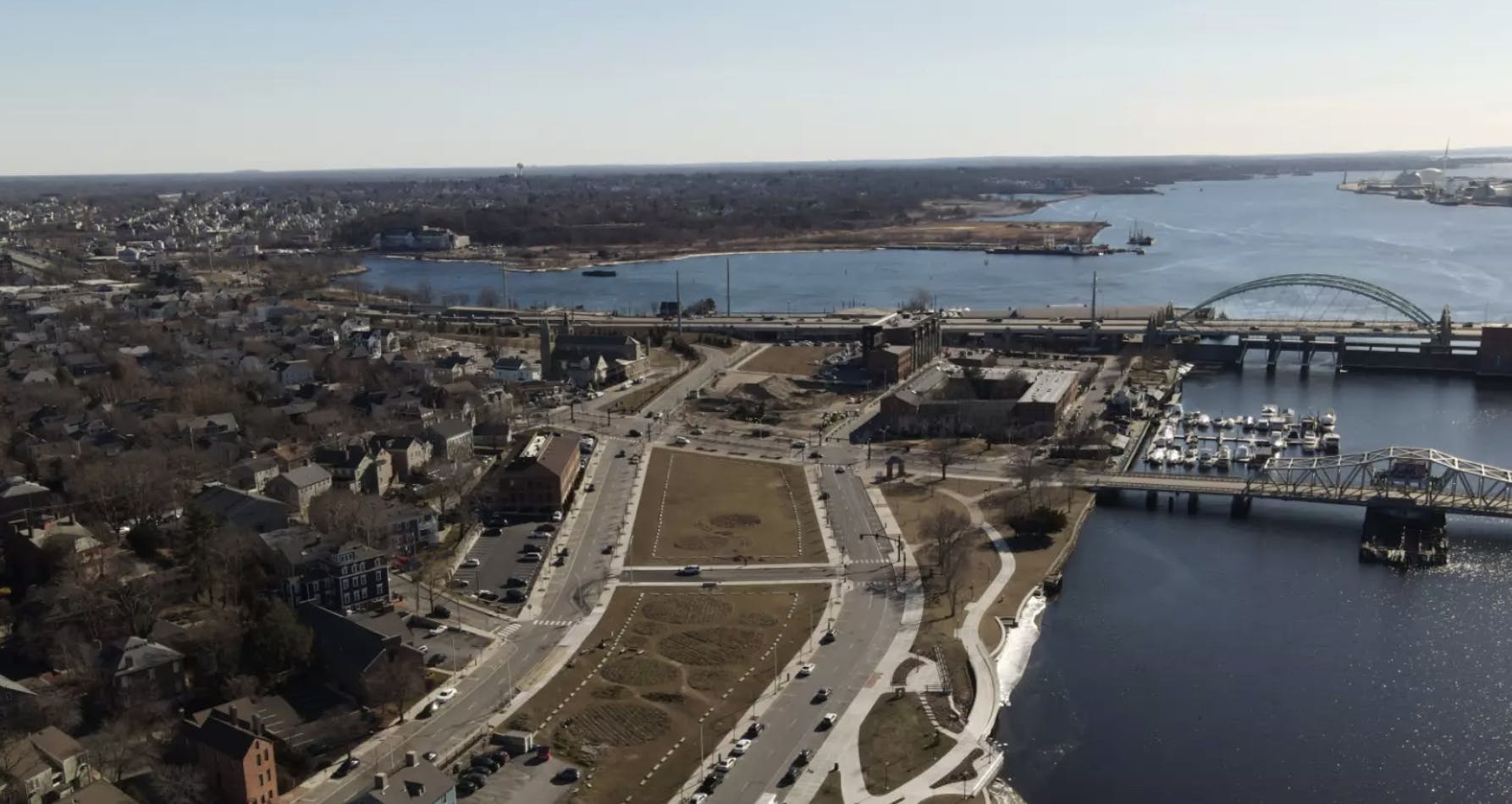
Shouldn't the I-195 Redevelopment District Commission know something about cities? Or is it just a front for schlock developers to inflict more mundanity on downtown? Doesn't the city deserve a stronger vision than this continuing clown show? Three years ago we were at this very same point, when two aggressively bland apartment projects were floated for Parcel 5. The most egregious proposal was by developer Post Road Residential, who wishfully called themselves "the blue chip apartment developer in the northeast." The Carpianato Group offered The Row at College Hill, "a catalyst for city and state," while their architects tunelessly declared "We need to inspire with great architecture."
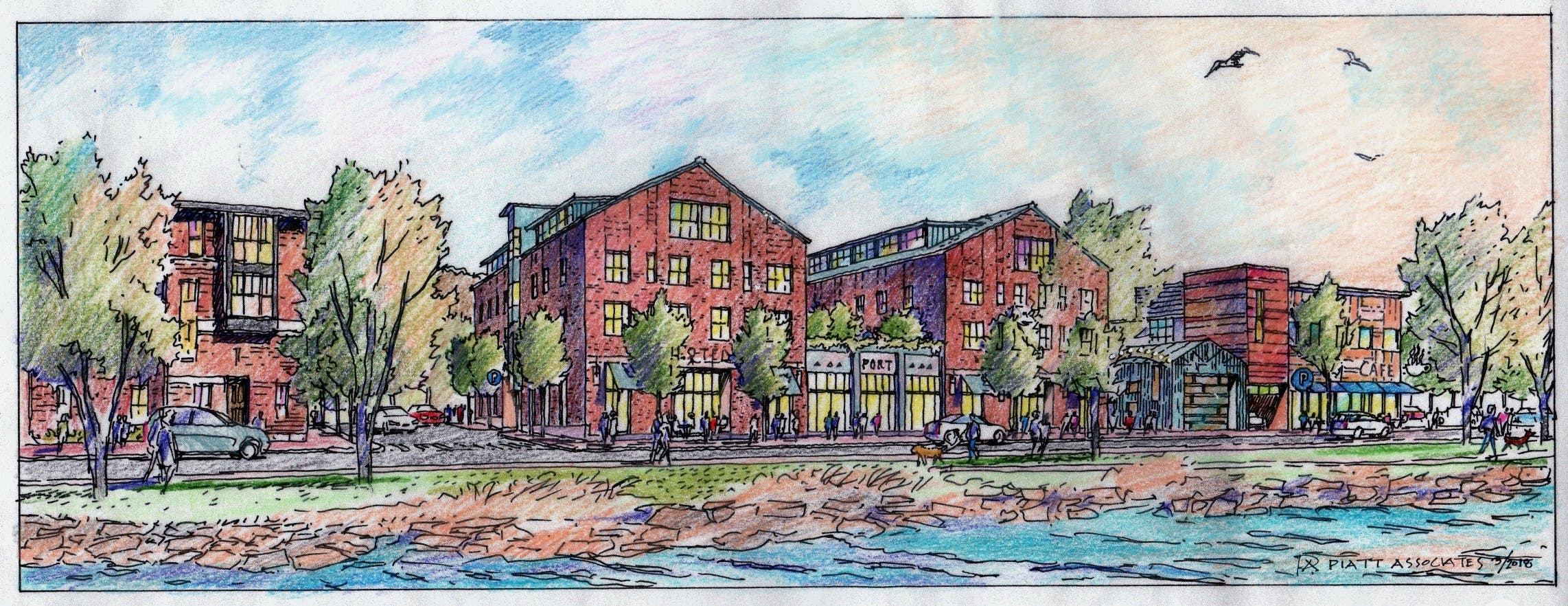
A third proposal seemed to break the mold of the suburban-junk let's-build-it-to-last-until-I get-my-money-out philosophy. The MIT-trained James Piatt of Boston, who worked for the legendary urban developer James Rouse on Faneuil Hall Market, understood Providence's history, scale, and unique vibe. Piatt's plan, however, was for both Parcels 5 and 2. All the proposals were rejected and the Commission is waiting for Parcel 6 to be completed before re-tackling Parcel 5
Parcels 5 and 2 would make a wonderful open space by the river–no city ever complained about having too many parks. But, as one source said, "there's not a snowball's chance in hell that Parcel 2 will not get developed." Yet, there is still the question: Why apartments? Why not a research center? The three proposals unveiled for the site are only a little better than the usual re-heated leftovers served up on the 195 sites.
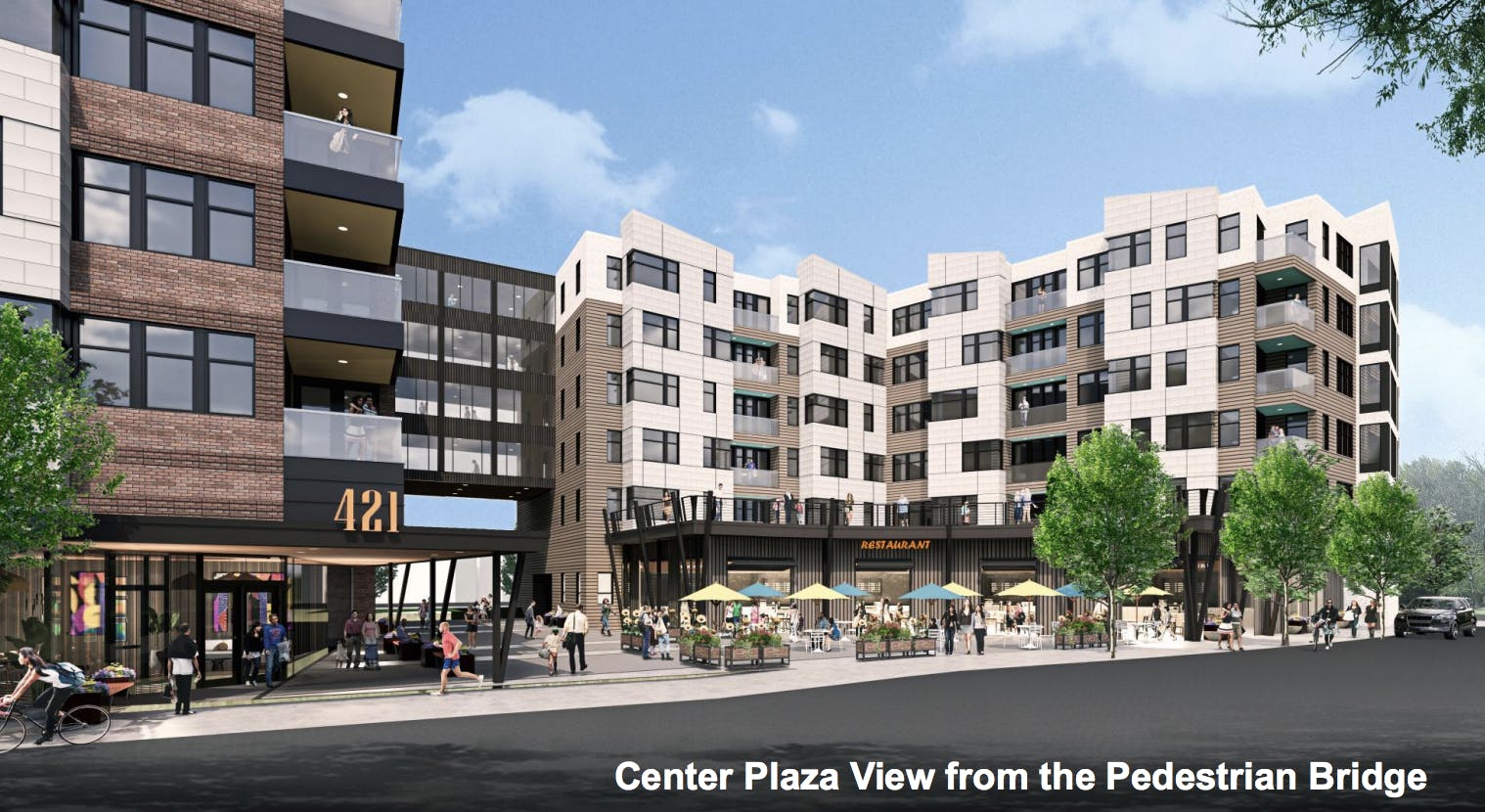
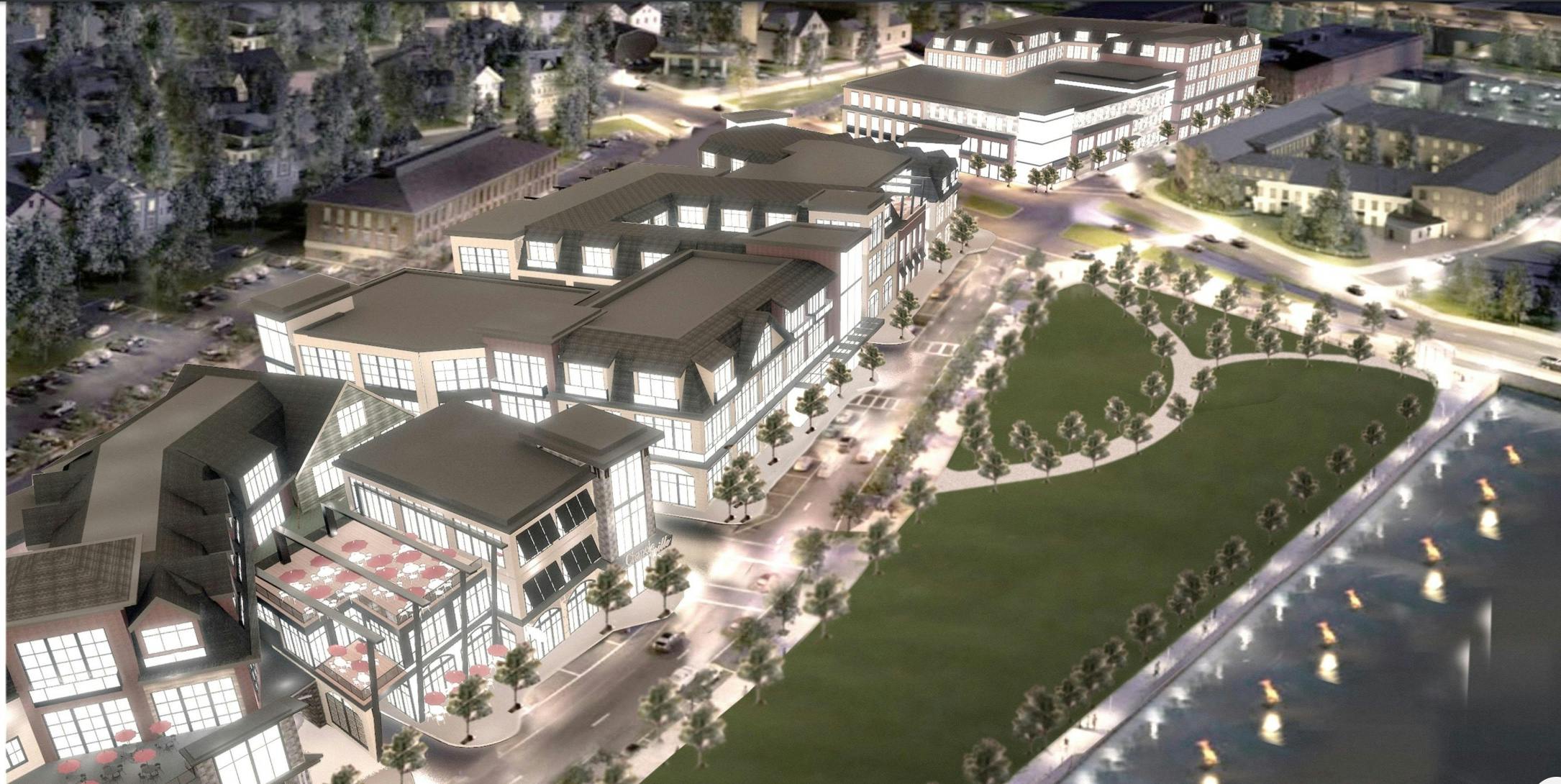
One problem with all of the current Parcel 2 schemes is scale. They are simply too big. Two come within a few square feet of their displacement (135,000), suggesting that each developer is trying to squeeze the maximum into the allowable zoning envelope. Parent + Diamond's block of flats, for example will have 120 apartments and parking for 140 cars. (Isn't it time to decrease the ratio for living units-to-cars in this walkable city?) The serpentine motif is borrowed from one of the great Modern buildings, Baker dormitory at MIT. Alas, the genius of that work by the Finnish master Alvar Aalto eludes the Parcel 2 supplicants' architects Nelson Worldwide.
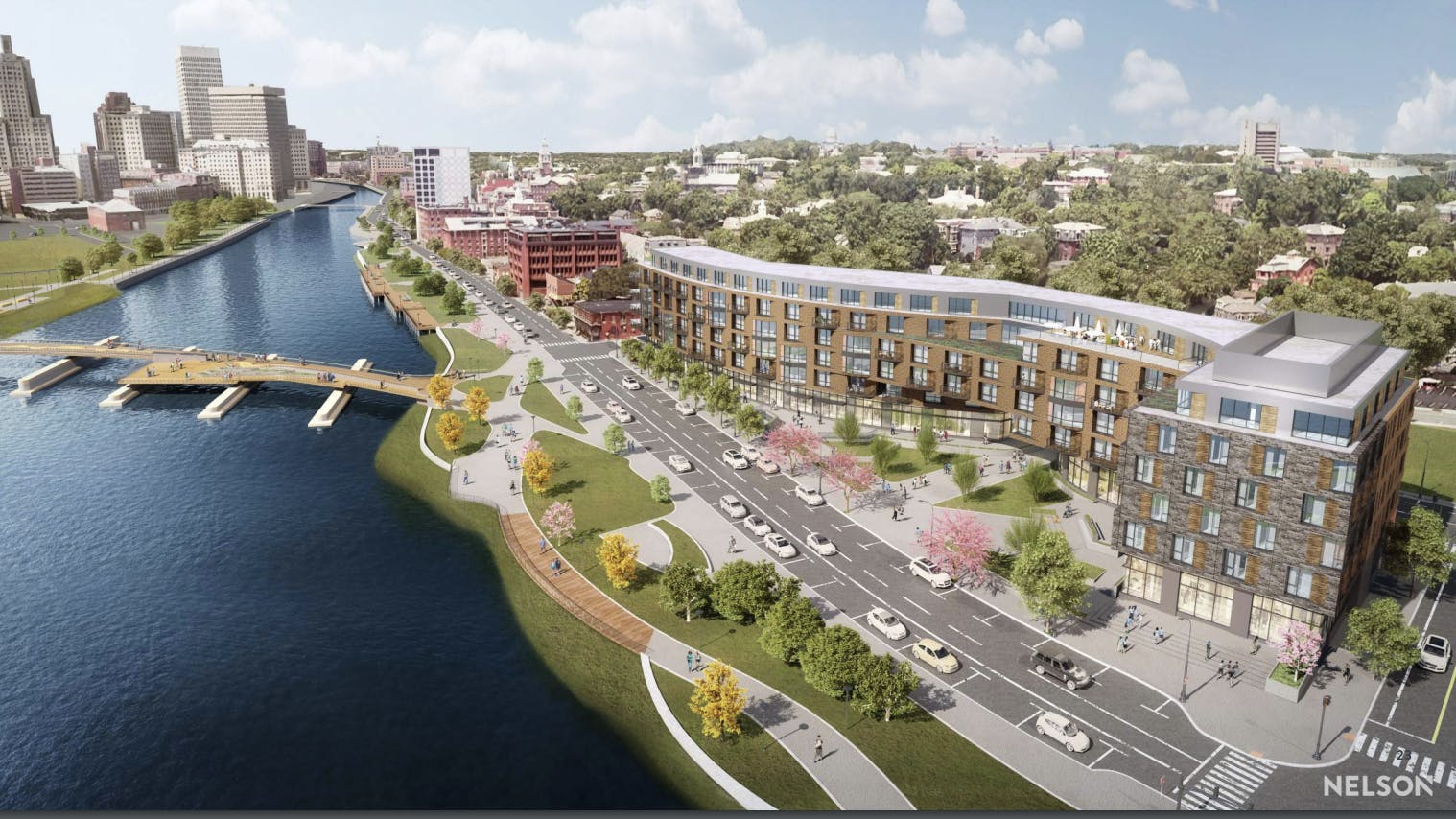
Urbanica's idea for Parcel 2 is the best of the three. To begin with, it has more (194) smaller apartments, and only space for 90 cars. It appears that there are solar panels, green roofs, masonry walls, and the complex bends to follow the line of the river. Even so, this is still an awkward attempt to mitigate a clearly over-scaled, bloated mass.

My wish would be that Providence would hold an international competition for a research center for the Parcel 2 site. There are professional competition advisors who could organize such an event, one that would attract worldwide attention, and give us an exceptional architectural design.
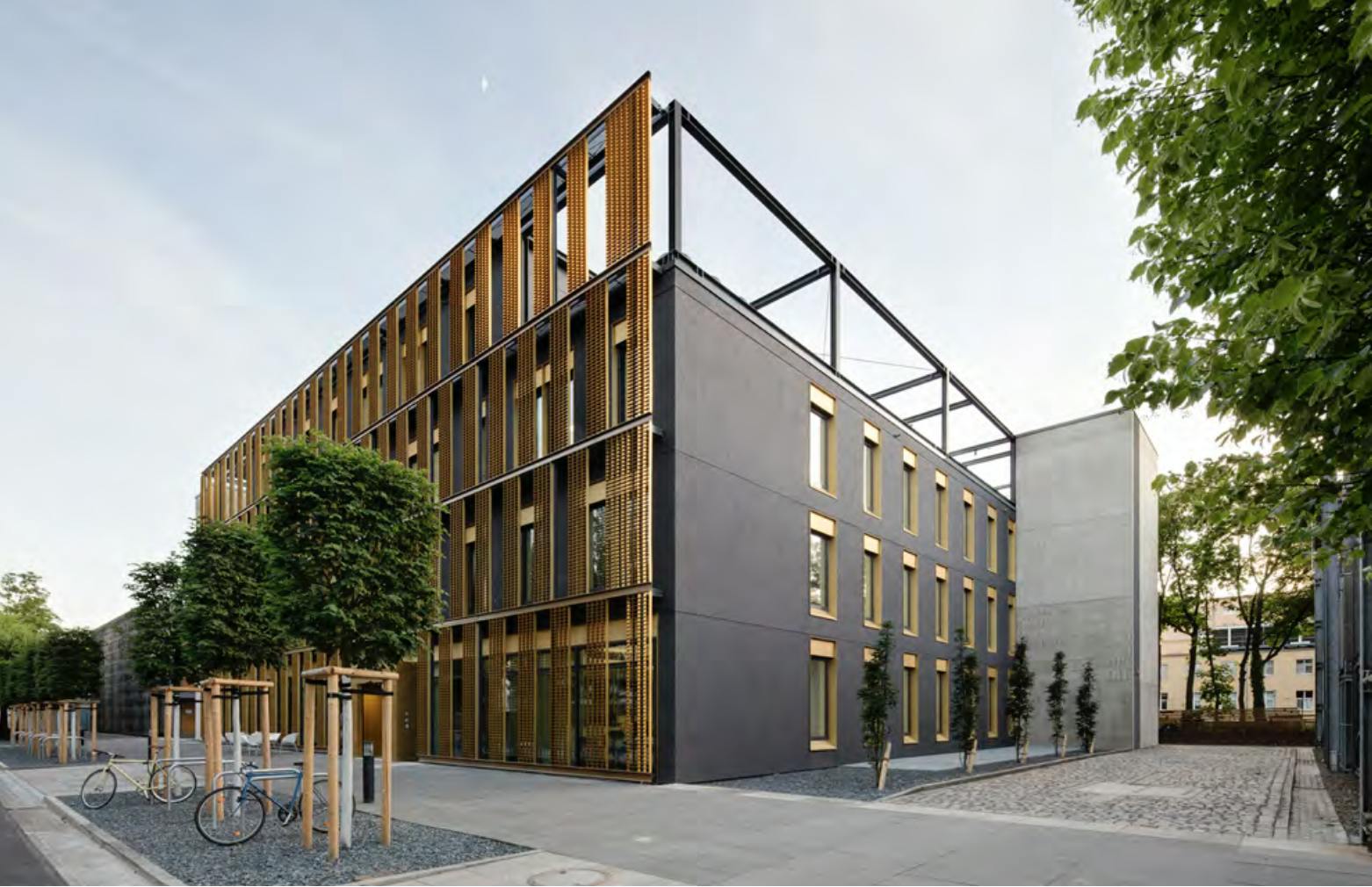
Short of such a contest in search of quality, what one wants to ask is why the 195 Commission cannot come up with impressive and appropriate architecture for a city that deserves it. (Also, shouldn't we also be curious why the commission's architectural advisor, Tim Love, has given such bad advice?) Clearly, the Commission has failed in its stated mission to create "an environment that encourages high-value users to build well-designed structures that enhance the value of surrounding neighborhoods and augment the sense of place." It is time that angry, fed-up, and disappointed citizens refuse to accept anything less than outstanding design for the remaining I-195 parcels.