


Shekarchi Introduces Bill to Streamline Regulations for RI Companies Using Blockchain
GoLocalProv Business Team
Shekarchi Introduces Bill to Streamline Regulations for RI Companies Using Blockchain
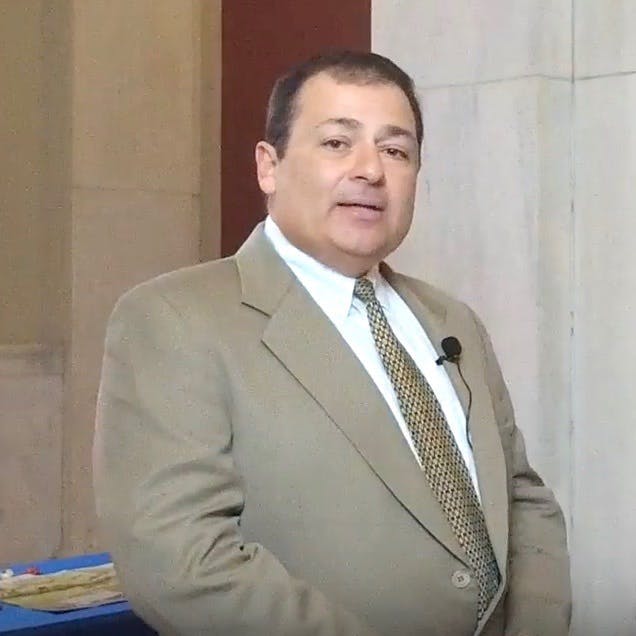
“Our message in Rhode Island for the last several years is that we welcome business development and growth. This bill is one element of the effort to make Rhode Island a place where businesses can thrive. By readying our regulatory systems for the technology of the future, we’re encouraging tech companies that may be developing blockchain technology to consider Rhode Island, while also making it easier for other companies, new and existing, to use it. This bill is about making it easier to do business in Rhode Island,” said Shekarchi.
The legislation is supported by the Department of Business Regulation (DBR).
GET THE LATEST BREAKING NEWS HERE -- SIGN UP FOR GOLOCAL FREE DAILY EBLASTThe Bill
Shekarchi’s legislation concerns only the functions that involve currency or virtual currency, since those are already licensed activities in Rhode Island.
This bill would consolidate Rhode Island’s current electronic money transmitter license and its sales of checks license and add the authority for virtual currency to the new currency transmission license.
The new license will allow licensees to conduct all the activities allowed under the two prior licenses, plus virtual currency activities.
Currently, users of blockchain financial applications are required to have both licenses.
Blockchain
Blockchain is a database technology that can be used to store information in a secure and public or encrypted manner, creating a decentralized database of blocks of data that are shared by all users.
Each block is attached to a chain of the blocks that came before it, creating an easily traceable and hard-to-alter history of the data. Although the design’s most high-profile use is to track the virtual currency Bitcoin, it has many applications, some financial, some not.
Walmart has begun using it to track the supply chain of its produce, and Rhode Island-based CVS and Fidelity have been using it to ensure patient information security and to facilitate the financial transactions of the future.
PHOTOS: General Assembly Opening Session - January 1, 2019


