


Smart Benefits: Small Employers Must Cover 'Essential' Benefits
Amy Gallagher, GoLocalProv Business/Health Expert
Smart Benefits: Small Employers Must Cover 'Essential' Benefits
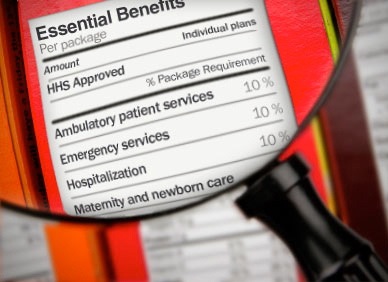
Essential Benefits Defined
Just what are essential benefits? There are ten categories of benefits that will collectively need to be included in all health insurance plans offered through an exchange, as well as to all non-grandfathered plans offered in the individual and small group market (less than 100 employees):
-
Ambulatory patient services
GET THE LATEST BREAKING NEWS HERE -- SIGN UP FOR GOLOCAL FREE DAILY EBLAST -
Emergency services
-
Hospitalization
-
Maternity and newborn care
-
Mental health and substance abuse disorder services
-
Prescription drugs
-
Rehabilitative and habilitative services and devices
-
Laboratory services
-
Preventive and wellness services and chronic disease management
-
Pediatric services, including oral and vision care
And existing legislation prohibits annual and lifetime limits on these benefits.
Insurers’ Plans Meet Requirements
The essential benefits are generally already covered through health plans offered by all three of the health insurers in the state. However, each state will be required to designate a benchmark plan that mirrors the ideal essential benefits program – and in Rhode Island, it’s Blue Cross and Blue Shield of RI’s Vantage Blue PPO.
Cost-Sharing Limits will Apply
The proposed regulations extend beyond just identifying benefit categories; there will be cost-sharing limits for deductibles, copayments, coinsurance and any other employee charges, prompting some employers to change plan designs.
The limits for 2014 follow, and will increase by the average percentage increase in health insurance premiums.
-
Employee out-of-pocket expenses cannot exceed $6,250 for individual coverage and $12,500 for other tiers of coverage (i.e. family).
-
In-network deductibles will be subject to a separate limit in 2014 of no more than $2,000 for individuals and $4,000 for other tiers.
Adjustments to deductibles will be allowed in certain situations. And for employers who offer much higher deductible plans, provisions will be made to include employer contributions to a health savings account (HSA) or health reimbursement arrangement (HRA).
Minimum Plan Value Calculations
Under the employer mandate, employers with at least 50 full-time employees must cover at least 60% of the actuarial value of the total allowed costs of health care. The state exchanges will offer bronze plans (60% of actuarial value), silver plans (90% of actuarial value), gold plans (80% of actuarial value) and platinum plans (90% of actuarial value); the proposed rules allow for small variations in these levels. Any plans offered by insurers available through the exchanges must also be available outside the exchange.
2013 Key to 2014
Small employers affected by the essential benefits regulations will need to start planning and preparing for plan modifications in 2013 for renewals beginning in 2014 if the proposed rules get finalized. Large employers with more than 100 employees may also be affected, depending on how their coverage compares and how many of their employees may qualify for the exchanges. Self-insured employers must follow the employer mandate of providing coverage, but will have more flexibility in plan design.

For more health and business coverage, watch GoLocalTV, fresh 24/7, here.