


Are You a Cyberchondriac?
GoLocalProv Health Team
Are You a Cyberchondriac?
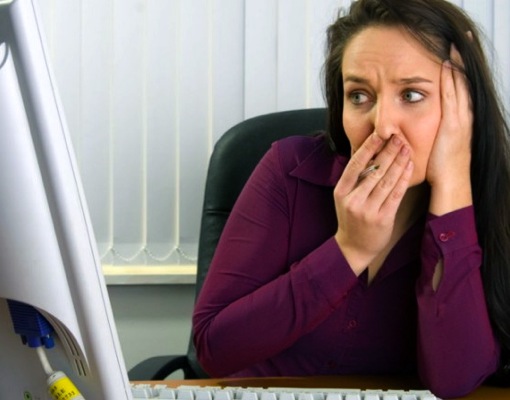
Now, in increasing numbers, they arrive with their own diagnoses of illnesses they're not even close to experiencing. It's cyberchondria, an unfounded anxiety concerning one's wellness brought on by visiting health and medical Web sites, and it's on the rise like an out of control flu season.
The Internet and health
The data is convincing: 8 out of 10 Americans use the Internet to look for health information now, according to the Pew Internet and America Life Project. But it's not just gathering information: a 2008 paper by Ryen White and Eric Horvitz for Microsoft dubbed the phenomenon cyberchondria, when their large-scale survey of 515 individuals' health-related online search experiences revealed disturbing trends.
"We focused on the extent to which common, likely innocuous symptoms can escalate into the review of content on serious, rare conditions that are linked to common symptoms," wrote White and Horvitz. "Our results show that Web search engines have the potential to escalate medical concerns."
Cyberchondria in Rhode Island
In Rhode Island, physicians see cyberchondria cropping up as well. "My patients are pretty Internet-savvy in general," said Thomas Bledsoe, MD, an internist at Rhode Island Hospital. "It's quite common to Google some symptoms, and they almost always have done some research about what their symptoms might mean and have concerns about these possibilities when they arrive in the office." Bledsoe makes a point of asking his patients what they're afraid of, and what they've found on the Internet, during his evaluation.
But this doctor doesn't mind a little mild cyberchondria. "I'm happy when they come in pre-loaded with worries or concerns," Bledsoe said. "That way, we can get their questions on the table early and I can address them at the time of the visit, as opposed to them developing the questions after the visit and then not having a good mechanism to have their concerns addressed."
"Be aware of the scams"
"At this point, everyone—including providers and patients who do not have the extreme condition of cyberchondria—are increasingly affected by the quantity and the quality of information that is readily available online," said Pablo Rodriguez, MD, Chairman of the Board of Directors of Women & Infants Health Care Alliance. "Providers need to be aware of the scams and be able to refute the less credible information, and patients need to be sophisticated enough to judge and decide whether to follow advice obtained on Google."
How to know whether to follow advice obtained on Google? Start with a trusted source. "My favorite is the National Library of Medicine patient portal, www.medlineplus.gov, or m.medlineplus.gov from your phone," offered Dr. Bledsoe. "All reputable links!"
What are we searching for?
According to the Pew research, Americans do their health searching, online, in the following way:
66%: Specific disease or medical problem
56%: Certain medical treatment or procedure
44%: Doctors or other health professionals
36%: Hospitals or other medical facilities
33%: Health insurance, including private insurance, Medicare and Medicaid
29%: Food safety or recalls
24%: Drug safety or recalls
22%: Environmental health hazards
19%: Pregnancy and childbirth
17%: Memory loss, dementia or Alzheimer's
16%: Medical test results
14%: How to manage chronic pain
12%: Long-term care for an elderly or disabled person
7%: End-of-life decisions
28%: Another health topic not included in the survey
80%: At least one of these topics
Are you a cyberchondriac?
If you're getting itchy to check out your latest symptoms, or feel anxiety even about what you've read, you may be suffering from cyberchondria. Take the following quiz to see where you fall on the spectrum: Are You a Cyberchondriac?
For more Health coverage, don't miss a beat of GoLocalTV, fresh every day at 4pm and on demand 24/7, here.