


Brown Discovery: High-Tech Early Detection of Cancer Cells
Maggie Lange, GoLocalProv Contributor
Brown Discovery: High-Tech Early Detection of Cancer Cells
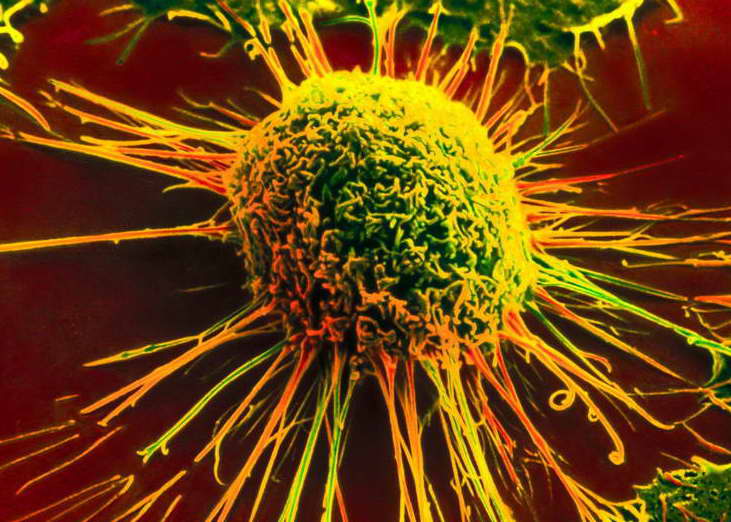
A Brown University chemistry research team has disproved this theory entirely. Using gold nanoparticles, this team has developed a new technique to spot tiny, cancerous tumors in the liver. This is the first time that metal nanoparticles have been used as agents to find tumor-like masses through X-ray image scattering.
This will lead to a “much earlier discovery of cancer,” says Christoph Rose-Petruck, PhD, a chemistry professor at Brown University and author of the paper on gold nanoparticles published in the American Chemical Society journal, Nano Letters.
GET THE LATEST BREAKING NEWS HERE -- SIGN UP FOR GOLOCAL FREE DAILY EBLASTSpotting liver cancer
In particular, this new method will be able to locate hepatocellular carcinoma, the most common type of liver cancer. Half a million people worldwide, mostly in sub-Saharan Africa and Southeast Asia, are diagnosed with this cancer yearly, and many die within half a year.
Early diagnosis would be the biggest aid to preventing the takeover of this hepatocellular carcinoma, and the use of gold nanoparticles will allow for a much earlier detection by locating smaller particles.
Breakthrough: spotting cancerous masses earlier
By employing this new method, the team can spot cancer masses that have a diameter as small as five millimeters. Currently, methods were only able to spot masses that were six times larger (three centimeters). By the time the
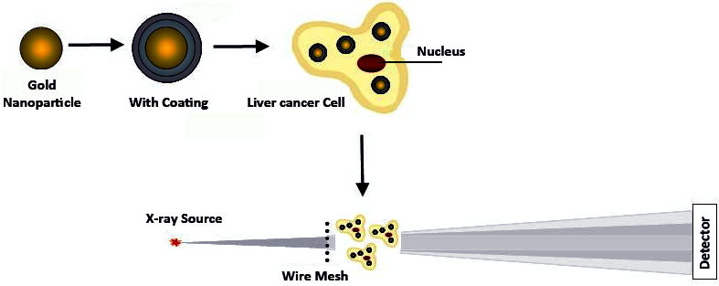
In order to spot these small cancerous spots, the gold nanoparticles are charged, to increase the chance that cancerous cells would absorb them. Once absorbed by cancerous cells, the Brown team was able to detect the gold nanoparticles within these cells through an X-ray device.
Next steps
Next, the researchers hope to attach these cancer-targeting antibodies to the nanoparticle to search for liver tumors in mice. Jack Wands, the director of the Liver Research Center at Rhode Island Hospital and a professor of medicine at the Warren Alpert Medical School says that they have already created an antibody that targets signs of highly-expressed liver cancer cells. With this antibody attached to the gold nanoparticles, they could detect earlier growth of tumors in the liver. Eventually, researchers say that this x-ray scatter-imaging method could be used for other organs as well.