


Huestis: November Skies Have Something for Everyone
David Huestis, GoLocalProv Astronomy Expert
Huestis: November Skies Have Something for Everyone
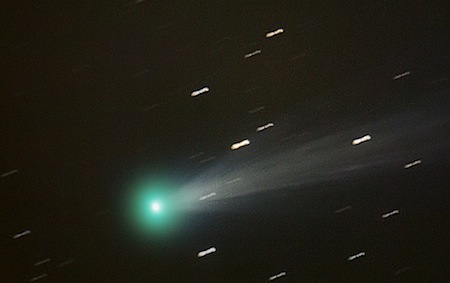
While we still cannot physically reach the stars, our spacecraft have probed the distant regions of our solar system. Although marvelous instruments have imaged the universe in all wavelengths of the electromagnetic spectrum, you and I can experience the majesty of the heavens using our eyes, binoculars, and modest-sized optical telescopes. Fortunately the often clear and transparent skies of November will be host to a wide variety of objects and events to satisfy the exploratory nature of the casual and amateur stargazer alike.
Annually during the first two weeks of November the Earth passes through a stream of debris left in orbit by Comet Encke. These often very bright meteors comprise the Taurid (Northern and Southern) meteor showers. The Taurids are fairly slow and enter our atmosphere at approximately 17 miles per second, resulting in yellow fireballs that often explode and fragment into multiple meteors. Concentrate your gaze toward the constellation Taurus the Bull (find the V-shaped pattern that defines the bull’s face, or locate the Pleiades — the Seven Sisters), but scan around since the Taurids can appear anywhere in the sky. At best, one can expect no more than six meteors per hour.
GET THE LATEST BREAKING NEWS HERE -- SIGN UP FOR GOLOCAL FREE DAILY EBLASTOn Sunday, November 6 at 2:00am, don’t forget to set your clocks and devices (older units don’t automatically accomplish this task) back one hour as we return to Eastern Standard Time (EST) from Eastern Daylight Time (EDT). Everyone knows the phrase, “Spring ahead and fall back/behind.” Failure to fulfill this ritual will result in your being one hour early until you remember to do so.
Furthermore, during the first week of November above the western horizon shortly after sunset, you can still catch a glimpse of Saturn, with brilliant Venus to its left. Higher in the sky to the left you can continue to see reddish Mars. You’ll need a good unobstructed horizon to view Venus and Saturn through a telescope, and Mars is so distant from the Earth at this time that little detail can be viewed on its surface. Throughout this period a waxing crescent Moon will glide above this planetary grouping. Saturn will soon be lost in the solar glare, while Venus will continue to rise higher into a darker sky as the year progresses.
Throughout November one can still observe the Milky Way as it stretches from the constellation Cygnus towards the western horizon. A dark sky will reveal the myriad of stars of our home galaxy, and even a pair of binoculars will show beautiful clusters of stars within its boundaries. And if you have a small telescope, just scan up and down its length with a wide-field eyepiece. You’ll be rewarded with many fine views of dense star fields.
For those of you who have a good view towards the northern sky, Ursa Major (Big Dipper) sits above the horizon after sunset this month. Watch as the handle of the dipper sinks below the horizon as the constellation rotates counter-clockwise around Polaris, the Earth’s pole star.
Also after sunset you can find the constellation Taurus the bull rising above the eastern horizon. You can recognize this star pattern because it contains two beautiful star clusters. The Pleiades, or Seven Sisters, is easily recognizable, as is the V-shaped cluster called the Hyades. This open cluster contains Taurus’ bright red star Aldebaran, the bull’s eye. Orion rises soon thereafter. Unfortunately that early evening appearance signals that winter will not be too far behind.
On the 14th the closest Full Moon since January 26, 1948 occurs. In recent years the term supermoon has been used to describe a lunar close approach. But a supermoon is really nothing special. The Moon’s elliptical orbit about the Earth produces one perigee (close approach) and one apogee (farthest distance) each month. These extremes vary each time they occur. This upcoming perigee will be the closest (221,524 miles) until November 25, 2034 (221,486 miles). Tides will be high, so let’s hope there are no coastal storms.
Just three days later is the peak of the annual Leonid meteor shower during the early morning hours of the 17th. Unfortunately a waning gibbous Moon on the Gemini/Orion border will overshadow all but the brightest meteors of this display. This scenario is further compromised because the Leonid peak rate is down to its normal level of perhaps 10-15 green or blue shooting stars per hour. The Leonids blaze across the sky at around 44 miles per second as they hit the Earth’s atmosphere nearly head-on. The resulting display produces many fireballs, with about half of them leaving trains of dust that can persist for minutes. The area of sky where the meteors appear to radiate from is in the Sickle (backwards question mark) asterism in Leo. Best of luck in seeing a handful of shooting stars.
And finally, throughout the month, please visit one of the local observatories and ask the telescope operators to show you the two most distant planets of our solar system. Since the demotion of Pluto to dwarf planet status in 2006, those planets now are Uranus and Neptune. These gas giants look like little blue-green disks through a telescope. You won’t see any detail, but you can boast of catching a glimpse of these distant worlds.
Seagrave Memorial Observatory in North Scituate is open to the public every clear Saturday night. Ladd Observatory in Providence is open every clear Tuesday night. The Margaret M. Jacoby Observatory at the CCRI Knight Campus in Warwick is open every clear Wednesday night. Frosty Drew Observatory in Charlestown is open every clear Friday night year-round.
Be sure to check the websites of these facilities before venturing out for a visit.
Great American Total Solar Eclipse on August 21, 2017. Countdown: 292 days as of November 1, 2016.
Keep your eyes to the skies.
20 Reasons Why Fall in New England is the Best Season - 2016

Grape Season at Newport Vineyards
Newport, RI
For wine lovers, this is one of the best times of the year because it's grape season.
There are many great Vineyards around New England but Newport Vineyards tops the list and fall is one of the best times to visit, even if you may need a sweater.
Enjoy the wine.

Wearing Comfy Sweaters while visiting the Mass Audubon Wildlife Sanctuary
Lincoln, MA
Listen to the sounds of birds chirping, see the rabits hopping around happily and so much more when you visit the Mass Audubon Wildlife Sanctuary.
You may need a little sweater but you will not regret the walk, or seeing the wildlife.

Fall Ferry Ride to Block Island
Block Island, RI
Start the fall off by sailing away on a ferry to Block Island for the day.
Enjoy the beach, outdoor dining, gift shops or just the views.

International Oktoberfest at Alex & Ani Center
Providence, RI
International Oktoberfest will take pace at the Alex & Ani Center in Providence on Saturday, September 24 and 25.
The festival will include seasonal beer, German cuisine and live music.
One of the main events of the fall season in all of New England.

Last Chances for Al Fresco Dining at Boat House Restaurant
Tiverton, RI
The views of Mount Hope Bay are unparalleled. Enjoy some wine with a snack or three while watching the sunset. The chef is known for a well-balanced menu of seasonal treats that uses locally sourced seafood in creative ways.
Celebrate the arrival of fall and sit outside at the Boat House Restaurant.

Leaf Peeping in The Berkshires
Berkshires, MA
Arguably the coolest thing about the fall season is the changing of the leaves. You will want to go up to the Berkshires and stroll through a park or just down a street and take note of all the colors, it's a must do fall activity.
How many colors can you see?

Start of Apple Picking Season at Pippen Orchards
Cranston, RI
There are not to many better fall family activities then to spend a day picking some apples.
Be sure to make the most out of the start of the fall season when you pick Pippin Orchards apples.
Then bring the apples home to make apple pie, apple sauce, or enjoy as they are.
Happy picking!


Bragging Rights on the Line in Final Tennis Matches
Still owe someone a rematch? or maybe just a match in general.
There is still plenty of great weather left to get the match in and the winner of the match takes home bragging rights which they hold for the entire winter.
Game on!

Fall Lineup of Beers
Whether it's Octoberfest from Sam Adams or a pumpkin beer from Harpoon or Newport Storm, it's time to get out to your local bar or store and pick up some of the great fall beers on tap or in stock.

The Deutsche Bank Championship at TPC Boston
Norton, MA
The best golfers in the world are all in Boston for the second leg of the FedEx Cup Playoffs this Labor Day Weekend.
Defending champion Rickie Fowler will look to repeat while superstars Rory McIlroy, Jordan Spieth and Jason Day look to take his title.

Last Golf Rounds of the Season at Harbor Lights
Warwick, Rhode Island
Golfers don't put away those clubs just yet. The summer may be nearly over but the fall offers some of the best golf weather of the entire season.
Take advantage of it at the beautiful Harbor Lights golf course in Warwick.

Learning at Plimoth Plantation
Plimoth, MA
The fall season is Plimoth Plantation's busiest time of year and it is a great time to bring the family.
Visit the Wampanoag Homesite, the 17th-Century English Village, Nye Barn, Craft Center, Plimoth Bread Company, Mayflower II, and the Plimoth Grist Mill!
A great way to learn and have fun at the same time.

Cozy Sweaters at Waterfire
Providence, Rhode Island
The evenings do get a bit cooler, however, they are still some of the best nights of the season and the fires are still burning bright in Providence.
Grab your nicest, coziest sweater and head down for an evening of fun, romance and much more.

Foxboro, MA
Every fall for the last 15-16 years, the New England Patriots have entered the season with a chance to win the Super Bowl, in a lot of cases, even favored to win it.
That's pretty cool and is a big reason why fall is the best season in New England.
Although, the first four games of this season may be tricky.

Take a Trip up Mount Mansfield
Stowe, Vermont
Visit Vermont and take a gondola up Mount Mansfield. Once you get to the top, look back at the spectacular view. There are not to many views llike it.
For travelers, be sure to bring a jacket.

Last Chance for Outdoor Dining at Caffe Expresso Trattoria
Worcester, MA
Caffe Espresso Trattoria has been open for over 20 years as a family owned and operated restaurant. Trattoria offfers authentic Italian home cooking.

Star of Pumpkin Picking at Jaswell's Farm
Rhode Island
Pumpkin picking is a timeless event for families, especially those with young kids who will love to just run around and grab whichever pumpkin looks good to them.
The fall season is all about pumpkins and pumpkin picking is one of the best fall activities going.
PHOTO: Flickr/Glenn Fleischman

Attend King Richard's Faire
Carver, Massachusetts
Dive into history at King Richard's Faire, New England's oldest and largest Renaissance Festival and most beloved annual fall event. Dress up, play games and learn alot at a faire that is a great fall event for the entire family.
The Faire starts on September 3 and goes until October 23

Visit Animals at the Zoo One Last Time
It's almost that time of year when the local Zoo's close up shop for the winter. Take the family to see the animals one last time.
The Zoo makes for a great fall day for the entire family.


