


NEW: Pulitzer-Prize Winner David McCullough To Speak at Providence College
GoLocalProv Lifestyle Team
NEW: Pulitzer-Prize Winner David McCullough To Speak at Providence College
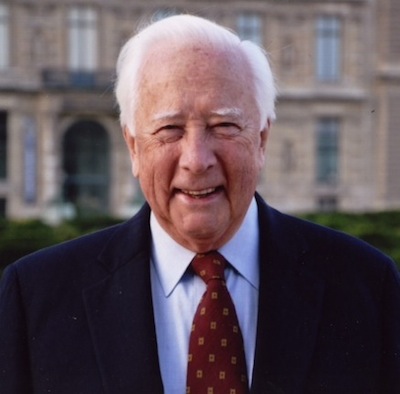
Highly accomplished
McCullough’s first book, The Johnstown Flood was published in 1968. Johnstown, PA was a region familiar to him, having been born and raised in nearby Pittsburgh. The book was a success and he became a full-time author. Since then, McCullough has written eight more books: The Greater Journey: Americans in Paris, 1776, John Adams, The Great Bridge, The Path between the Seas, Mornings on Horseback, Brave Companions, and Truman.
He is two-time winner of the Pulitzer Prize, the National Book Award, and the Francis Parkman Prizes from the American Society of Historians. He has received the Presidential Medal of Freedom, the nation’s highest civilian award. His other honors include a Charles Frankel Prize, a National Book Foundation Distinguished Contribution to American Letters Award, and a New York Public Library’s Literary Lion Award.
GET THE LATEST BREAKING NEWS HERE -- SIGN UP FOR GOLOCAL FREE DAILY EBLASTMcCullough received a bachelor’s degree in English literature from Yale University in 1955. In an extensive and productive career, McCullough has been an editor, teacher, lecturer, and familiar presence on public television as host of Smithsonian World, The American Experience, and narrator of numerous documentaries including Ken Burns’s The Civil War. His is also the narrator’s voice in the movie Seabiscuit.
The Ruane Center
The Ruane Center for the Humanities is named in recognition of PC’s former Board of Trustees Chair Michael Ruane and his wife, Elizabeth, whose leadership gift helped make the facility possible. The building will serve as home to the College’s Development of Western Civilization (DWC) and Liberal Arts Honors programs, the Departments of English and History, and the School of Arts & Sciences.
The Ruane Center is located on the College’s main campus between the Phillips Memorial Library and the Albertus Magnus-Sowa-Hickey science complex. It includes 12 seminar-style classrooms to accommodate 20-22 students each and four larger classrooms to support the DWC Program and its new colloquia, as well as the Liberal Arts Honors Program.
Other academic-oriented features in the building include a large presentation and functional space, group and individual study spaces, faculty offices, and faculty and student lounge/community space.