


TRENDER: Observatory Design's Cutter Hutton + Ayako Takase
Tracey Minkin, GoLocalProv Features Editor
TRENDER: Observatory Design's Cutter Hutton + Ayako Takase

Local cred: Both Hutton and Takase went to RISD for Industrial Design (and met there). They live and work in a carriage house on the West Side of Providence.
What in your youth (if anything) was an indicator that you'd end up in this field?
GET THE LATEST BREAKING NEWS HERE -- SIGN UP FOR GOLOCAL FREE DAILY EBLASTI loved drawing as a child, and throughout school could be found in an art classroom in any free time. Like many young boys, I was also drawn to machines, but I had an obsession with figuring out what made them work. Unfortunately for my mother, at age 3 this led me to investigate her new sewing machine, which never recovered despite professional intervention. I've been doing that ever since, trying to figure out how to make something work.
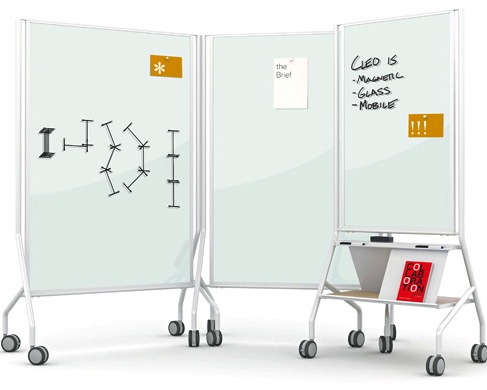
Your Cleo Divider and Easel is a finalist in Interior Design's Best of the Year. It's an amazing product, and anyone who sees one wants one. What, in a nutshell, led to creation of this product?
After 12 years as Kaiju Studios, you've changed your name to Observatory Design. Why?
We started Kaiju Studios during the heady days of the web 1.0 revolution, and we did a lot of User Experience and Web design back then alongside our product work. Kaiju, which means giant monster (think Godzilla) was quirky and fun and the name fit with a bunch of kids in a warehouse space. Over time we began to focus more and more on products and furniture, and we felt Observatory better communicated the research, exploration and design thinking we invest in our work.
What made you choose Providence as the home base for Kaiju/Observatory?
We came back to Providence when we started up for a number of reasons - our connection to RISD and familiarity with the city , the availability of inexpensive but beautiful studio space in the mills around town, the low cost of living and being in between Boston and NYC.
Design is hotter than ever on the world stage, from media to education. Why now?
Public awareness is the big reason - everyone expects good design in what they use, and when something is badly designed we recognize it and demand better. Now the same tools we use to figure out how to make your smartphone better are being applied to how we improve services, experiences, education - almost anything. Design was the last big differentiator out there for companies, cost is marginalized with globalization, and the internet has broken down the barriers to availability. Business realizes to be competitive you need design and now it is spreading across our culture. Thank goodness, life doesn't need to be more complicated.
What are the 3 hallmarks, in your opinion, of great design?
Great design has an appropriate balance of beauty, simplicity, and honesty. Beauty is subjective, but really I think of it as creating an emotional response with a person - great design connects with us. Albert Einstein sums up my thoughts on simplicity better than I could; "Everything should be made as simple as possible, but not simpler." And great design is honest - it is honest in its purpose, its materials - it does what it is supposed to do well, it doesn't pretend to do more or be something it isn't. Get the perfect concoction of those things and you are on to something.
What is the best thing about being Providence-based? The most challenging thing?
Without a doubt, the food is the best thing. Close second is the creative community here. The most challenging thing professionally is our client base isn't here - we don't need to be down the street from our clients, but it is nice. We've started working with more companies locally so we're hopeful we can improve this.