


10 Things to Watch This General Assembly Session in RI
GoLocalProv News Team and Kate Nagle
10 Things to Watch This General Assembly Session in RI
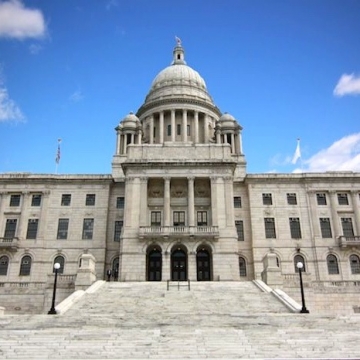
"My highest priority for the new session is to continue improving the economy and keeping us competitive with neighboring states in terms of tax policies and business-friendly initiatives. We are seeing some economic momentum but we must continue to work hard in attracting good-paying jobs to our state," said Speaker of the House Nicholas Mattiello.
SLIDES: See Ten Things to Watch This General Assembly Session BELOW
The groups organized for Tuesday's anti-toll press event include a dozen taxpayer and advocacy organizations, who issued the following statement over the weekend.
GET THE LATEST BREAKING NEWS HERE -- SIGN UP FOR GOLOCAL FREE DAILY EBLAST"Many businesses testified last year that RI would experience numerous job losses in the trucking industry if truck toll legislation passed. In a move that is expected to repeat itself if tolls get closer to a reality, UPS announced last week that they were pulling 10 tractor trailer trucks, along with the associated jobs, out of RI and moving them to Massachusetts."
“The trucking industry told leadership that there would be job losses. This is just the first of many losses that are expected to occur if the Governor’s toll legislation passes,” said StopTollsRI spokesman Tony Viveiros. “When we fought against the Sakonnet Toll, it was the same situation. The General Assembly ignored the negative financial impact of tolls on the local and state economy. They are doing the same thing here. UPS is proving that STOP was right."
"The House will also focus on two pillars of a strong economy, education and infrastructure," continued Mattiello. "We will look to strengthen public education funding and policies, and we must address, as early in the session as possible, a sensible plan to fix our roads, bridges and overpasses with as little burden as possible to the taxpayers."
Business, Taxpayer Groups Pinpoint Issues

"OSTPA, as a member of the StopTollsRI.com coalition, sees the toll plan as a big legislative priority, opposing both the additional bonds and the toll itself. Ethics Reform is a priority as the 38 Studios debacle remains unresolved and no one trusts state government. Then there is the 38 Studios investigation itself. A truly independent investigation is required. A comprehensive policy to attack waste, fraud and abuse in the welfare system is a legislative priority. We call on leadership to dust off the Ken Block report commissioned by former Governor Chafee," said Pam Gencarella with taxpayer advocacy group OSTPA.
"Another priority includes a plan, perhaps a commission, to identify and track the Governor’s promise of $1 billion in savings from waste, fraud and abuse in the Department of Transportation along with oversight to ensure that those savings are dedicated to road and bridge repair," said Gencarella.
Former Director of Administration and head of the Rhode Island Public Expenditure Council Gary Sasse spoke to what he thinks is necessary from a business standpoint this coming session -- and that is structural reform.
"Making more productive use of financial resources requires tax reform that lowers the cost of doing business and keeping wealth in RI," said Sasse. "Specifically lawmakers need to enact a commercial property tax reform program, phase out the vehicle property tax, significantly reduce the unemployment insurance tax paid by most business and take the next step to eliminate the estate tax. This type of broad based structural tax reform is preferable to the company specific tax incentives that promote crony capitalism but do not make the most productive use of Rhode Island's limited financial resources and tax capacity."
Taxpayer advocacy group RI Taxpayers noted that putting large borrowing measures before the voters is one of their top priorities, given the current climate.
"While we appreciate the modest steps taken last session by the General Assembly, much more needs to be done to improve the state's business climate and show that we are open for business. This includes an easing of the tax and regulatory burden on businesses as well as a ratcheting back of the use of targeted tax credits for chosen industries and companies," said RI Taxpayers Communications Director Monique Chartier.
"It also means the introduction of important good government measures including but not limited to the line item veto, putting the General Assembly back under the purview of the Ethics Commission and reinstituting the Constitutional right of the people to vote on ALL borrowing measures over $50,000; i.e., the elimination of all non-general obligation bonds," said Chartier.
Progressive Politics - and Marijuana
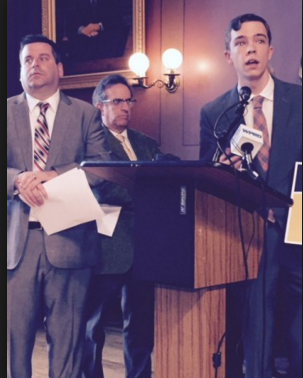
Entering the 2016 session, proponents remain optimistic at the prospect, however.
"It's 2016, and the majority of Rhode Island thinks regulating marijuana like alcohol is a common-sense solution to a failed prohibitionist approach. Most voters feel that adults shouldn't be punished for consuming something that is objectively less harmful than alcohol," said RegulateRI's Jared Moffat.
"Over the past several years, other states have taken the lead, and marijuana is going to be regulated and taxed in more states all across the country soon. For a state like Rhode Island that is trying to boost its economy and bolster its state budget, regulating marijuana like alcohol in 2016 — before other states crowd the market — makes a lot of sense."
Sam Bell with the Rhode Island Progressive Democrats -- who says they support marijuana legalization -- spoke to other items on their agenda, both long term, and short term.
"In the long term, our top legislative priority is repealing the gargantuan 2006 tax cuts for the rich that plunged our state into its current fiscal and economic crisis. We also hope to ultimately repeal the voter ID law, our abortion restrictions, and Gina Raimondo's massive expansion of the corporate welfare agency that did the 38 Studios deal," said Bell. "And we want to pass the same common-sense gun safety reforms that real Democrats have passed in Massachusetts and Connecticut, including a ban on assault weapons and high-capacity magazines.
"Unfortunately, however, the right-wing machine that dominates the General Assembly Democrats will block these common-sense reforms. Despite running as Democrats, the top leadership of the General Assembly stands with the Republican Party on the core issues that divide the two parties at the national level. That's why our long-term mission is to break the machine," continued Bell.
"In the short term, we hope to support some smaller but concrete policy wins. Our allies in the General Assembly will be introducing a range of progressive bills, which we will be supporting. Two campaigns which we are particularly excited about include paid sick leave and the education funding formula reform initiative championed by Representative Jay O'Grady."
State House Photo on Home Page: Flickr/KumarAppaiah
10 Things to Watch This General Assembly Session in RI

#10
Statewide Teachers Contract
Critics of a potential statewide teacher contract are warning of implications should the state move away from district level negotiations, as a Senate committee is currently considering its potential and is expected to report on its findings in January,” wrote GoLocal in November.
“There are a lot of unanswered questions before anything could happen, so it certainly wouldn’t happen this year,” said Purtill. “I think there has been a lot of interest in the discussion, including NEARI, on how to make starting salaries competitive and some uniformity across the state so districts aren’t competing for teachers based on salary and benefits. State wide health care plan may be the logical place to start; keeping good quality health care benefits while lowering, or at least controlling the costs. This discussion should also lead to how we attract people to the profession, including more minority teachers and those who want to teach in urban areas.”
At least one group, however, warned against the implications of a wide-reaching approach.
“The Center believes there can be a state role in saving money for local school districts. Negotiating and offering a large group health insurance option, that local districts can choose to participate in or not - as opposed to a mandate that would surely be part of any statewide contract - is one such concept,” said Mike Stenhouse with the Rhode Island Center for Freedom and Prosperity. “Consolidating control over another large piece of our education and taking it away from taxpayers and local officials, however, we think that's dangerous. We saw it with RhodeMap RI, and the fire unions, now we're talking about teachers -- it would tie the hands of municipalities through mandates.”

#9
Corporate Taxes
Last session, the General Assembly lowered the minimum corporate tax for businesses in RI from $500 to $450 — making it no long the highest in New England (the distinction goes to Massachusetts) but not as low as Vermont and Connecticut at $250.
RI’s perennial placement on the Tax Foundation and other “worst tax climate” ranking has one business advocate calling for a much more drastic reduction in the tax.
"To improve the business climate, the General Assembly needs to do three things," said URI Distinguished Professor of Business Edward Mazze. "(1) reduce the annual fee of $450 charged to businesses back to $50 whether they make a profit or not to encourage/support entrepreneurship, (2) make sure any new economic development legislation or initiatives are transparent so that businesses can operate on a level playing field and (3) align the state’s estate tax exemption to the federal exemption amount to help family businesses and farms.
Whether or not the GA would make such a bold (and bottom-line) affecting move for a short term loss in hopes of long term gains seems like a reach, but as RI tries to improve its business climate, look for outside-the-box ideas.

#8
Gambling
2016 is an election year — and casinos in Rhode Island are slated once again to put before voters in Rhode Island This time, the Tiverton Town Council voted in November to allow legislators to put a local and statewide referendum on the ballot for a new casino proposal for the town - by Twin River, who purchased Newport Grand, and is now eyeing the the location.
Newport Grand faltered to gain approval in Newport (but got the statewide nod) the last two times it was put on the ballot to increased its offering from just slots to a full-scale table games casino. Expect to see the legislation gain little objection from the rest of the state, as gambling opportunities increase in Massachusetts -- and the fear factor of loss of revenue in RI continues -- but the x-factor has always been at the local level.

#7
Earned Income Tax Credit
Last session, the Economic Progress Institute pushed for an increase of the Earned Income Tax Credit — and saw it go up from 10 to 12.5 percent of the federal earned income tax credit. And this year, it’s pushing for another bump.
"Our legislative priorities include policy changes to help working families make ends meet by increasing the state's Earned Income Tax Credit to 20% from 12.5% and making child care more affordable by making the "exit income limit" permanent and raising the "entry income limit,” said EPI Executive Director Rachel Flum.
Last year, they had shot for 15% — and got the balance. Could this year’s approach be another “big ask” to meet somewhere in the middle? Stay tuned

#6
HealthSource RI
In 2015, Speaker Mattiello entered the General Assembly session wary of the cost of the state’s Obamcacare vehicle (“The General Assembly will ultimately have to make the decision as to if and how we fund it, through budget appropriations or through some type of fee,” said Mattiello at the time. “That's our jurisdiction. If it's not efficient, we'll certainly look to turn it over to the Feds.”)
Mattiello hedged on an individual and small employee fee as proposed by last year by Raimondo, and Raimondo’s appointment of Anya Rader Wallack to head the agency has been moved to head up the state’s Medicaid office — the future is uncertain.
“Obamacare exchange in Rhode Island limping along in need of more funding,” wrote Justin Katz for Watchdog in November.
Wrote Katz, "HealthSource is a central piece of the state’s Unified Health Infrastructure Project (UHIP), which will link all government services and welfare programs through a single exchange. The state government is therefore sure to find some way to keep it under local control for another year, and then another. Under UHIP, with all services flowing through the same processes, the state might achieve some degree of scale, but perhaps more significantly, the exchange will just become part of the ballooning costs of social services in the Ocean State."

#5
Guns
Rhode Island House Speaker Mattiello Senate President M. Teresa Paiva-Weed have an A+ and A rating from the NRA respectively. Even visiting the Rhode Island statehouse, it should be no surprise general assembly members will proudly flaunt their support of the NRA with posters and stickers hanging on their office windows, wrote Guest Mindsetter Matt Fecteau in November.
Governor Raimondo in a joint press conference with Senator Reed however called for “action to prevent gun violence” in October.
“Gun violence is hurting our children and our communities, and we must commit ourselves to building safer neighborhoods and schools,” said Raimondo. “Thanks to Senator Reed, Rhode Island is a leader in taking a stand to reduce gun violence. And while there is still much more work to do, he is committed to continuing to champion ways to reach across the aisle and build coalitions to make our communities safer.”
With renewed calls from gun control advocates to take action, Raimonodo’s pro-gun control stance will be at odds with the more gun-rights leadership. "Standing up to gun extremists" has been a focal point for Raimondo.
"The gun extremists are at it again. There's a video going around Youtube comparing Gina to Hitler, Stalin and Pol Pot because she wants to implement a big, bold progressive plan for the state of Rhode Island -- one that includes a ban on military-style weapons," wrote her campaign.

#4
Marijuana
In August, USA Today put out a list of “next states to legalize marijuana” — Rhode Island came in at number nine. Massachusetts? Number one.
Both states have legalized medical marijuana. Of RI, USA Today wrote the following:
Marijuana use in the small New England state is pervasive. An estimated 20% of Rhode Islanders aged 12 and up used the drug at least once in 2012. No other state in the country had wider use.
According to an April 2015 poll conducted by Public Policy Polling, 57% of respondents in the state support changing the law to regulate and tax marijuana similarly to alcohol.

#3
Drivers Licenses for Immigrants
Speaker Mattiello in the fall of 2015 warned Governor Raimondo not to usurp the legislative process by issuing an executive order to provide licenses to illegal immigrants in Rhode Island.
In December, Coventry Representative Bobby Nardolillo questioned Raimondo’s intentions to "honor the legislative process should she decide to move forward with her campaign promise to provide drivers licenses to immigrants who are in Rhode Island illegally".
“The people’s voices are meant to be heard through their representatives and senators in the legislative branch of government. That is the appropriate place for this highly controversial matter to be debated and determined if the Governor chooses to act following the recent rally held by a group of self-proclaimed illegal immigrants demanding that she make good on her campaign promises,” said Nardolillo.
Raimondo has been on the record in support of the issue since her campaign.
"I was the first candidate in the gubernatorial race to explicitly call for drivers’ licenses for undocumented immigrants. This is an issue of fairness and public safety," said Raimondo in an ACLU questionnaire last year during the campaign.

#2
Tolls
The prospect of truck tolls to fund an infrastructure bond — and how the plan is rolled out, and the reception it receives — is high on everyone’s list of uncertainties for the 2016 legislative session. Having faltered on the last night of the 2015 General Assembly (after only being floated in May), the plan to fun a $500 million revenue bond came under public and political scrutiny throughout and the summer and fall, when the prospect of a joint fall session to address a now-defunct Providence stadium proposal — and tolls - fell by the wayside.
All eyes are back on the General Assembly - with no PawSox distraction at this time — and with it being an election year, how elected officials grapple with funding much needed bridge and road repairs (with the Republicans continuing to advocate for a pay-go model), could have direct ramifications at the polls in November.

#1
Budget
While at least one legislator called last year's budget the "Most Business Friendly Budget in Decades," other political watchdog groups begged to differ.
"Every year, Rhode Islanders are making the decision to leave their state because it does not appear to be getting any better. If they look at this budget, they see more debt (including municipal debt without voter approval), they see some refinancing wizardry, and they see one-time fixes," said Justin Katz with the RI Center for Freedom and Prosperity at the time. "Meanwhile, the instances of tax reform are so targeted that they're practically special interest give-aways offset by tax increases elsewhere."
"Although the Center appreciates that some principles around taxation, regulation, and freedom that we support are at least shuffled into the deck in small ways, with this budget, it is overall a bad deal for Rhode Islanders," continued Katz. "The fact that it passed the House so quickly and with such little debate should be seen as terrifying, not encouraging."
Now, the state awaits Governor Raimondo's second budget proposal as Governor, following taking credit for a FY15 budget surplus.
"Gina M. Raimondo today announced that the FY15 Preliminary Closing Statement, issued by the Department of Administration's Office of Accounts and Control, shows the state ended fiscal year 2015 with a $166.4 million General Fund surplus. General revenue expenditures were $21.5 million less than budgeted and general revenues were $23.9 million more than estimated," announced her office.
"In my jobs plan, I made it clear it is time to reinvigorate Rhode Island and state government with fresh ideas and new ways of doing things so that we can enhance accountability, control costs, and get better results for our citizens," said Raimondo. "We're focused on improving efficiency within our agencies, modernizing our way of doing business, and increasing collaboration throughout state government - we're already seeing results. I am grateful for the work of all of my cabinet directors and all state employees on these efforts."


