


25+ Years Ago There Was a Major Study of Providence Schools -- See What Was Found Then
GoLocalProv News Team
25+ Years Ago There Was a Major Study of Providence Schools -- See What Was Found Then
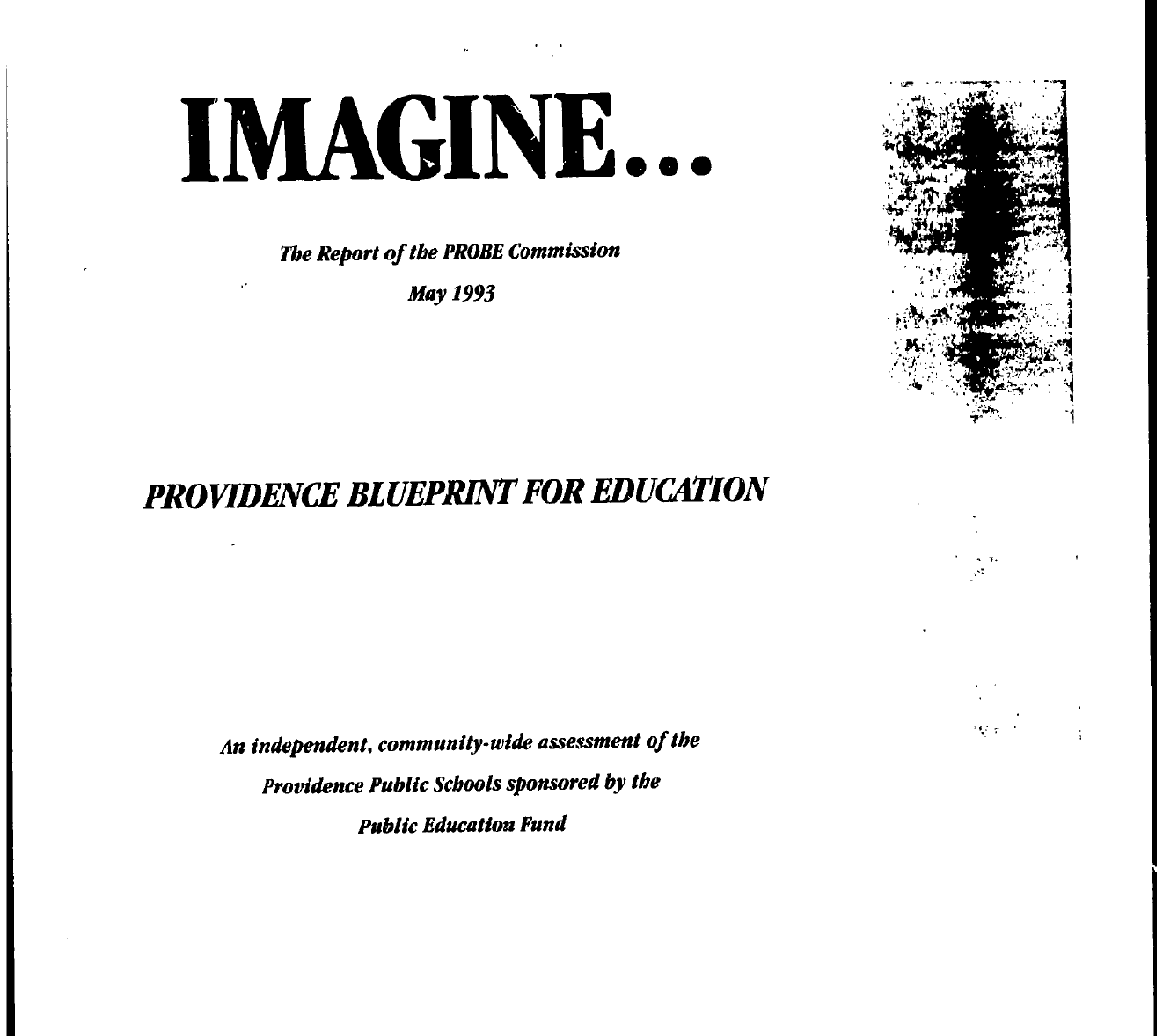
The report was led by top educators and business leaders and took a year to prepare. It included hundreds of surveys and interviews and it was funded by the top corporations in the state.
The report found that Providence’s teaching techniques were lacking; the high schools performed poorly, and there were “troubling questions about the equity of opportunity offered to children with special needs.” The report identified problems with English learning programs, lack of commitment by teachers, concerns about safety in the schools and increasing discipline problems.
GET THE LATEST BREAKING NEWS HERE -- SIGN UP FOR GOLOCAL FREE DAILY EBLASTThe report was detailed both in the assessment and in recommendations. It included timelines and priorities.
The 123-page report concluded, "Without question, better schools are within reach of Providence.”
But, more than 25 years later Providence schools are arguably worse.
GoLocal looks at the similar findings in the 1993 report as yet another analysis released, as the new report by Johns Hopkins University’s education program released on Tuesday deemed Providence schools as having deficiencies in learning, questions about safety, and a lack of leadership.
Same Issues -- Decades Later
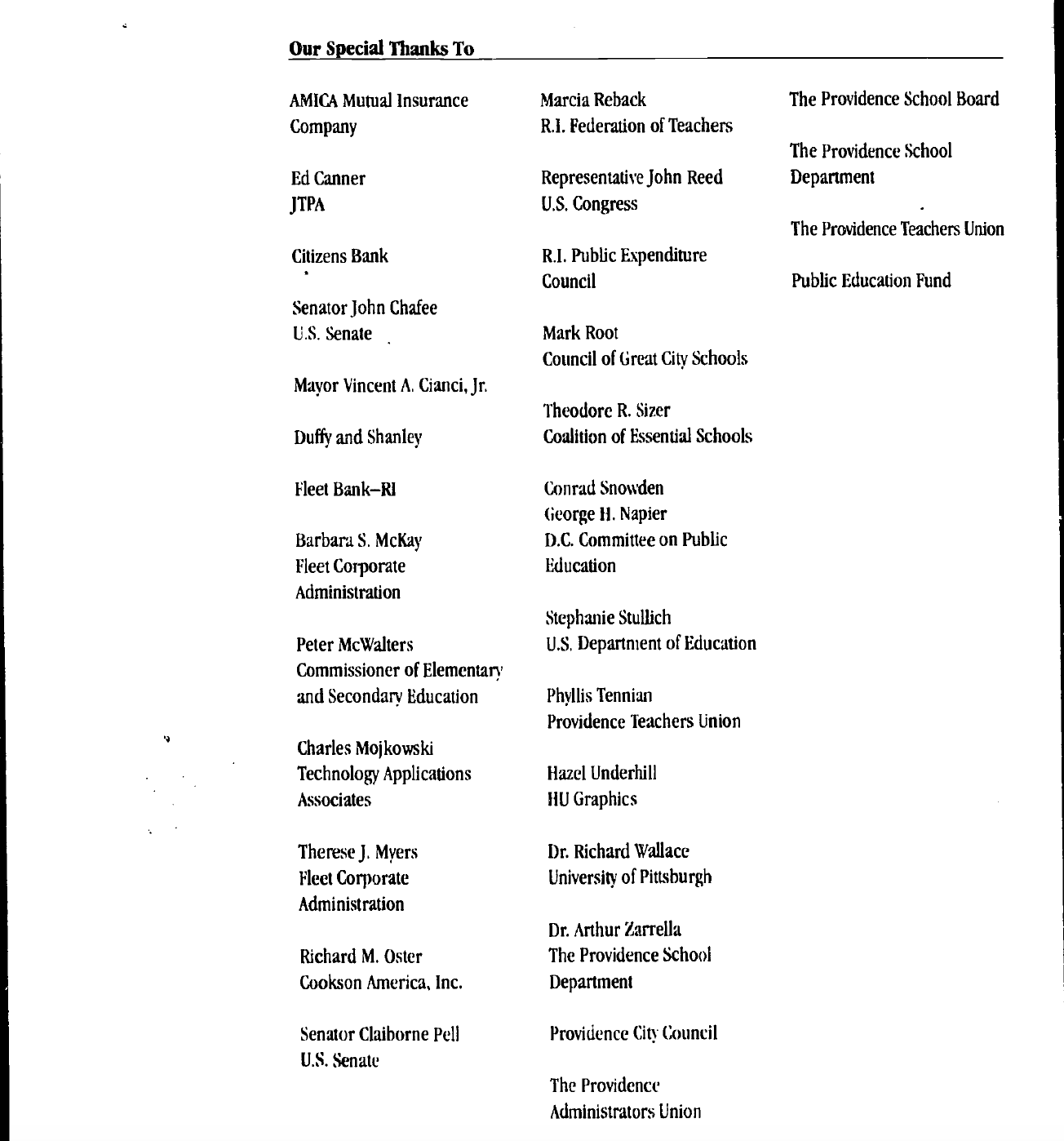
In 1993, the evaluation was led by then-former President of the University of Rhode Island Ted Eddy. The review process took approximately a year and the commission included 33-members — including union Presidents Marcia Reback and her successor Phyllis Tennian.
“This report is a message of encouragement, not despair. It is an attempt to be perceptively honest about where the Providence public schools currently stand, what steps need to be taken to change them, and what results can be expected from the consequent transformation,” wrote the 1993 report.
The report said, “Our prescriptions are simple enough so that progress is easily measurable.”
The 1993 report checked all the boxes — it found that change could happen if "the Governor and General Assembly recognize that Rhode Island must do a far better job of looking out for Providence with its unique populations and problems.”
The report’s commission included a number of prominent Rhode Island business leaders who lived in the state, including then-Cookson executive Don Carcieri, Gilbane’s Paul Choquette, real estate developer Arthur Robbins, and former bank CEO Henry Woodbridge. All of the business executives were Rhode Island-based.
“We believe that essential, major changes can be made without reliance on new funding…By our count, only 15% of the Commission’s recommendations may necessitate extra funds,” wrote Eddy in the cover letter to the report.
“‘We never get a chance to talk,’ and ‘they never listen to us’ are comments we heard most often as we listened to Providence’s teachers, students, parents, principals, and administrators,” found the report. “Poor communication poisons relationships and cripples Providence schools.”
Unlike the Johns Hopkins report, the 1993 report compared Providence Schools to peer sized school systems around the country and found Providence to be underperforming in almost every measure and poorly funded. Providence was amongst lowest per-pupil funded in both a comparison to eleven districts across the country and in comparison to other school districts in the northeast.
And, the report found that the biggest discrepancy was in state funding — Providence was significantly underfunded compared to its peer school systems across the United States.
Another key finding in the 1993 report was that Providence students spent far fewer hours in school than in peer cities — students in Rochester, New York spent 144 more hours a year in school than Providence students. And, teachers in Rochester spent 177 more hours per year.
Safety and Discipline
The 1993 report singled out issues of safety, “Principals and teachers are no more pleased about discipline problems. They say too much time and energy is spent trying to maintain order. High school suspensions have increased 100% during the last 10 years…while the school population grew by only 20%.”
1993 Recommendations:
1) There needed to be “recognition and resolve” to identify the issues and have an ongoing commitment to improving Providence Schools. “We have found too often a school system fragmented by suspicion and pursuit of personal or narrow group interest. It has few commonly shared goals, little sense of focus and priority, and even less confidence and pride," wrote the report.
2) Create smaller learning environments — specifically, breaking up the middle schools into smaller units of 150 to 300.
3 Lengthen the students “working day.”
4) Lengthen the teacher’s “working day.”
5) Expect teachers to meet with parents.
6) Lengthen teachers working year.
7) Redesign the process for school board appointments — create aboard nomination commission.
8) Conduct a national search for a superintendent.
9) Conduct a national search for administrators.
10) Institute School-based hiring for teachers.
11) Establish and Enforce a Strict Code of Ethics.
12) Redesign the budget process.
13) Allow principals to choose their staffs.
14) Revise accountability of custodial services.
15) Organize regular discussion sessions for teachers.
16) Organize student committees.
17) Establish informational student town meetings.
18) Establish informal parent town meetings.
19) Redesign monthly principal meetings.
20) Establish goals by and within each school.
21) Establish site management at five prototype schools.
22) Institute professional development and evaluation of school board.=
23) Institute professional development and evaluation of central administration.
24) Institute professional development and evaluation of principals.
25) Institute professional development and evaluation of teachers.
26) Institute school-based development designed by teachers.
27) Institute new system for teachers and staff evaluation and termination for unsatisfactory performances.
28) Implement 60/40 funding for Providence and guaranteed student entitlement
29) Hire full-time grant writer
30) Allocate funds to address immediate priority needs
31) Encourage community to donate expertise and facilities
32) Offer social services in four to six schools
33) Increase business community involvement in schools
34) Support early childhood education
35) Support multicultural arts program
36) Develop integrated and networked data collection and dissemination system
37) Support and recognize promising programs
38) Review and improve areas of concern
READ JUNE 2019 JOHNS HOPKINS REPORT BELOW
Johns Hopkins Providence Schools Report


