


30 Things that Have Happened to Providence Schools Since Johns Hopkins Report Was Released
GoLocalProv News Team and Kate Nagle
30 Things that Have Happened to Providence Schools Since Johns Hopkins Report Was Released
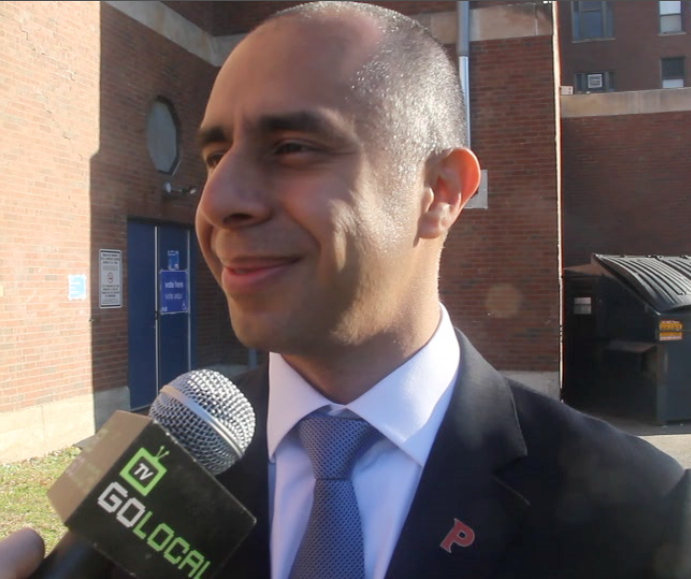
Over the past two-plus months, the school system has been deemed one of the worst in the country, the state has moved to take over the schools and there are growing issues of control, transparency, and inclusion.
Jennifer Wood, who is Executive Director of the Center for Justice, spoke to the organization's legal motion filed Wednesday on behalf of parents and students “to require engagement and transparency" in the schools' takeover.
GET THE LATEST BREAKING NEWS HERE -- SIGN UP FOR GOLOCAL FREE DAILY EBLASTOne of the key findings by Johns Hopkins was “most parents feel shut out of their children’s education.”
The report states, “Parents are marginalized and demoralized. In a system that is majority Latino, we expected to encounter multiple initiatives and programs that connected parents to the schools their children attend. That was simply not the case. The lack of parent input was striking on its own, but the widespread acceptance of this marginalization was of particular note.”
Despite the findings, Rhode Island's Education Commissioner Angélica Infante-Green said she and she alone will select the next Superintendent to oversee Providence schools — which in approximately 30 days will transfer state control.
READ The 30 Things that Have Happened to Prov Schools Since the Johns Hopkins Report Was Released Below
At the crux of it, said Wood, is having a clear, legally delineated role of parents and families — and specifically, in the process of selecting a Turnaround Superintendent for Providence.
Previous to the filing, GoLocal had reported in August on concerns raised by parents, teachers and student organizations on the state’s process for transparency -- and Infante-Green's refusal to open the selection process.
“That’s definitely something we call out in the motion to intervene,” said Wood in an interview with GoLocalProv. “That’s a good example of transparency and inclusion are important to families. We have a moment here. Someone will be selected for the turnaround superintendent, and that’s a critical role. Parents and students say we need a leader that has an educational philosophy that we know. Parents and students know the schools, they live this — and they feel they have not been well served. We understand that there has to be screening and vetting. But what are the criteria, what are the qualifications?”
“It’s with that concern in mind, that the parents and students filed the motion before the show cause hearing, so that it includes our perspective [on the process] now,” said Wood. “It’s an easy problem to solve, if the community has the ability to weigh in now. This isn’t about slowing down the process. But there’s no indication [legally] that the Commissioner has the authority to appoint a superintendent. We want to work with her.”
“With transparency and accountability, we need to know about the metrics for progress and success. Is there an exit plan? What determines success test scores? Higher graduation rates? Increased confidence in school culture? Are there measurements of success along the way — what happens if we’re two years in and nothing’s budged? Are we trending upward?”
READ The 30 Things that Have Happened to Prov Schools Since the Johns Hopkins Report Was Released Below
30 Things that Have Happened to Prov Schools Since the Johns Hopkins Report Was Released

June 26, 2019
“It’s a Crisis” Says Raimondo of Providence Schools; One of the Worst School Systems in U.S.
Rhode Island Governor Gina Raimondo called Providence schools a “broken system” following the release of the scathing Johns Hopkins report — but stopped short of calling for a state takeover of the state’s largest school district.
“Unfortunately, I’m here with upsetting news,” said Raimondo at the press conference with Providence Mayor Jorge Elorza and Education Commissioner Angelica Infante-Green of the “devastating report. “It sheds light on what is clearly a broken system.”
“Shocking, not because I didn’t expect to learn that there were problems — we saw the test results — we’ve seen challenged test results for a long long time — the report showed me it’s much worse than I realized,” said Raimondo. “It’s beyond low test scores — it’s the basics — teachers students and educators don’t feel safe in their schools — and real learning isn’t happening. It’s on us to fix this system.”
Raimondo cited that John Hopkins experts called Providence the worst school system in America that they have analyzed.
“Our challenge is to channel our outrage into action. I’m more determined than ever to do whatever it takes to turn this system around and give these kids a chance,” said Raimondo.
Raimondo noted that the first parental engagement forum is scheduled for Wednesday at 6 p.m. at the William D’Abate Elementary School at 60 Kossuth Street in Providence.
“Look in the mirror. Get ready for big change — don’t look to point fingers,” said Raimondo. “The finger to point at is a broken system that’s letting students, parents, and teachers down."

July 3, 2019
Hispanic Leaders Confront Elorza Over Schools - Suggest He Resign at Prov School Meeting
At the end of one of the community “conversation” about Providence public schools, Jorge Elorza was confronted by State Senator Ana Quezada who stepped up, pointed in his face, and said, “You have had five years. You are responsible for this mess.”
Elorza seemed caught off guard by Quezada’s verbal attack and immediately raised his voice. “This is not the time. This is not the moment,” said Elorza, who recently returned from Hawaii where he traveled to a Mayors' conference just two days after the release of the report conducted by Johns Hopkins University deeming Providence schools among the worst in the United States.
Quezada did not back down. “You act like you have nothing to do with it. Cut it out," she said.
Elorza scurried away from Quezada.
The community meeting was the sixth of the eight community "conversations" being hosted by Rhode Island’s new Commissioner of Education Angélica Infante-Green.
Pichardo Asks If Elorza Has Thought of Resigning
Just a few minutes earlier, former State Senator Juan Pichardo in a statement during the comment period said, “Mayor...you came up short. Mayor, have you thought of resigning?”
“You must have struggled with that...I am sure it is hard to sit there and hear how things are coming undone,” said Pichardo.

July 1, 2019
Providence Schools Are Not the Only Ones in Trouble — See the Other RI School Systems with Similar Performance
A GoLocal review of the performance of Rhode Island's public schools — with a focus on middle schools — finds that Cranston, Pawtucket, Woonsocket, Newport, Central Falls, West Warwick, and some charter schools look very similar to Providence’s poorest performing schools.
At Joseph Jenks Middle School in Pawtucket, only 8 percent of students are meeting or exceeding expectations for English Language Arts (ELA). Math results are even worse — just 6.45% meet or exceed expectations.
The Pawtucket school's performance is similar to many of Providence’s lowest-performing middle schools.
SLIDES: See Middle Schools Across RI With Similar Performance to Providence's "Crisis" Schools BELOW
Rhode Island Commissioner of Education Angélica Infante-Green told GoLocal in a phone interview that she understands there are problem areas around the state.
“I have only been on the job for two months,” said Infante-Green. “We have work to do everywhere - we are starting in Providence” in discussing the education challenges that litter the state, after Providence's schools were deemed "broken" and in "crisis" following the Johns Hopkins report.

July 8, 2019
Wall Street Journal Calls Providence “An Education Horror Show”
The Wall Street Journal has named Providence “an education horror show — a case study in public school failure and lack of accountability.”
This is yet another national hammering of the capital city and the failed education system.
The Wall Street Journal editorial writes, “No surprise, then, that only 5% of Providence eighth graders on average scored proficient in math in the 2015 through 2017 school years. That compares to 21.3% in Newark, N.J., where students have similar socioeconomic backgrounds. Low-income students in Worcester, Mass., not far away, were twice as proficient as those in Providence.”
The Wall Street Journal cited episode after episode from the John Hopkins study.
“One student reported that ‘my best teacher’s desk was urinated on, and nothing happened.’ Another noted a teacher ‘was choked by a student in front of the whole class. Everybody was traumatized, but nothing happened.’ One district leader observed, ‘the students run the buildings.’”
The Wall Street criticizes Governor Gina Raimondo and legislative leaders for passing the so-called “Evergreen” legislation that was pushed by Rhode Island union leaders.
“The union’s latest political focus is ‘evergreen’ contracts that stay in place even after they expire, giving the union more leverage in negotiations with the school district. Student results are an afterthought,” writes the Wall Street Journal.
“Democratic Mayor Jorge Elorza reflected the liberal political class’s low expectation by telling the Johns Hopkins reviewers he’d give Providence schools a C grade.,” cites the Journal.
In contrast, Hopkins researchers told Raimondo Providence may have the worst schools in America.
Lastly, the Wall Street Journal cites the high level of per-pupil spending in Providence.
“Democrats as ever blame a lack of funding, though the district spent nearly $18,000 per pupil in 2017—about 50% more than the national average. In a system with any accountability, this would all be judged a disgrace and people would be fired. But this is a government failure, underwritten by entrenched union power. That’s why the Democratic presidential candidates won’t show up in Providence, but maybe Donald Trump should.”

July 10, 2019
RI Has One School System That Has Worse Test Scores Than Providence - The State Runs It
The man who pushed for the State of Rhode Island taking over Central Falls schools in the early 1990s is raising concerns about a state takeover of the Providence schools.
Former Central Falls Mayor Tom Lazieh told GoLocalProv.com this week that he lobbied then-Governor Bruce Sundlun to take over the underperforming Central Falls schools system in hopes of better financial support and stronger educational outcomes, but now more than two-plus decades later, the former Mayor says the experiment has been an educational failure.
“The State takeover of schools doesn’t mean better quality,” said Lazieh. And he has words of warning about a Providence takeover.
Providence schools' performance on the state’s new comprehensive tests mirrored on the Massachusetts model -- RICAS -- were an embarrassment and in part lead to a comprehensive assessment by Johns Hopkins University.
The Wall Street Journal has named Providence “an education horror show — a case study in public school failure and lack of accountability.”
However, if Providence is a horror show, then what are the Central Falls schools?
According to last November’s RICAS scores only 13.7 percent of Providence students meet or exceed expectations for English Language Arts (ELA).
So if Providence’s ELA scores are deplorable, what term should be used to describe Central Falls' ELA scores — only 9.6 percent on Central Falls students meet or exceed expectations for ELA — 30 percent lower than Providence students.
Math scores on the RICAS were even worse. Only 10.3 percent of Providence students meet or exceeded the standard for math, but that was 33 percent higher than the state-run Central Falls students. Only 6.9 percent of Central Falls students met or exceeded the standards for math.
Lazieh says “the state has failed.”

July 11, 2019
RI Education Commissioner Hires Godfather of Her Son for Top Position
Victor Capellan, the newly appointed senior adviser to Rhode Island Department of Education Commissioner Angélica Infante-Green, is the godfather to the new commissioner’s son, GoLocal has learned.
The Commissioner was appointed to correct the State’s lagging test scores and develop a strategy to correct Providence schools.
It was announced that Capellan would work for Infante-Green at Rhode Island’s Department of Education earlier this week. Previously, Capellan was the Superintendent of the Central Falls School system -- the worst performing system in the state according to RICAS test results. READ MORE HERE.
Josh Block, spokesperson for Governor Gina Raimondo refused to answer if questions about the relationship — specifically if the Governor knew of the personal family relationship between Capellan and Infante-Green.
And, the Governor’s office refused to answer if the Governor approves of the hiring.
Presently, Raimondo is attending a tech conference in Idaho.
Capellan reports to Infante-Green. She earns $231,726.04 and Capellan's salary has not been disclosed, but it is estimated to be in the $175,000 range.
When asked about the personal family relationship the Commissioner’s office issued the following statement.
"Commissioner Infante-Green has worked with Victor Capellan for more than two decades. She has great respect for his knowledge of the state, his leadership skills and his educational expertise. As a result, she asked him to join her staff as a senior advisor. Due to their great personal respect for him, several years ago she and her husband asked Victor to stand as one of their son's godfathers, which he graciously accepted."
According to Rhode Island's ethics statute and regulations, nepotism and favoritism states, “You may not participate in official actions, decisions or deliberations that affect your family members, business associates, outside employers or any business you represent. You may not hire, evaluate, supervise or otherwise participate in employment decisions affecting your family members.”

July 16, 2019
Is There a Plan to Make Providence Schools Safe?
Providence City Councilman Jim Taylor says the city’s current investment in school safety — in conjunction with keeping the buildings “warm, safe, and dry” — is not “nearly enough” as public safety officials met with City Council members this week to discuss school safety, with the start of the 2019-2020 school year just seven weeks away.
The Providence City Council Special Committee on Public Safety, chaired by Taylor, met Monday to address “School Safety Plans” — and reports on Providence schools conducted prior to the scathing Johns Hopkins report which identified significant safety issues in the city’s public school system.
While schools lack safety, tens of thousands of dollars were invested to install a comprehensive security system in Providence Mayor Jorge Elorza's office.
“The $20 million [investment for the coming year] is not going to fix all the schools,” said Taylor, in an interview with GoLocalProv.com following the meeting. “The number we hear is needed is $500 million.”
“And of that $20 million, I’d say 90% of that will be for things such as roofs and toilets,” said Taylor of the city’s overwhelming need to tackle school repairs. “And I don’t know which schools they’re doing first.”
The Hopkins report identified significant safety issues including fights, bullying, and gangs. According to one teacher, “I had 12 gang members in my classroom who ended up being arrested. Nobody had warned me.”
“In three schools, our team was told by multiple students about ‘arranged fights’ ‘often involving girls’ that took place ‘especially on Fridays’ and that were ‘actively promoted on social media,’” stated Hopkins in their report.
“School culture is broken, and safety is a daily concern for students and teachers,” said Hopkins.
3M Window Film, Single Points of Entry
Taylor acknowledged that the meeting did not specifically address the Hopkins report, as his committee had a limited scope pertaining to the city’s budget — and investments.
According to Taylor, Providence Police Chief Hugh Clements discussed safety measures taken in the prior school year — including the investment of “3M” film on school windows to make them impact-resistant — and what can be accomplished in the coming year.
Taylor said that Clements told council members that the previously conducted school safety reports — completed in 2018 — will be shared with council members in the coming weeks.
For the coming school year, Taylor said a major emphasis will be on securing “single point of entries” at schools — of which public safety officials said “one” school currently met the criteria they are looking to implement at all Providence schools.

July 16, 2019
Former Controversial Central Falls Superintendent Gallo to be Named Interim in Prov
Former controversial Central Falls Superintendent Frances Gallo has been endorsed to be the interim Superintendent in Providence, the Providence School Board announced on Tuesday.
Gallo resigned from her position at Central Falls in January of 2015, as GoLocalProv reported.
Her resignation came just over three years after she received a vote of “No Confidence” from Central Falls teachers.
“Fran Gallo has a long and impressive record of leadership both in Providence schools and throughout Rhode Island, and is known for her ability to make tough decisions. She has experience at every level, from classroom teaching to administration, and in particular, has many years of experience in the Providence Public School District, and understands the needs of our students, teachers, staff, and facilities. Dr. Gallo values community input, and has a record of being accessible, engaging families and students, and incorporating community voice in her decisions as a school leader,” said Providence School Board President Nick Hemond.
“I am excited that Dr. Frances Gallo will be considered as interim superintendent for our Providence public schools. Dr. Gallo’s decades of experience, spanning service as a teacher to the highest levels of district administration, make her an incredibly qualified candidate. We have a lot of work do to provide our students’ the high-quality education they deserve and Dr. Gallo’s leadership will be critical moving forward,” said Providence Mayor Jorge Elorza.
Gallo's Central Falls Controversies
In 2011, GoLocal report about a series of issues in Central Falls under Gallo's tenure.
In May of 2011, GoLocal reported:
Central Falls Superintendent Frances Gallo this morning denied that teachers are being discouraged from reporting violent incidents to police.
She also disclosed new details about an assault by a student against a teacher at the Calcutt Middle School last week.
Gallo said the assault took place in a classroom reserved for students with “significant behavioral and academic challenges.” She said one student began to behave in a way that required that the teacher restrain him, using techniques that special ed staff have been trained to use. “Unfortunately, the teacher was injured in the process,” Gallo said.
Gallo becomes the second former Central Falls Superintendent to take a new position following Victor Capellan, who was appointed senior adviser to Rhode Island Department of Education Commissioner Angélica Infante-Green last week, as GoLocalProv reported.
In another report, GoLocal found that top administrators were being paid, but had not worked in months.
Three top school administrators in Central Falls who have not been working for months are still on the payroll for the school district—two of them earning six-figure salaries, according to records obtained by GoLocalProv.
A copy of the payroll lists three administrators as receiving the following salaries—even though sources confirm they are no longer working in the district:
■ Joseph Rousseau, Principal at Captain Hunt Elementary School—$80,000
■ Elizabeth Legault, Principal at Central Falls High School—$105,500
■ Sonn Sam, Co-Principal at Central Falls High School—$100,000
The payroll list was provided by Finance Director Giovanna Venditti in response to a GoLocalProv request for a list of current employees and their salaries. But yesterday, a spokeswoman for the district said Sam and Rousseau had resigned in March of this year while Legault is currently on administrative leave. Sources tell GoLocalProv that Legault has been on leave since early October 2010.
Despite his resignation, Sam continues to earn as much as the current Principal at Central Falls High School, Evelyn Jones. And, even though she is on leave and has not been at work for most of the school year, Legault remains the highest-paid administrator at the school level—not counting the pay of district-wide administrators.
Officially, Sam resigned for “personal and family reasons,” according to a district news release. The district has not disclosed the reasons for why Rousseau resigned or why Legault was placed on administrative leave.
Yesterday, district spokeswoman Yaviri Grosso-Escalera was unable to provide an explanation for why Legault, Sam, and Rousseau are still listed on the payroll.
About Gallo
Gallo served as superintendent of Central Falls School District from 2007 until 2015.
Most recently, she has served as a senior advisor to the Blackstone Valley Prep Mayoral Charter Network.
Prior to that, Gallo served in a variety of capacities from 2002 to 2007 with Providence Schools, including deputy superintendent, transitional superintendent and chief of administration.
Prior to her work in Providence, Gallo served as superintendent of the Jamestown, RI, public school system.
She holds Bachelor of Science and Master of Education degrees from Rhode Island College and an Ed.D. in educational leadership from NOVA University.

July 19, 2019
Council President Matos Endorses Providence School Takeover
Providence City Council President Sabina Matos has issued a statement regarding the state take over of Providence Schools.
As GoLocalProv reported on Friday, Providence Mayor Jorge Elorza got the official call this week from RI Education Commissioner Angélica Infante-Green that the state will be taking over Providence schools.
Elorza on Friday morning is holding a press conference calling for a state takeover — a decision which was, de facto made months ago by Governor Gina Raimondo’s administration.
The Rhode Island Board of Education is expected to unveil the takeover plan at its regularly scheduled meeting on Tuesday.
Matos Issued the Following Statement:
In the aftermath of the Providence Public School District Community Forums and on the eve of a state takeover of our public school district, the City Council remains committed to playing a collaborative role in our children’s educational future.
We look forward to the opportunity to work in partnership with RIDE and to help foster solutions that will improve educational outcomes for our kids. Council President Matos and the Council's finance team looks forward to continued dialogue with Commissioner Angélica Infante-Green and the Governor's senior staff to achieve this end.
Despite the Mayor not being communicative or transparent with the Council in these preliminary stages of this process, we remain unwavering in our shared responsibilities to provide students with safer and cleaner school buildings, a more relevant and rigorous curriculum, and a quality of education that sets them up for success.

July 19, 2019
Leaders Call Out Elorza for Claiming Credit for Upcoming Providence Schools Takeover
Jorge Elorza got the official call this week from RI Education Commissioner Angélica Infante-Green that the state will be taking over Providence schools.
The takeover seems to be a surprise to no one -- except Providence’s Mayor. In April, GoLocal first reported that the Providence schools were likely to be taken over after a state review process.
Elorza on Friday morning is holding a press conference calling for a state takeover — a decision which was, de facto made months ago by Governor Gina Raimondo’s administration. The Rhode Island Board of Education is expected to unveil the takeover plan at its regularly scheduled meeting on Tuesday.
Teachers, Council President Call Out Preemptive Press Conference
Providence Teachers Union President (PTU) Maribeth Calabro called Elorza's announcement of Friday's event "confusing."
"While the PTU fully expects and expected that there would be state intervention of some kind, we believed that we would be informed on Tuesday at RIDE as to what that might look like," said Calabro. "[Thursday] evening, the Mayor’s announcement has left us confused, as we thought that was already established that this was happening, and with his announcement, we don’t understand what the level of communication and transparency there is between the state and the city."
"It is the hope of the PTU membership that their message is cohesive and aligned so that the focus on working together to plan and move onto implementation for the opening of school," said Calabro.
City Council President Sabina Matos said that she had a previously scheduled engagement Friday morning, but that even if she was available, she would not attend the event.
"I think the press event is premature -- we have to see what RIDE is going to say," said Matos. "I was invited but I declined to be there. Even if I was around, I wouldn't have gone -- we have to see what the Commissioner is going to present."
Matos confirmed she had spoken with the Commissioner this week, but only said that she would defer to what Infante-Green announces next week.
"I don't think the city should be 'calling' for anything until we hear what the proposal is that the Commissioner is going to be putting forth," said Matos.
Over the past few months, Johns Hopkins University conducted a study which found Providence Schools to be the worst in the country. Elorza missed a number of the "community" meetings on education when he traveled to Hawaii with his family for a mayors' convention.

July 23, 2019
GoLocal Unveils that the Chair of the State's Board of Education Has Never Visited a Providence Public School in 4+ Years
According to the Chair of the Providence School Committee, Barbara Cottam, the State of Rhode Island’s Chair of the Board of Education has never visited a Providence School other than for “maybe a press conference.”
Cottam, a long-time Democratic staffer and close personal ally to Governor Gina Raimondo was appointed by Raimondo in February of 2015. She refused to respond to a series of questions about her involvement with Providence schools during her four-plus years as chair of the Board. Today, she serves as a top communications executive for Citizens Bank.
Nick Hemond says that in the three-and-a-half years that he has chaired the Providence School Committee Board, he and Cottam have only met one time — two years ago.
Hemond while appearing on GoLocal LIVE on Monday said, “We met one time and it was in response to talk of this sort of thing -- two years ago under Ken Wagner [former RI Commissioner of Education] and you know we pushed back at that time to say listen, all of our winds are together.”
According to minutes of meetings of the Board of Education, it has never held a meeting at a Providence School. Neither Hemond nor other schools officials remember Cottam visiting a Providence school in her tenure as chair.

July 23, 2019
State Board of Education Votes to Take Over Providence Schools
The Rhode Island Council on Elementary and Secondary Education voted to authorize a state takeover of Providence schools.
The unanimous 7-0 vote comes a month after the release of the Johns Hopkins report and three months after Governor Gina Raimondo announced a state review of the schools.
Questions persist as to how this takeover will be different from the state's takeover of Central Falls schools. Central Falls school's test results are 30+ percent lower than Providence's scores.
Recently, former Central Falls Mayor Tom Lazieh told GoLocalProv.com that he lobbied then-Governor Bruce Sundlun to take over the underperforming Central Falls schools system in hopes of better financial support and stronger educational outcomes, but now more than two-plus decades later, the former Mayor says the experiment has been an educational failure.
“The State takeover of schools doesn’t mean better quality,” said Lazieh. And he has words of warning about a Providence takeover.
Two weeks ago, Gary Sasse, the former Director of Administration for the State of Rhode Island said on GoLocal LIVE’s Business Monday, that there was a significant opportunity to improve education in Central Falls and the state has failed the children of Central Falls.
“I want to thank the Council for its leadership, decisiveness, and support tonight. I will need everyone involved to display the same qualities as we work to turn Providence schools into the model system that our students deserve. I look forward to working with my team and the entire community as we develop a plan for fundamental change that lasts for generations,” said Angélica Infante-Green, Commissioner of Elementary and Secondary Education.
Following the decision, Providence Teachers Union President Maribeth Calabro issued the following statement:
“Providence teachers want what Providence students need. We hope the board, elected leaders, parents, students, and educators with their union can work together to follow through on making these schools safe, supportive, respectful and welcoming environments for everyone who walks through the doors. We look forward to doing that work together—as a community.
As the teachers in the classrooms every day, we are acutely aware of the challenges facing our students and our schools. We are committed to tackling those challenges head-on and working with the state board and others to take action on these issues quickly. For years, we have tried to draw attention to gaps in curriculum, social and emotional concerns, and the declining conditions we face, and we hope these issues will finally be addressed collaboratively and thoughtfully.
We want all public schools to be places where parents want to send their kids, educators want to teach and kids can thrive.”

July 26, 2019
Mattiello Disappointed RI Dept. of Education Has No Providence Plan, Commissioner Offers No Details
Despite having been working towards a Providence School takeover for more than three months, Rhode Island’s Commissioner Angelica Infante-Green is now backing away from promises of transparency.
Her office is now refusing to layout plans as to how to improve Providence Schools.
Appearing on GoLocal LIVE this week, Speaker of the House Nick Mattiello discussed Rhode Island Department of Education voting to take over the beleaguered Providence public schools, following the Johns Hopkins report which identified the glaring problems in Providence -- including school buildings. He voiced concern that there is no public plan.
Mattiello warned that the state was not prepared to assist with additional financial resources beyond those already provided.
“If you don’t invest each and every year you’re going to have a disaster on your hands. They have a problem in Providence and that’s going to have to be addressed. The state is not going to come in with a large sack of money and address the Providence infrastructure needs,” said Mattiello. “They have to come up with a plan. I’m disappointed that I don’t see one at this point.”
“I’m interested to see what the Commissioner and Department of Education’s plan is. In the General Assembly, we passed a lot of legislation addressing curriculum, governance, and so forth that should be of assistance throughout the state,” said Mattiello. “But there are a lot of problems — disciplinary problems, curriculum problems, teachers being disrespected — I think you have to start foundational at the beginning and just rebuild the network one piece at a time.”

July 31, 2019
Role of Elorza Will be “Small or Non-Existent” in State Takeover of Providence Schools, Says Calabro
Providence Teachers Union President Maribeth Calabro joined GoLocalProv News Editor Kate Nagle on LIVE where she spoke to the transition plans that the PTU released this week, how schools are readying students and parents for the start of the school year — as the state will not fully take over the schools well into the fall — and more.
Calabro said she has been in regular touch with new statewide education commissioner Angelica Infante-Green.
“There’s nothing officially codified in language — what we’ve done is had conversations,” said Calabro. “I don’t think the Commissioner is ready to put the pen to paper because she hasn’t brought all the stakeholders together. I think we’re going to take the time of the 90 days to meet together and have conversations.”
Calabro spoke to how parents should know that they won’t see wholesale change at the start of the school year, following impassioned community forums about Providence’s failing schools on the heels of the release of the Johns Hopkins report at the end of June.
“I don’t know that [parents] know that and that’s my fear — that nothing’s going to happen overnight — and so I think what we need, if nothing else, we heard in these forums ‘lack of communication’ — so starting next week I think we need to start preparing families for the start of school,” said Calabro. “Things aren’t going to look markedly different going forward for a bit but moving forward there are some changes you can expect, and here are some things we’re going to need you to help us with. I think if we’re clear about that, that will lessen the anxiety.”
Calabro said she didn’t have a sense as to what the structure will look like after 90 days.
“I’ve heard there will be a new superintendent. We currently have Dr. Gallo and she’s been deemed the person who’s going to open the schools — so she’s going to make sure all the…busses and kids are in the right spot and she already has a plan. [But] in terms of what happens next, that will be for the Commissioner,” said Calabro.
Calabro said that she doesn’t believe Providence Mayor Jorge Elorza however will play a role moving forward.
“The role of his office moving forward is very, very small, if at all,” said Calabro. “There can’t be this amalgamation of influences and leadership and people vying for position. I think there needs to be a very clear path of who’s in charge and who’s answering to whom and how we’re going to address certain needs, but in my opinion [the role of the Mayor’s office] is small or non-existent.”
Teachers’ Contract

July 31, 2019
To Fix Providence School Buildings Will Cost Billions
Nearly all of the Providence schools are old, past life-cycle and broken down. The cost to make them just “safe, warm and dry” but not modern, technologically functioning and state-of-the-art is more than $400 to $500 million, according to a blue-ribbon report.
The cost to have a modern collection of buildings is in the billions.
The $400 million number is just the beginning. The strategy of making schools meet just a minimum standard may be just throwing good money after bad, in many cases.
As an example, Mount Pleasant High School’s repair cost is $31,070,239 according to the data developed in 2017. Since then, construction material costs have risen 20 percent, according to multiple developers GoLocal spoke with.
Rehabbing Mount Pleasant High School — a building constructed in 1931 by the Public Works Administration — may be less expensive than building a new structure, but after making the building “safe, warm and dry” the building will nearly 90 years old.
The "Schoolhouses Report" found that replacing Mount Pleasant High School would cost $107,352,000, but that too may be an underestimation. In Fall River, Massachusetts, the cost of replacing Durfee High Schools is estimated to exceed $263 million.

August 1, 2019
Providence School Board Chair Decries Filthy Conditions at Schools After Visiting Buildings
Providence School Board Chair Nick Hemond called out the conditions at least two Providence schools during summer school — and raised questions about who is in charge to ensure schools’ cleanliness.
In June, the Johns Hopkins report on Providence schools had identified, among other problems, glaring facility issues.
Hemond said that in his visit Wednesday to Anthony Carnevale Elementary School on Springfield Street in Providence, he saw a school “that hadn’t looked like it had been swept in quite some time.”
“That's a school we've had complaints about mice,” said Hemond. “The reason I saw is that breakfast and lunch are being served in the classroom [during summer school for students].”
“I took [Providence Teachers Union President] Maribeth Calabro in to see some schools,” said Hemond, after school officials would not let Calabro into facilities earlier in the week. “[At Carnevale], it looked like the school hadn't been swept in quite some time.”
“I was told that Aramark told teachers it’s ‘not our job’ in the summer. If that's true, we shouldn't have summer school if there aren't custodians,” said Hemond. “They tried to direct my attention to how great the second and third floors are — but there aren't kids there.”
Backed Up Pipes -- and a Sinking School
Hemond spoke to visiting Del Sesto Middle School up the street.
“We had a complaint of a sewer problem causing backups,” said Hemond. “The kitchen at DelSesto, I will tell you, was so clean you could eat off the floor.”
Hemond said the issue of the sewer pipe had been fixed — but that the building itself is “sinking.”
“The pipe has been fixed and deodorized. There's no river of sewage flowing under the building. We think it was staff or students throwing things down the toilet that shouldn’t have been there,” said Hemond.
“That building's sinking -- it was built in 2002, and sunk 7 inches since it was built,” said Hemond. “There's no safety issue, but we've caulked the cracks to make sure nothing gets in.”
Chain of Command
“Everyone has my number -- I'm not hard to find,” said Hemond of being made aware of problems. “If you have a facility issue -- call me -- email me at [email protected].
“I think [these issues] should be handled at the school level. Whether it's supposed to work that way or not, sometimes it doesn’t,” said Hemond. “I met with the Commissioner [Wednesday] morning. The state doesn't want the board to go away, we'll be involved in some fashion [when the state takes over] -- we can still be advocates, we can be a constituent service.”
“If the Commissioner is the one ultimately deciding what's happening with [Aramark’s] contract, that's who we'll call,” said Hemond.

August 7, 2019
ACLU to School Officials: Address Racial Disparities in School Discipline in Providence Now
The ACLU of Rhode Island is calling on Providence school officials to take immediate action to address racial disparities in school discipline -- including taking 4 immediate steps.
In a letter sent this week to Acting Superintendent Frances Gallo and the members of the Providence School Board, the ACLU pointed to its review of the disciplinary data from the 2017-2018 school year, the latest that is available, to document severe racial disparities in out-of-school suspensions, especially “for relatively minor and often subjective types of ‘misconduct,’ such as insubordination and disrespect.”
ACLU’s Findings
Among the ACLU’s findings cited in the letter from the recent data:
The range of students most affected by this disparity are Black students in Kindergarten through 5th grade, “grades at which any suspensions at all seem suspect and counter-productive.”
Percentage-wise, Black students in those grades were three times as likely to be suspended as their white classmates.
A total of 201 suspensions of students in those early grades was reported, including 46 suspensions for Kindergarteners and first graders, and the vast majority of suspensions of these vulnerable children were for offenses such as “disorderly conduct” or “use of obscene language.” Suspensions like these are taking place despite passage of a 2016 law designed to limit their use.
Across all age groups, not only were Black students suspended more often, but the average duration of both their suspensions and those of Latinx students was 21 percent longer than the average duration of a suspension meted out to a white student.
These disparities have remained incorrigibly steady over time. During the 2014-2015 school year, the percentage of suspensions issued to Black students in the Providence public school district was 25.7 percent; during 2017-2018 school year, that percentage was 24 percent. Across these time periods, the percentage of Black students in the student body has consistently stayed around 16 percent.
Disturbing disparities also exist for students with disabilities. While students with IEPs composed 15 percent of the school population, they made up 28 percent of all suspensions.
ACLU’s Recommendations
The ACLU’s letter asked school officials to take four immediate steps to combat these disparities and the overuse of suspensions:
Suspension notices should specifically reference the standards in the 2016 law, which limits use of this discipline to seriously disruptive behavior, to confirm that the suspension is justified under that law.
The Administration should bar certain vague and open-ended infractions from serving as the grounds for an out-of-school suspension.
Elementary students should never be given out-of-school suspensions for any misconduct in the absence of evidence that it creates a clear and present danger to the health or safety of students or staff.
Although state law requires school districts to provide reports to RIDE on corrective actions they are taking to address suspension disparities on the basis of race and disability, Providence has never submitted such a report. One should be prepared and submitted immediately.

August 8, 2019
Infante-Green Says She Can “Break Contracts” in Providence Schools Takeover, More Districts Possible
Rhode Island Education Commissioner Angélica Infante-Green said Thursday that once the state takeover of Providence schools is complete, she'll "have the right" to break contracts -- including teachers and school vendor Aramark -- and that she sees other districts in the state as candidates for takeover moving forward.
Infante-Green made the remarks on a press call after she issued her Proposal for Decision and Order regarding the Providence Public School District (PPSD). The document details how the Rhode Island Department of Education (RIDE) intends to take control of the district.
"Last year's test scores were a wake-up call for many Rhode Islanders -- the current system is broken," said Infante-Green. "We can and must do better -- the future of our state depends on it."
Infante-Green said that the teachers' contract -- which has one-year left under its current agreement -- can be broken.
"I will have to renegotiate the teachers' contract. I think everything's on the table," said Infante-Green
On September 13, Infante-Green will convene an administrative hearing to review any evidence or testimony submitted by the parties. If the Proposal for Decision and Order becomes final, the Commissioner will appoint a State Turnaround Superintendent and/or other designees, who will work with the community to develop, build support for, and implement a Turnaround Plan for the district.
"I think once the process is over, I'll have the right to break contracts," said Infante-Green, which pressed on what her authority will be.
Infante-Green said that she has been talking with candidates for the Turnaround Superintendent Position -- but refused to give any names.
"I don't want them to run away from the job," said Infante-Green.

August 16, 2019
Ed Commissioner Infante-Green Won’t Include Parents in Selection of New Providence Schools Head
Angelica Infante-Green who had promised a new policy of transparency in working to fix the Providence Schools will not be including the public in the selection process.
Green, who when up for consideration of Education Commissioner in Massachusetts in 2018 went through a public interview process, will not include parents or any stakeholder groups in the selection process of the person to be hired to oversee the Providence Schools.
Infante-Green was not selected in Massachusetts.
Parental Involvement in Question
Repeatedly, Infante-Green promised parents who attended the community meetings reviewing the Johns Hopkins report on the failed Providence School system that they would be included in the process moving forward.
The Johns Hopkins report found, that parents were rarely included and often shunned in Providence.
“Respondents agreed that communication at the school and district level was wanting. Parents cited this as a reason for their perceived lack of engagement, feeling that it was difficult to advocate for their students. Many mentioned the absence of parent-teacher conferences at the school level and their difficulties to obtain even an annual meeting with a classroom teacher," found the Johns Hopkins Report.
Parents were quoted as saying:
RIDE needs to go to parents instead of expecting parents to come out to them. – PPSD Parent
Communication is haphazard at all levels in the schools. School to school it is different. It is not happening consistently. - PPSD Parent
It is kind of a part-time job advocating for your kid. – PPSD Parent
Because of language barriers and work schedules, if you are not linked up with outside supports or advocacy groups, there is no one standing up for you. - PPSD Parent

August 20, 2019
Elorza’s Proposal to Close Charter School Is Criticized Immediately
Providence Mayor Jorge Elorza, who for the past five years has governed over one of the worst school systems in America, is now floating the idea of calling for the closure of a local charter school -- to allow nationally-run Achievement First to expand.
The state of Rhode Island has been forced to take over Providence’s failed system run by Elorza. That process is now proceeding.
Elorza’s proposal to close a public charter school in the city -- and then move the dollars to Achievement First -- drew immediate fire.
Charter Schools Fire Back
The Rhode Island League of Charter Schools rejects the idea floated by Elorza to close an existing Providence charter school to allow for an expansion of Achievement First.
“Charter schools have always had their own system of accountability that is completely separate from the accountability that the Providence school system is now experiencing. The expansion of Achievement First in Providence could be a valuable component of a turnaround plan for Providence. However, Achievement First’s expansion should not be at the expense of other Providence charter schools,” said Keith Oliveira, Executive Director of the Rhode Island League of Charter Schools.
“Unfortunately, Mayor Elorza seeks to pit charter schools against each other rather than allowing Achievement First to expand on its own merit. We urge Commissioner Angelica-Infante Green to reject Mayor Elorza’s attempt to scapegoat other charter schools as justification for his standing in the way of Achievement First’s expansion” said Oliveira.
In addition, the Providence GOP joined in.
GOP leaders called on Elorza to give immediate approval for Achievement First to expand eventually to 3,100 students. They also asked him to support all the other existing public charter schools in Providence; to assist them in expanding to serve more students, and to welcome more public charter schools to form in the City.
GOP Co-Chairs David Talan and William Ricci, said in a statement, “Achievement First has had amazing results, with student test scores that outperform those of students in East Greenwich and Barrington. — This, while traditional public schools in Providence have been a disaster, as outlined by the recent John Hopkins report.”
In addition, the GOP said, “Achievement First currently has two Academies, with 1,300 students (about 1,100 from Providence), up to grade 7. There is a long waiting list for children to get into Achievement First (800 children for kindergarten; 500 kids for 1st grade). They eventually plan to expand, by the year 2026, to 3,100 students (about 2,600 from Providence), with 3 Academies and a High School.”

August 19, 2019
SPECIAL REPORT: Providence Schools — Health Code Violations
Inspections by the Rhode Island Department of Health of Providence Public Schools found rodent feces, broken freezers, food improperly stored, and dozens of other violations.
GoLocal reviewed the most recent health inspections at nearly 40 of the Providence elementary, middle and high schools.
Some of the violation were administrative and others were far more serious.
Pleasant View School was cited for violating a number of health codes including, “The floor in the dry storage area under a table has an accumulation of old mouse droppings. The physical facilities shall be cleaned as often as necessary to keep them clean.”
According to the Centers for Disease Control, children and the elderly are most at risk from food poisoning.
“Young children have immune systems that are still developing, so their body’s ability to fight germs and sickness isn’t as strong. Food poisoning can be particularly dangerous for them because illness can lead to diarrhea and dehydration. Children younger than 5 are three times more likely to be hospitalized if they get a Salmonella infection. And kidney failure strikes 1 out of 7 children under age 5 who are diagnosed with E. coli O157 infection,” reports the CDC.
Overall, food-borne illness affects an estimated 48 million Americans each year, resulting in 3,000 deaths and the hospitalization of 128,000 people, according to the Centers for Disease Control and Prevention (CDC).
The issues of the quality of the food served Providence’s 24,000 public school children was identified in the report compiled by Johns Hopkins University as one of the many challenges facing the system.
The number of violations across the system has decreased -- a GoLocal review in 2016 of 2015 data found that Nathan Green Middle School in Providence lead Rhode Island with 48 over a two-year period. This year's review looked at just the most recent violation.
“The Board member then specified what a restart would actually mean: ‘Starting over means new everything: new teachers, new trainings for teachers. Our buildings are terrible, our food is terrible; we only have one vendor for transportation, one vendor for food – there are a lot of monopolies in Rhode Island, so we are at the mercy of the vendors,’” reports the Johns Hopkins study.
The Hopkins study found other issues relating to school cafeterias — like violence. “Violent fighting and bullying are present often enough that students and teachers do not feel safe. In one school, we were told that it is ‘very common for fights to erupt in cafeteria.’”
The city of Providence’s vendor says, “Sodexo delivers healthy and delicious school meals based on the USDA’s nutrition guidelines so that students are engaged and ready to learn in school. All meals include a variety of fresh fruit and vegetable choices, and a variety of chilled non-fat or low-fat milk.”
The company says, “Our theme for all of our endeavors this school year is compliance. We are dedicating everything we do and all of our daily activities to taking our program to an expert level of compliance. From training and accountability to the SNA certification of our team members, Providence hopes to achieve superlative recognition in all upcoming RIDE reviews.”
One of the most prevalent violations in the past year's inspections was schools not having proper procedures in place for the removal of vomit.
Inspections Are an Imperfect Science
A new study by Harvard Business Review finds that inspections are imperfect.
“When done correctly, a food-safety inspection is a painstaking process. We noticed that inspectors tended to cite fewer violations at each successive establishment they visited through their day — suggesting that the onerous work takes a toll on their meticulousness. When they spent more time on inspections earlier in the day, they cited fewer violations later. And, when inspections risked prolonging their work past their normal quitting times, they cited even fewer violations. This isn’t intended to insinuate that inspectors become lazy. Rather, it demonstrates that inspections are exhausting to conduct,” reports Maria R. Ibanez and Michael W. Toffel in HBR.

August 21, 2019
RI Senator Calls for “Dismantlement” of Achievement First in RI, Cites Abuse at Schools
Democratic State Senator Sam Bell is calling for the dismantling of Achievement First’s management in Rhode Island.
“Dismantling the Achievement First Rhode Island network needs to begin with removal of the Achievement First Corporation from any managerial involvement with the schools. Closure would be too disruptive to the students, and converting the schools into public schools is a better approach,” Bell told GoLocal.
Bell sites a range of issues, including physical abuse of students. in Rhode Island, Achievement First operates under the names Achievement First Iluminar Mayoral Academy and Achievement First Providence Mayoral Academy.
His comments came as Providence Mayor Jorge Elorza this week suggested the possibility of closing a public charter school to allow Achievement First to expand -- which was met with strong rebuke by the League of Charter Schools.
RI Education Commissioner Angélica Infante-Green refused to comment on Bell's charges.
Issues of Abuse
One of the recent episodes of violence occurred at Achievement First’s New Haven school location.
In January of this year, the head of Achievement First Amistad High School in New Haven was caught on video shoving a student. This was one of a number of episodes linking faculty to physical contact with students.
“Morgan Barth, the school leader at Achievement First Amistad High School, decided to step down immediately," reported the New Haven Independent. The news outlet continued:
His resignation comes hours after the Independent posted a story and a video of him shoving a student and days after a former employee criticized the working environment he fostered at Amistad in a viral video.
The incidents touched off a broader community discussion about discipline practices at the nationally acclaimed Dixwell Avenue charter school. ‘It’s clear that he could not be the leader of the school right now, given his actions and the feelings of the school community,’ said Amanda Pinto, Achievement First’s senior communications director. "I think both of those things became clear to him."
Barth was also linked to a 2013 physical incident with an Achievement First student.

August 21, 2019
“Textbook Fake Community Engagement” - Prov. Student Union Leader Calls Out RIDE
The head of the Providence Student Union is blasting the Rhode Island Department of Education for what he said was a last-minute invitation to participate in focus groups this week.
On Tuesday, Providence Student Union Executive Director Zack Mezera took to Facebook to blast RIDE for the late invite to participate in focus groups — taking place on Wednesday and Thursday — on such topics as school culture, safety, cell phone policy, and attendance, as part of RIDE’s involvement with moving towards a takeover over the Providence schools.
SEE FULL SCHEDULE BELOW
Mezera wrote:
This morning, Rhode Island Department of Education - RIDE sent out invitations to various youth organizations (and others?) to attend "Community Focus Group Sessions" on topics (debatably?) related to the impending state takeover of Providence schools.
These "community sessions" are scheduled for the following two days, as-in, tomorrow and the day after.
If anyone has an explanation of how it's possible for students to attend these meetings with 24-48 hours notice—or for organizations to mobilize their youth participants in that same time frame—with any kind of authenticity, I'd love to hear it. Please, help me understand.
Because this looks like textbook fake "community engagement" to me: Some "focus groups" are called on issues determined by someone else. Very few people show up to those meetings. And so the decision makers claim that the community "doesn't care" or "isn't engaged"—and plow ahead with their pre-made plans anyway.
This is what happens when the community doesn't *control* the process for gathering input. When we aren't in structural positions of power to improving our schools *together*. This is the strategy.
I see no signs of this pattern of engagement changing—*unless* RIDE actually puts youth and parents in real, meaningful control of this process. Otherwise, the state is going to waste a lot of time. The state is going to waste a lot of money. (Although they're going to make certain groups of people a lot of money.) And the state is going to hurt a lot of young people.
In his post, Mezera tagged Governor Gina Raimondo, Education Commissioner Angélica Infante-Green, Board of Education Chair Barbara Cottam, and Providence Mayor Jorge Elorza.
"The invitations sent out yesterday should have been released as a series. We recognize that the short notice posed a challenge for the stakeholders to fully engage, and we apologize for the miscommunication on our end," said RIDE spokesperson Meg Geoghegan. "We are going to send out a full schedule of opportunities, which should have been provided...so that they can more fully participate."

August 22, 2019
Providence Teachers Accuse RIDE of Leaving Them Out of Workshops
The head of the Providence Teachers Union is claiming that the Rhode Island Department of Education is leaving them out of focus groups scheduled for this week — while RIDE is claiming that teachers were in fact identified for participation.
“Did anyone attend the RIDE meetings today that we weren’t invited to? The one at 7 am or tonight’s? I’m just wondering if anyone went and what was said or done, and how many were in attendance?” Providence Teachers Union Maribeth Calabro posted to Facebook Wednesday night.
SEE FOCUS GROUPS BELOW
“We previously reached out to the union to identify teachers who could join us for a work session last week on these initiatives, and reached out to a different group for this week,” said RIDE in a statement. “Going forward, the dates provided will be shared with all stakeholders and they can join whichever sessions work for their schedules.”
Calabro shot back.
“I received an email from RIDE to review the Social-Emotional toolkit — I could [not make it], so I sent teachers in my place. These forums should be open to all teachers all community partners families and students. It feels like and looks like we are being managed,” said Calabro.
“Did they ask the community to choose a group to represent them to attend? I did not receive a follow-up email nor have I debriefed with my team to see if they were told to send teams to upcoming meetings,” said Calabro. “We are being treated differently than others and separated from the community and students.”
Latest in Focus Group
The head of the Providence Student Union is blasting the Rhode Island Department of Education for what he said was a last-minute invitation to participate in focus groups this week.
On Tuesday, Providence Student Union Executive Director Zack Mezera took to Facebook to blast RIDE for the late invite to participate in focus groups — taking place on Wednesday and Thursday — on such topics as school culture, safety, cell phone policy, and attendance, as part of RIDE’s involvement with moving towards a takeover over the Providence schools.

August 22, 2019
Commissioner Looks to Control Students Cellphones
95% of teens have access to a smartphone, and 45% say they are online 'almost constantly' according to Pew Research.
The devices can be powerful information tools, but now there is the beginning of a movement to ban cellphones in classrooms in Providence.
The head of Providence’s Teachers Union Maribeth Calabro tells GoLocal that the time has come to limit -- or remove -- students' access to cellphones in the classrooms in Providence schools.
"Cell phones are a huge problem. Students refuse to put them away. They won’t give them to teachers when asked. It’s a nightmare," said Calabro, who on Wednesday shared an article about a California high school that is banning cell phones. "Something needs to be done."
Issue in Focus
The scathing look at Providence schools in the Johns Hopkins report released this spring found that teachers were frustrated with the use of cellphones
“There’s no penalty for being on a phone [in class ]. At least 10 phones out are in my class every day. They are Facetiming and watching Netflix in the classroom with no headphones,” Johns Hopkins University researchers were told.
“Students are on their phones constantly. They don’t even talk to each other," said another teacher.
According to Hopkins, "students’ remarks supported these reports. A representative comment from one of them."
"There is constant phone usage among students. There’s no consistent policy for phones, every teacher is different. Some you have to put it away but others it’s a struggle. Some teachers don’t care.”
On Thursday, RIDE is hosting a "focus group" for students -- on cell phone policy.
Commissioner Weighs In
“She believes the best practice is to significantly limit cell phone use in schools, and to prohibit it completely during instructional time unless it is being used to facilitate student learning,” said Meg Geoghegan, spokesperson for Angélica Infante-Green.
Much of the district's problems may be tied to the lack of a policy -- and nearly everything is one the table as Providence’s failed school system is in the midst of a state takeover.
“Something needs to be done. [But] if parents and community aren’t going to support the initiative, whatever we choose, it won’t matter!" said Calabro.
One teacher told Johns Hopkins, “Students emulate others exhibiting poor behavior because there is no discipline. One student not doing work became two and then three. They see that they can just sit on their phone and watch videos and not work.”
Complex Problem
The issues can be complex than banning or not banning.
In 2018, France banned cellphones in the classroom in schools up through the 9th grade throughout the country.
Now, schools in California are moving forward with classroom bans.

August 29, 2019
Prov School District Sued for Hiding Documents Related to English Language Services Violations
The Rhode Island ACLU filed a lawsuit against the Providence School District for hiding information about its violations of the rights of English Language Learner (EL) students.
As GoLocalProv reported, those violations led to a settlement agreement between the school system and the U.S. Department of Justice in August of 2018.
“The rationales offered by the City for keeping this critical information secret border on the frivolous. The public deserves a better commitment to transparency from the largest city government in the state,” said ACLU of RI executive director Steven Brown.
The lawsuit filed by the ACLU seeks a court order requiring the immediate release of the requested records, imposing a fine on the city and awarding attorneys fees.
The Lawsuit
The lawsuit seeks a court order requiring the school district to release the DOJ documents identifying the various violations of federal law committed by the school district, which are referenced in the detailed settlement agreement.
According to the ACLU, in March, the City refused a request from RI Legal Services for a copy of the DOJ’s fact-finding documents by claiming, among other things, that the records were “protected by the attorney-client privilege” and constituted “preliminary drafts” exempt from disclosure under APRA.
However, the lawsuit notes that since “the United States is the federal agency responsible for investigating” the school district, there was no attorney-client relationship to assert, and that there is nothing preliminary about “the final findings of the U.S. Department of Justice.”
The 22-page settlement agreement, entered last August, acknowledges that the Department of Justice had found a dozen violations of federal law, including the school district’s placement of “hundreds of ELs in schools that lacked EL services without obtaining the parent’s voluntary and informed waivers of these services,” its use of “an educationally unsound EL program,” and its failure “to staff its EL programs with enough qualified teachers.”
RI Legal Services attorney Veronica Not added, “It’s time to bring some transparency to the process. The full findings of the Department of Justice, which form the basis for its Settlement Agreement with Providence with regard to EL services, would shine a light on identified deficiencies in services and help close achievement gaps as the State begins to implement reforms in the District. The families of Providence students deserve no less.”

August 29, 2019
Wall Street Journal Charges That Elorza is “Holding the Children and Charter Schools Hostage”
The national embarrassment continues.
First, the Wall Street Journal editorial board dubbed Providence schools “An Education Horror Show.”
Now, the influential global business news organization is doubling down on criticizing Providence's failed educational system and specifically Providence Mayor Jorge Elorza.
On Thursday, America’s leading business newspaper published a blistering editorial attacking Elorza’s policies and his efforts to block the expansion of educational alternative for Providence families.
“The mayor is holding the children and charter schools hostage while he tries to squeeze more money from the state for his failing schools. Ms. Infante-Green shouldn’t pay his blackmail. The Governor and Legislature can strip him of his power over charters before he does more harm to children,” writes the Wall Street Journal.
In addition, the paper writes, “But now Mayor Elorza is threatening to block an expansion of Rhode Island’s top-performing Achievement First charter network. About four times as many students at Achievement First schools meet or exceed state English standards than at traditional Providence schools. Achievement First’s newest school last year ranked number one in the state—despite spending about $1,700 less per pupil than traditional schools.”
“The mayor says he worries that a new Achievement First charter could trigger a prison break by parents that drains money from traditional schools. Due to an oddity in state law, the mayor chairs the Achievement First board in Rhode Island and can stop its expansion. He wants to force a charter school in Providence to close before letting Achievement First add an additional school,” the editorial adds.
A GoLocalProv.com editorial called for Elorza to step aside and stop interfering in the operation and the transfer of Providence Schools to state control.
The Wall Street Journal urges Governor Gina Raimondo and legislative leaders to strip Elorza of any control over education in Providence, "The Governor and Legislature can strip him of his power over charters before he does more harm to children."

August 30, 2019
Providence School Shooting: 17-Year Old Sentenced to Life in Prison for 2018 Murder of Central High Student
A 17-year-old has been sentenced to life in prison for the 2018 murder of a Central High School student, announced Attorney General Peter Neronha.
The murder was RI's first school shooting.
Joel Loarca, 17, pleaded guilty to five criminal counts and was given a life sentence plus an additional 10 years to serve at the ACI for the 2018 murder of 15-year-old William Parsons outside of the Providence Career and Technical Academy (PCTA).
“Today’s sentencing resolves the criminal prosecution of this matter, and I am grateful for that measure of justice. Nothing, however, can return the young man who lost his life in this senseless act of gun violence to his family. Such violence, endemic to this country, often takes its greatest toll on the young,” said Neronha.
The sentencing comes after Loarca pleaded guilty to one count each of first-degree murder, carrying a pistol without a license, possession of a firearm on school grounds, assault with a dangerous weapon, and discharge of a firearm during the commission of a crime of violence.
According to Neronha’s office, he waived his status as a juvenile and was arraigned in Providence County District Court, where he was ordered to be held without bail.
The Incident
As GoLocalProv reported, at approximately 2:00 p.m on September 5, 2018, Loarca fatally shot and killed Parsons with a .357 Magnum Taurus revolver while outside of the Providence Career and Technical Academy.
Before the shooting, Loarca engaged in an argument with two juveniles while outside of the PCTA.
Following that altercation, a third person walking by engaged in an aggressive exchange of words with Loarca.
In response, Loarca drew his revolver and fired a shot in the direction of the third individual. William Parsons was a bystander in a crowd of students and was struck and killed by the bullet.
Providence Police were able to identify Loarca as the shooter after he was treated by rescue personnel for a gunshot wound approximately one-half mile from the PCTA.
Loarca admitted that he had unintentionally shot himself while fleeing the PCTA. Police were able to use video surveillance to locate the revolver used in the shooting, which Loarca had attempted to hide in a deserted lot, wrapped in his shirt.
Loarca also admitted that he was a member of the Hanover Boyz gang.

August 31, 2019
Hope High School Field Dumped with Dozens of Barrels of Waste Marked “Cancer Causing” By City Vendor
The areas adjacent to the tennis courts and fields at Hope High School in Providence are littered with dozens of 55-gallon barrels and other containers.
In the bushes are dozens of other containers. Most of the barrels and containers are marked with warning labels that the materials are “cancer causing” or “product not to be stored in direct sunlight.”
The barrels are not secured — haphazardly dumped, some without tops. On some of the containers, the tops can be easily removed. Others have liquid in them and do have tops.
Just beyond the tennis courts is the school's track, and there is a playground at the facility about 75 yards away -- all accessible to the public.
Some of the littered containers are marked, “Keep out of reach of children.”
Some of the labels are marked acrylic — meaning water-based. But some of the other containers have labels which contain a laundry list of warnings. It is unclear by the labels if the materials are toxic.
Providence School officials did not respond to multiple outreaches about the situation. Providence Schools have been widely cited for mismanagement. Presently, the Providence schools are in the process of being taken over by the state.
Vendor Awarded Contract in April
GoLocal searched through city documents on Friday night and found the vendor — the sole bidder for the $75,357 job to resurface the Hope High School tennis courts.
The company — who was awarded the contract by the Board of Contract & Supply — which is chaired by Mayor Jorge Elorza — is J.G. Coffey Company, LLC of Bristol, RI.
The contract was awarded on April 29, 2019. It is unclear why the project is still not completed -- Hope High School opens on Tuesday for the school year.
The company’s Neil Feeley, Jr. told GoLocal by email, “Everything is water based paint and nontoxic. Nothing is considered hazardous. The last day a crew was there they had to leave the site in a hurry as inclement weather arrived earlier than forecasted. Guys are there tomorrow to hopefully finish the painting, seal the drums and we should have the drums gone by early next week,”
“Thank you for bringing it to my attention as we don’t want to create a dangerous situation,” added Feeley.
According to RI Department of Environmental Management reached on Friday night, the Department will inspect the site on Saturday morning to determine if the materials are hazardous or toxic and to see the extent of the contamination. The situation could constitute a solid waste violation.

September 4, 2019
Providence Public School Parents and Students Filed Motion with State Over Transparency
A group of high school students and Providence parents on behalf of their children filed a motion with the RI Department of Education demanding that a clear plan for the district be shared with the public before it is implemented. Parents and students were joined by representatives of several organizations that serve Providence youth, including Youth in Action (YIA), Providence Youth Student Movement (PrYSM), Alliance of Rhode Island Southeast Asians for Education (ARISE), and Providence Student Union (PSU).
The motion was filed by the Rhode Island Center for Justice. It is asking the Commissioner of Education Angelica Infante-Green to ensure that there is a formal role for parents and students to preview and weigh in on the plan for improving the city's schools, the leaders who will implement it, and the goals, progress and criteria for success for the plan.


