


360 High School Continues Fight Against School's Closure - Ryan Barker
Ryan Barker, Guest MINDSETTER™
360 High School Continues Fight Against School's Closure - Ryan Barker
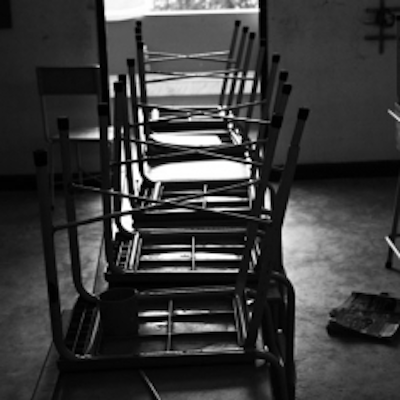
The community will continue its fight against the planned closure of 360 High School at the Tuesday, Feb. 27 meeting of the Rhode Island Council on Elementary and Secondary Education. Interested members of the community can join the meeting in person at 255 Westminster St. or virtually on Zoom. The recently published agenda indicates that public comment will be limited to 20 minutes. Once again, community members are being shut out of this process.
GET THE LATEST BREAKING NEWS HERE -- SIGN UP FOR GOLOCAL FREE DAILY EBLAST
Once again, we will argue that it is in the best interest of current students, future students, and the community at large for 360 High School to remain open. The community will continue to highlight the school’s exceptional culture, questions of equity surrounding a potential closure, and issues of transparency and accountability for decision-makers in the district. Additionally, we will directly respond to arguments for the closure of 360 High School presented by RIDE and PPSD representatives at the Feb. 15 meeting of the PPSD school board and by Commissioner Angélica Infante-Green in recent interviews.
The argument that the closure of 360 High School is instead a “merger” has grown increasingly untenable, and the failure of RIDE and PPSD to acknowledge this reality serves to illustrate the lack of transparency at the highest levels of management. As George Matouk, a member of the PPSD school board, pointed out during the Feb. 15 meeting, “Everybody knows that the community feels that there is a transparency issue in the management of PPSD. That is not a secret. And when something like this happens, and a decision is made – I'm sorry – to close a school, and the people who make the decision insist on using the word ‘merge,’ it makes it all worse. There’s nothing… that has convinced any of us that this is a merger. 360 is being closed.”
The closure of 360 High School and the absorption of its student body by the redesigned JSEC would result in direct harm to the vulnerable populations of students served by 360, and would thereby exacerbate existing inequities. Data from the 2013 mass closure of Chicago public schools clearly support this concern: according to the UChicago Consortium on School Research’s May 2018 report on school closings in Chicago, “Students affected by school closures experienced negative effects on test scores, especially students from closed schools… [They] experienced a long-term negative impact on their math test scores; slightly lower, but not significant long-term effects for reading test scores.” Additionally, “Closed school students also felt unwelcomed and marginalized in the welcoming schools… [and] there was an increase in fights and bullying between students from the closed and welcoming schools.”
If 360 were to close, these impacts would disproportionately impact multilingual learners (MLLs, students with limited English proficiency), who make up 56% of 360’s student body, the highest rate in Providence outside of the Newcomer Academy. MLLs feel welcomed and centered at 360; Daniela Rozon Rios, a senior and MLL wrote, “Through its supportive environment, dedicated teachers, and commitment to understanding students on a personal level, 360 High School not only imparts language skills but also instills confidence and prepares students for a future enriched with possibilities.” Closing 360 would sever MLL students from the relationships, culture, and opportunities that allow them to thrive.
The detrimental impacts of a closure would also be particularly damaging to the students in need of the greatest levels of support: the many 360 High School students with severe and profound levels of learning disability. At 360, these students benefit from a highly predictable, safe, and supportive environment and are celebrated members of the community. Unfortunately, according to Andrew Cormier, a special education teacher, “The unexpected closure of 360 High School feels like another callous example in the long history of those with disabilities being an afterthought in an educational bureaucracy that neglects the best interests of students, families, and the community.”
360 High School, unlike schools in the redesign process, is already on the right track. As Dr. Ellen Foley, a math teacher at 360 High School and former associate director of the Annenberg Institute for School Reform and professor at Brown University, pointed out: “Overall achievement… is a lagging indicator; test scores improve after other things are put in place. 360 has most of the leading indicators [that suggest a school is on the right track]: things like school culture, student engagement, low vacancies, teacher retention, high teacher attendance, effective leadership, trust.” Contrary to the assertions of RIDE and PPSD, the data show that 360 is built on a firm foundation. The community understands this: 360 is at capacity and its waitlist is one of the longest in the district. Why would RIDE and PPSD close a school that is well-positioned for success? Again, we are left with the sense that leadership is not being transparent about its reasons for the closure.
The meeting of the Rhode Island Council on Elementary and Secondary Education will be held at 255 Westminster St. on Tuesday, February 27, at 5:30 PM. The public is invited. To get in contact with members of the 360 community, email [email protected]
Ryan Barker. He is a Social Studies Learning Facilitator at 360 High School and a representative of the Friends of 360 High School, a group of students, parents, educators, and community members who are fighting to save 360 High School in Providence from being closed.