


Insurance Policy Would Pay Back 38 Studios Bonds
Stephen Beale, GoLocalProv News Contributor
Insurance Policy Would Pay Back 38 Studios Bonds

The insurance policy, obtained from a Statehouse source, has few conditions restricting its use. The policy itself does not require that there be any proof of fraud or malfeasance before the insurer will make payments on the bonds. The main requirement for the policy to be triggered is receipt of a formal notice that a scheduled payment on the bonds has been missed. (See below link to the full text policy.)
GET THE LATEST BREAKING NEWS HERE -- SIGN UP FOR GOLOCAL FREE DAILY EBLAST

Insurance policy can be used even if no wrongdoing
Stephen Lubben, a nationally recognized expert on corporate bankruptcy and debt who teaches finance at the Seton Hall University School of Law, told GoLocalProv that the policy was “fairly standard bond insurance.” He said he was not aware of any conditions that would limit its use to only those cases in which there was proof of any wrongdoing.
“I was surprised that there were basically no conditions under which the company would refuse payment to bondholders if the insurance company received notification that the bondholders were not going to be paid,” said Ed Mazze, a University of Rhode Island business professor whose area of expertise encompasses the use of bonding for economic development.
The lack of such restrictions means state policymakers do not have to wait for the outcome of a lawsuit filed last November against a lineup of key players in the 38 Studios deal, including company founder and Red Sox star Curt Schilling, former officials at the Economic Development Corporation, former EDC attorneys, and a financial adviser to the state. The lawsuit alleges fraud and negligence.
An investigation by state law enforcement authorities is also underway but so far has yielded no public findings of criminal activity. A probe on the federal level already came up empty handed last fall.

At one time, before the 2008 market crash, more than 50 percent of municipal bonds had insurance, according to Fazioli, a senior managing consultant at The PFM Group. (Fazioli is also a former senior vice president at First Southwest Company, the state’s financial adviser during the approval of the 38 Studios loan guarantee.) Having insurance raises the rating for a municipal bond, lowering the cost of borrowing and expanding the pool of potential investors. But, in a post-recession economy, he said bond insurance is now used for only a tenth of municipal bonds.
Using insurance could have drawbacks for state
The existence of such insurance means that state officials conceivably could renege on the moral obligation to pay back the 38 Studios bonds without stiffing bondholders, who would be paid through the insurance policy.
The question remains whether that is the most prudent course of action.
A number of finance experts told GoLocalProv they don’t think it is.

Fazioli said there is a difference between inability to pay and unwillingness to pay. He pointed to the City of Harrisburg, Pennsylvania, which defaulted on $262 million in bonds in 2009 for its municipal waste management agency because it was unable to keep up with the payments. Ultimately, the insurer for the bonds, Assured Guaranty Municipal Corporation, covered some of the debt.
Unlike Harrisburg, a default on the 38 Studios bonds would occur because the state is unwilling to pay them, Fazioli said. “In the bond market, that would carry a negative tone for quite a long time,” Fazioli said. “In the municipal bond world, that has significant consequences.”
Mazze pointed to two risks for the state takes if it defaults on its moral obligation. The first is a “reputation risk.” Mazze said financial community may hesitate to do business in a state that “does not honor its obligations, even though it is a moral obligation.”
A second risk is financial: “[W]hen issuing bonds in the future, the financial services industry and investors will always keep in mind what the state did or did not do in this situation,” Mazze said. “It could have an effect on the pricing and interest of future bond issues.”

Insurer could go after the state
There also is nothing to stop the insurance company from going after the state in court for some of the funds, according to Mazze.
“The policy protects the bondholders so that they get their return. If the state through the EDC or Governor’s Office misrepresented (or lied about) any of the information to the insurance company that was taken into consideration in determining whether or not to issue the policy or setting the premium….the insurance company can take the state to court,” Mazze said. “The company relied on the information it obtained from RIEDC, the Governor and 38 Studios. “
“Since these are bonds, there is the possibility of the SEC being called in by the insurance company,” Mazze added. “No insurance company is going to pay back $100 million without exhausting all its options.”
Bond insurer weighs in on 38 Studios debate
A spokeswoman for Assured Guaranty Municipal Corporation released a statement from the company yesterday, expressing confidence that the state would live up to its moral obligation.

The bond payments are made from a capital reserve fund. Initially, some of the proceeds from the sale of the bond were placed into the fund to cover payments while 38 Studios ramped up its operations.
Now that 38 Studios has filed for bankruptcy, the state is obligated to maintain enough of a balance in the fund to continue making scheduled payments to bondholders, the company said, saying that obligation was spelled out under “the terms of the transaction documents and State law.”
A company spokeswoman declined to comment on whether the company has been in contact with state officials about the 38 Studios bonds. So did Tom Carlotto, the attorney representing the EDC. He noted that so far there has not been any default of the payments.
Carlotto also challenged the notion that the state could simply use the policy to pay back the bonds. “The RIEDC does not have rights under the insurance policy in question as the policy is issued in favor of the bondholders and as such, the RIEDC cannot simply ‘use’ the policy,” Carlotto said. He did not elaborate.
Governor Lincoln Chafee and House Speaker Gordon Fox’s offices both did not respond to messages seeking comment.
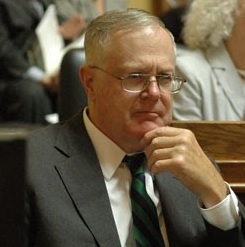
One proposed legislative measure, House Bill 5888, would block the state from using any money in its budget to make payments on the 38 Studios bonds. One co-sponsor of the bill, Spencer Dickinson, D-South Kingstown, said he thinks the state should instead rely on the insurance policy.
Dickinson described the bill as a renunciation of the deceptive and failed economic development policies of the past. He said it also makes a firm stand in favor of local business. Passing the bill, he said, sends a clear message to local businesses that they won’t be taxed to support the 38 Studios bonds. “We have to come down on the side of our businesspeople and act responsibly,” Dickinson said.
Dickinson also noted that the holders of the bonds knew what they were getting into. He said the high interest rates were a sign that they were taking on a great degree of risk in buying the bonds. “We’d be suckers if we let them take a risk like that and then held them completely harmless for the risk they took,” Dickinson said.
Lawmaker says EDC may have violated agreement
Another co-sponsor, however, does not see bond insurance as the state’s way out.
“Relative to the issue of whether or not these bonds will be paid for by the taxpayers, or the insurance company, I have strong concerns based information I’ve received that there is a real possibility that EDC may have violated certain terms of the policy and therefore would have released the insurance company from any obligation to pay the bond holders. If this proves to be the case, then I would not support the use of taxpayer dollars for loan repayment,” said state Rep Mike Chippendale, R-Foster.
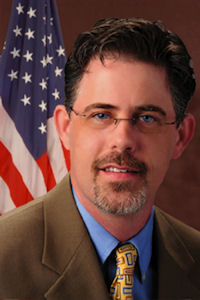
But Chippendale still supports the bill to stop payments on the bonds. Before making those payments, he says he wants the Oversight Committees in the House and Senate to look into the EDC program that produced the loan guarantee to 38 Studios. He also wants state lawmakers to look into details of how the deal was arranged and approved.
“Do I think we should play ‘deadbeat’ on our financial obligations? No, no I don’t,” Chippendale said. “But at the same time, I do believe we owe it to the taxpayers of Rhode Island to do a thorough review of how we make decisions on the way we are going to spend their money.”
Senator says state better off not using insurance
State Senator James Sheehan, the chair of the Senator Oversight Committee, offered another take on the debate: he says the state is better off paying bondholders through the budget, rather than letting the insurance company pick up the payments.
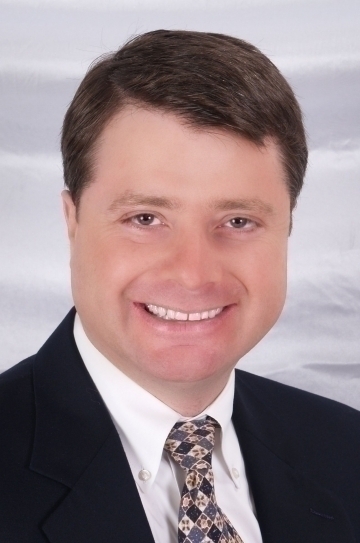
He said there is little information on what the long-term consequences would be for defaulting since so there are so few precedents. Sheehan said he wasn’t aware of any defaults by state governments since the Great Depression. His conclusion: the safer approach is to pay back the bonds, rather than risk unknown consequences of pursuing the alternative.
“Our reputation at minimum would be damaged by this,” Sheehan said.
In public discussion over the bond insurance, some have made comparisons to car insurance. Using that analogy, Sheehan said it makes more sense for the state to not use the insurance, for the same reasons that an at-fault driver in an car accident won’t use his insurance: to avoid an increase in their insurance rates.
Stephen Beale can be reached at [email protected]. Follow him on Twitter @bealenews