


ACLU Sues to Block Eviction of Homeless Sex Offenders
GoLocalProv News Team
ACLU Sues to Block Eviction of Homeless Sex Offenders
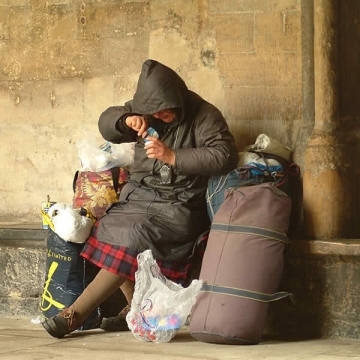
The lawsuit is on behalf of a group of homeless registered sex offenders (RSOs) who, because of a new state law, will no longer be allowed to stay at the Harrington Hall homeless shelter in Cranston and will instead be forced back into the streets.
“New Year’s day should be filled with hope, joy, and goodwill. For some people, as a result of this callous law, it will be anything but that. We hope this lawsuit can stop this cold-hearted law from taking effect,” said ACLU of RI executive director Steven Brown.
GET THE LATEST BREAKING NEWS HERE -- SIGN UP FOR GOLOCAL FREE DAILY EBLASTThe Lawsuit
The lawsuit calls Harrington Hall “the shelter of last resort for male homeless registered sex offenders in Rhode Island, whose only other option is to sleep or camp on the streets,” and notes that the facility has “routinely provided overnight shelter to many more than 11 registered sex offenders, including many of the Plaintiffs,” without experiencing “any increase or experience of re-offenses.
The lawsuit seeks a temporary restraining order to halt enforcement of the law. The ACLU expects the request to be heard by a judge sometime this week.
“The risks that this law poses to our plaintiffs cannot be understated. In addition to putting their health and well-being in danger, this law will make it more difficult for them to access counseling or medical treatment and services, maintain employment, and even comply with the onerous registration requirements that other laws already impose on them. To prevent these dire consequences, I am hopeful that we can obtain a court order to temporarily halt this law’s enforcement,” said Lynette Labinger, ACLU of RI volunteer attorney.
The suit makes the following points:
* Increasing homelessness and transience of this population will only “make it more difficult for law enforcement officials to monitor” them,
* By forcing them into transience, “the 10% Restriction increases their lack of stability and access to community and services, increasing the risk to public safety and the risk of re-offense and recidivism,” and, most urgently,
* Forcing them into “unsheltered homelessness, particularly during the winter months, imposes life-threatening conditions upon the Plaintiffs.”
GoLocal: Benchmark Poll, October 2017

Sponsor: GoLocalProv
Sample: N=403
Rhode Island General Election Voters Margin of Error: +/- 4.9% at 95% Confidence Level
Interviewing Period: October 9-11, 2017
Mode: Landline (61%) and Mobile (39%)
Telephone Directed by: John Della Volpe, SocialSphere, Inc.
Are you registered to vote at this address?
Yes: 100%
When it comes to voting, do you consider yourself to be affiliated with the Democratic Party, the Republican Party, Moderate, or Unaffiliated with a major party?
Unaffiliated: 49%
Democrat: 32%
Republican: 15%
Moderate: .4%
Next year, in November of 2018, there will be a statewide general election for Governor and many other state offices. How likely is it that you will vote in this election?
Will you definitely be voting, will you probably be voting, are you 50-50...
Definitely be voting: 78%
Probably be voting: 13%
50-50: 9%
In general, would you say things in Rhode Island are headed in the right direction or are they off on the wrong track?
Right track: 39%
Wrong track: 45%
Mixed: 10%
Don't know/Refused: .6%
What would you say is the number one problem facing Rhode Island that you would like the Governor to address?
Jobs and economy: 21%
Education: 12%
Taxes: 12%
Roads: 12%
State budget: 9%
Corruption/Public integrity: .8%
Healthcare: 3%
Governor: 3%
Homelessness: 2%
Immigration: 2%
Other: 7%
Don’t know: .9%
Over the past three years or so, would you say the economy in Rhode Island has improved, gotten worse, or not changed at all?
Changed for the better: 35%
Changed for the worse: 16%
Not changed at all: 43%
Don't know/Refused: 5%
Over the same time, has your family's financial situation improved, gotten worse, or not changed at all?
Changed for the better: 26%
Changed for the worse: 19%
Not changed at all: 54%
Don't know/Refused: 1%
Recently, a proposal has been made to permit the issuance of $81 million in bonds by the State to build a new stadium for the Pawtucket Red Sox. If there was an election today on this issue, would you vote to approve or reject issuing $81 million in financing supported moral obligation bonds to build the stadium?
Net: Approve: 28%
Definitely approve: 15%
Probably approve: 14%
Net: Reject: 67%
Probably reject: 19%
Definitely reject: 48%
Don't know: 4%
Could you please tell me your age?
18-24: 7%
25-34: 15%
35-44: 15%
45-54: 20%
55-64: 17%
65+: 25%
Don't know/refused: 1%
What was the last grade you completed in school?
0-11: 2%
High school grad: 16%
Technical/Vocational school: 1%
Some college: 23%
College grad: 34%
Graduate degree: 24%
Don't know/refused: 1%
The next question is about the total income of YOUR HOUSEHOLD for the PAST 12 MONTHS. Please include your income PLUS the income of all members living in your household (including cohabiting partners and armed forces members living at home).
$50,000 or less: 27%
More $50,000 but less than $75,000: 13%
More $75,000 but less than $100,000: 13%
More $100,000 but less than $150,000: 17%
$150,000 or more: 13%
Don't know/refused: 17%
What particular ethnic group or nationality - such as English, French, Italian, Irish, Latino, Jewish, African American, and so forth - do you consider yourself a part of or feel closest to?
American/None: 21%
English: 13%
Italian: 13%
Irish: 12%
Black or African American: 6%
Latino/Hispanic: 6%
French: 6%
Portuguese: 3%
Jewish: 3%
German: 1%
Would you say that Donald Trump has done an excellent good, fair or poor job as President?
Excellent: 13%
Good: 12%
Fair: 14%
Poor: 57%
Never heard of: 0%
Cannot rate: 3%
Would you say that Jack Reed has done an excellent good, fair or poor job as a United States Senator?
Excellent: 22%
Good: 29%
Fair: 23%
Poor: 15%
Never heard of: 6%
Cannot rate: 6%
Would you say that Sheldon Whitehouse has done an excellent good, fair or poor job as a United States Senator?
Excellent: 17%
Good: 22%
Fair: 21%
Poor: 28%
Never heard of: 6%
Cannot rate: 7%
Would you say that David Cicilline has done an excellent good, fair or poor job as a Member of Congress?
Excellent: 9%
Good: 29%
Fair: 21%
Poor: 27%
Never heard of: 6%
Cannot rate: 8%
Would you say that James Langevin has done an excellent good, fair or poor job as a Member of Congress?
Excellent: 7%
Good: 30%
Fair: 20%
Poor: 18%
Never heard of: 13%
Cannot rate: 11%
Would you say that Gina Raimondo has done an excellent good, fair or poor job as Governor?
Excellent: 6%
Good: 28%
Fair: 30%
Poor: 31%
Never heard of: 1%
Cannot rate: 3%
Would you say that Daniel McKee has done an excellent good, fair or poor job as Lieutenant Governor?
Excellent: 3%
Good: 16%
Fair: 21%
Poor: 8%
Never heard of: 26%
Cannot rate: 25%
Would you say that Peter Kilmartin has done an excellent good, fair or poor job as Attorney General?
Excellent: 3%
Good: 20%
Fair: 28%
Poor: 17%
Never heard of: 13%
Cannot rate: 19%
Would you say that Seth Magaziner has done an excellent good, fair or poor job as General Treasurer?
Excellent: 4%
Good: 18%
Fair: 24%
Poor: 13%
Never heard of: 21%
Cannot rate: 21%
Would you say that Nellie Gorbea has done an excellent good, fair or poor job as Secretary of State?
Excellent: 5%
Good: 21%
Fair: 21%
Poor: 10%
Never heard of: 20%
Cannot rate: 23%
Would you say that Jorge Elorza has done an excellent good, fair or poor job as Mayor of Providence?
Excellent: 4%
Good: 24%
Fair: 24%
Poor: 22%
Never heard of: 9%
Cannot rate: 15%
