


ACLU Takes Cranston to Court Over Prayer Banner
Chip Young, Senior Editor
ACLU Takes Cranston to Court Over Prayer Banner
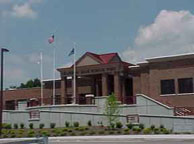
The federal lawsuit, filed Monday in Providence during a press conference to announce the action, argues that the eight-foot high, three-foot long prayer banner on the wall of the auditorium that begins with "Our Heavenly Father" and ends with "Amen" violates the First Amendment. The ACLU is seeking a court order to prohibit its continued display at the school.
GET THE LATEST BREAKING NEWS HERE -- SIGN UP FOR GOLOCAL FREE DAILY EBLAST“It should not be seen by students until the case is decided in court,” said Lynette Labinger, a RI ACLU volunteer attorney who will be co-lead counsel in the case, along fellow volunteer attorney Thomas Bender. According to the lawsuit, the banner “is designed to be easily read by students attending programs in the auditorium,” and “…it’s something that is not part of the curriculum,” Labinger said.
Can Cranston Afford It?
The immediate question is whether or not it is worth it to take on the ACLU.
The Cranston School Committee initially balked at fighting the ACLU’s demands back in July, when they publicly expressed reservations about doing so due to the cost involved. They had just gone through two school committee vs. city court fights over the school budget, the latter having cost almost $250,000, which the school committee lost.
The School Committee has pursued the idea of using pro bono legal help – Providence attorney Joseph Cavanagh, best known for his work with local media such as the Providence Journal, and counsel from the Becket Fund for Religious Liberty, which supports religious freedom cases across denominations, have both been informally floated as being of possible assistance – as well as the idea of having fundraisers to support the defense.
Don't Pay Me Now or Pay Me Later
But Labinger is quick to point out that one side having pro bono legal help does not mean the court action will be free – especially if you lose.
“It is different from a fiscal standpoint,” she said. “If they are unsuccessful, we will be seeking attorneys’ fees. There may be no out-of-pocket expenses (for Cranston), but they will pay the ACLU.”

For a school committee which just saw its request for a $3.8 million increase in its budget for 2012 countered by Mayor Allan Fung’s declaration that he would be giving them only $2.4 million – and risking another court confrontation – that potential expenditure should be a factor worth some considered thought.
A Long Battle
The current dispute between the ACLU and the City of Cranston began back in July 2010 when the parents of a sophomore student at Cranston West, Jessica Ahlquist, who is now plaintiff in the lawsuit (brought on her behalf as a minor by her father, Mark), complained about it, saying it endorses the “ideals of Christianity,” and that “As an atheist, I do not feel included in the message of the prayer; in fact, I feel excluded.”
Interestingly, Rhode Island was actually a proving ground for freedom of religion cases, with a 1992 U.S. Supreme Court ruling in the Lee v. Weisman case in which the plaintiffs were the parents of a female Providence middle school pupil.
It involved the principal of Nathan Hale Middle School, Robert E. Lee, inviting Rabbi Leslie Gutterman to the school’s graduation ceremony and to lead them in prayer. The Weisman parents filed a temporary restraining order to bar the rabbi from speaking, but the motion was denied in RI District Court.
The girl and her parents attended the graduation where Gutterman gave the benediction, but followed up with their litigation. It made it all the way to the highest court in the country. The Weismans won a controversial and highly publicized 5-4 decision that preserved the lesser role that religion should only be allowed to have in public schools.
That battle cost the City of Providence $130,000, estimated Steven Brown, ACLU’s executive director, who was working for the organization at that time.
Setting a Precedent
When asked if the Lee v. Weisman case would be used as a precedent in her own arguments in court, Labinger said, “Absolutely...just one of the precedents.”
But after mulling the idea over, including holding school committee meetings to hear the public’s views aired – predominantly in favor of keeping the banner – it came down to a March 7 vote that essentially triggered the ACLU action. A subcommittee then voted 4-3, led by chair Michael Traficante, to keep the banner up, saying at the time, “It’s our obligation to protect the moral fabric of our students, and that banner does that.”
Labinger said she had tried to reach out to the school committee’s legal counsel as late as December 2010 to try to get them to come to a decision that would have negated the possibility of the case going to court. But she heard nothing back from that time on until the March vote, she said.
What to Do?
How can the issue go away at this point?
“They can take it down,” said Labinger, “or they can re-word it, without the religious content.”
Case not closed. For now.
If you valued this article, please LIKE GOlocalProv.com on Facebook by clicking HERE.