


"Race and Class" Blocks Aquidneck School Regionalization
Chip Young, Senior Editor
"Race and Class" Blocks Aquidneck School Regionalization

Very definitely, according to some of those involved.
GET THE LATEST BREAKING NEWS HERE -- SIGN UP FOR GOLOCAL FREE DAILY EBLASTChanging People’s Hearts
“It’s just racism and class-ism,” said Newport School Committee member Jo Eva Gaines, of the barriers to proposed regionalization of the island schools. “I’m not one to play the race card, but when it is staring you in the face, you can’t deny it."
“Those are our kids,” Gaines, a former member of the state Board of Regents for Elementary and Secondary Education, said. “People need to start looking at the whole system, not just what people want. I don’t know how you change people’s hearts.”
Newport Schools Superintendent Dr. James Ambrogi backs up Gaines’ view with a slightly different take. “There is that attitude that ‘We want to have our children go to school with children like ours’,” said Ambrogi. “People want to feel they have more control over their environment.”
Perceptions Part of the Problem
When asked about the roles race and class may play in moving ahead with plans to regionalize the three island high schools, in particular, there was recognition of a problem that neds to be addessed.
Portsmouth schools Superintendent Susan Lusi said, “I wouldn't characterize it (racism and class-ism) that way. When you combine two or three different systems, there is always the fear of the unknown.”
“Right or wrong, a number of families historically migrated north up the island,” said Lusi. “Part of that migration was the perception of the school systems. That set of perceptions is part of the problem.”
Dr. Charles Shoemaker, a member of the Newport School Committee, said of the racial undertones, “It has never been said, but we’ve seen it, both with (approving bonds for) Thompson (Middle School) and the Pell school.”
Shoemaker, who is leading the volunteer Aquidneck Island School/Municipal Advisory Committee, a group with representatives from all three communities that is looking into regionalization, said, “(Racism and class division) may be there. But I would tell Portsmouth, ‘Don’t worry about it; your situation will stay the same.’”
Similar or Dissimilar?
Ambrogi notes that some of the friction between schools comes about because "We are three dissimilar communities."
But in GoLocalProv's recent RI rating of 2011's Top High Schools, Middletown ranked number 6, Portsmouth came in at 12th, and Rogers in Newport was 20th ranked out of 51 secondary schools. All have graduation rates above 80 percent, bunched within five and half points of each other. Only Rogers breaks away from the pack with a decidedly lower average verbal SAT score of 450, versus Portsmouth's 518 and Middletown's 519.
And while Newport has the greater percentage of minorities, it is hardly a vast difference, with all the communities being predominantly white.
Shoemaker noted that, "There are lots of minority kids in Middletown as well as Newport, and many are related to each other. There is a lot of interaction between the communities."
“They Are All RI’s Kids”
State Senator Louis DiPalma, whose District 12 includes parts of Little Compton, Middletown, Newport and Tiverton, has been working on the idea of shared services, a larger take on regionalization, and has a bill pending at the General Assembly that would call for a non-binding referendum that would allow voters to decide (or not) to “pursue the facilitation of shared municipal services for the purposes of achieving more economic, efficient and effective management of the state's overall resources.” (See related GoLocalProv article by clicking HERE.)
Of the racial and societal impediments to that goal that might intrude in the education debate, DiPalma said, “I have heard about that issue, but have yet to see it play out. Are they saying it? Yes, but we can overcome it.”
“They are all Rhode Island’s kids. It’s the right thing to do,” said DiPalma.
No One Wants To Lose Control
With race and class threading through the regionalization conversation, and analyses such as the Rhode Island Public Expenditure Council’s 2009 report, “Aquidneck Island Consolidation Feasibility Study,” that shows the three island communities could save as much as $12 million through regionalization, there is another elephant in the room: the loss of local control. This is a constant factor in what is holding back possible school system consolidation on Aquidneck Island, identified by many, if not all, of the leaders involved as a sticking point.
Gaines, noting that local politicians only look after their own self-interest, said, “People fear having no control. I feel like regionalization is the right way to go, but we just don’t have a critical mass to support it.”
Superintendents Speak Out
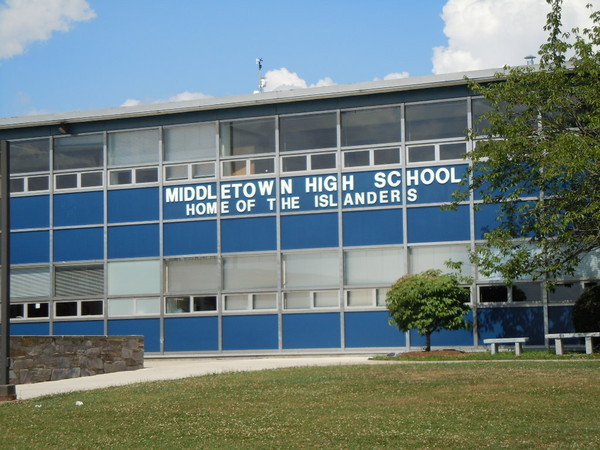
“I’m a proponent of regionalization,” said Newport Superintendent Ambrogi. “But it might not happen in my lifetime, due to concerns about local control and identity. Each community is concerned about who we are, and what we’re about, and don’t want to lose that.”
Rosemarie Kraeger, superintendent of Middletown Public Schools, said that while race and class may be a hot button, “I have heard more about local control. No one wants to give it up.”
“We have to look at this through new lenses,” said Kraeger. “Do we want to give it up? I have heard the Town Council's concerns about governance. The school committee - and they are wonderful - are all worried about the children learning. But I get calls and e-mails against regionalization. And ultimately, it will come down to will the voters to approve it.”
In Portsmouth, Susan Lusi recalled her comments about regionalization in a public forum devoted to the topic. “I asked whether or not we had the will to do it,” she said. “It is all about what the deal is like, and what kind of conditions the communities are willing to accept.”
A Mandate Needed
When asked about what were the chances of regionalization, Jo Eva Gaines answered quickly and simply: “None,” she said.
“Regionalization has to come from the top,” Gaines said. "It has to be a mandate. It has to be ordered that we consolidate districts in this small state. People have genuine concerns, such as losing jobs, or what happens in the community. That versus the more diabolical concerns of the local politicians. But people have to let go and let it happen.”
If you valued this article, please LIKE GoLocalProv on Facebook by clicking HERE.