


Blackface Is Unacceptable in Virginia and RI — Raymond Two Hawks Watson
Guest MINDSETTER™ Raymond Two Hawks Watson
Blackface Is Unacceptable in Virginia and RI — Raymond Two Hawks Watson

While outrageously inappropriate, the news is not surprising for anyone that is even slightly familiar with America’s relationship and history with scientific and institutional racism. Particularly due to Virginia’s role in institutionalizing concepts of white racial superiority in U.S. society through the establishment of racial classification and anti-miscegenation laws eventually leading to the establishment of the Racial Integrity Act of 1924, it’s almost karmic that it is Virginia’s Governor being taken to task for such behavior. While not surprising, the behavior is still outrageously inappropriate and founded in negative racial stereotypes about enslaved Africans which need to be debunked at every given opportunity.
As the national dialogue has picked up steam, local voices have begun to add their two cents to the conversation. Most recently a demand was made by the Rhode Island Republican Party for Governor Raimondo to demand the resignation of Governor Northam for his conduct; rightfully so. Yet while the cry for national action has been loud and clear, the State sits relatively silent about its own personal struggle, which has all but slipped into obscurity.
GET THE LATEST BREAKING NEWS HERE -- SIGN UP FOR GOLOCAL FREE DAILY EBLAST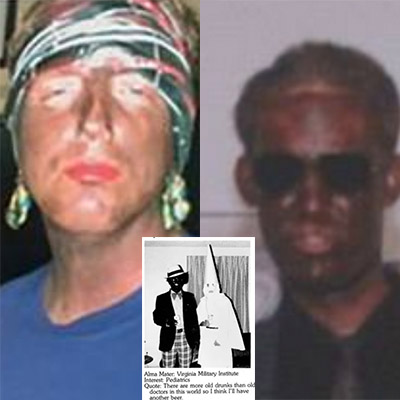
So yes, I’m personally outraged by Governor Northman’s behavior; and yes the Republican Party is justified in calling for Governor Raimondo to demand his resignation. As I’ve stated several times in this Op-Ed, the practice of blackface is outrageously inappropriate and founded in negative racial stereotypes about enslaved Africans which need to be debunked at every given opportunity. I’m more appalled, however, at the hypocrisy of pointing fingers at a public figure in another state while simultaneously turning a blind eye to the state’s own local infractions.
As long as our outrage is based primarily in political expediency rather than moral and ethical integrity, the outcome is quite predictable; marginalized communities will continue to be insulted and disrespected and these sorts of behaviors will continue to surface. Our conduct as Rhode Islanders clearly demonstrates that this type of behavior is only an issue when it’s not taking place in our own backyard.
Legacy of Racism in New England

Tom Yawkey
The legacy of the former owner of the Boston Red Sox, who passed away in 1976, is currently in the media glare for his views and actions while head of the club.
“It’s time to banish the racist legacy of Tom Yawkey,” wrote Adrian Walker for the Boston Globe on Monday, of the former owner of the Sox for 44 years, starting in 1933.
Wrote Walker, “All this history raises an uncomfortable, current-day question. Why on earth does Boston have a street called Yawkey Way? Or a Yawkey MBTA station? At a time when activists, especially on college campuses, are clamoring for renaming monuments to racist history, it’s long past time for Boston to think long and hard about the official Yawkey legacy. That the Red Sox are so central to the city’s psyche makes it even more urgent for Boston to act now to banish this legacy of racism.”
Last year, the Globe’s Robert Burgess posed,"Was Tom Yawkey Boston's Donald Sterling," making a comparison to the now former LA Clippers owner who was banned by the NBA for making racist remarks.
“Unfortunately, Boston knows a thing or two about racism in sports," wrote Burgess. "While Sterling’s alleged words are offensive to many, let’s not sit too proud on our high horse.”

Brown University
“In 2003, Brown University president Ruth Simmons opened an investigation into the school’s role in the slave trade. The findings exhumed unsettling accounts of the many ways in which important founders of the institution participated in and benefited from slavery, including the use of slave labor to construct the oldest and most iconic building on campus, University Hall,” wrote Northwestern Professor Jennifer Richeson in a piece entitled "What Ivy League Ties to Slavery Teach About Redemption."
As part of its recognition of its past ties to the slave trade, Brown unveiled its slavery memorial last year, which reads, “Rhode Islanders dominated the North American share of the African slave trade, launching over a thousand slaving voyages in the century before the abolition of the trade in 1808, and scores of illegal voyages thereafter. Brown University was a beneficiary of this trade.”
A Manhattan Institute Fellow broached the issue of Brown changing its name when it took up renaming Columbus Day to "Fall Weekend", but the idea got little traction.
"If you're going to get rid of the day honoring Columbus because he was involved in slavery, I don't see how you can bypass the Brown problem," said John Leo, a senior fellow at the Manhattan Institute. "They have to be consistent with their message on slavery. And if they’re not willing to do that, then there's no reason to take them seriously."
Now, Brown just announced it is investing $100 million to "promote diversity and inclusion" on the campus, in light of pressures from the students and community to address ongoing racial issues on campus.

H.P. Lovecraft
H.P. Lovecraft, one of Providence’s most famous authors, known for “The Call of Cthulhu” and other works of horror fiction, is also known for a fair degree of controversy about racially-charged aspects of his writing.
“It’s OK to admit that H.P. Lovecraft was racist,” wrote Laura Miller for Salon in 2014. Meanwhile, numerous literary analyses and blog posts, including “The ’N’ Word Through the Ages: The ‘Madness’ of HP Lovecraft” and “Lovecraft, Racism, and the ‘Man of his Time’ Defense" give the author much less of pass.
Lovecraft and his work where heralded with much fanfare this past summer in Providence for NecronomiCon, “celebrating 125 years of weird in the heart of Lovecraft’s city.” Meanwhile, much more quietly, the Atlantic Cities reported that starting next year, the World Fantasy Award trophy will no longer be modeled after the massively influential horror-fiction writer H.P. Lovecraft. "Small, corrective steps matter, not for the past, but for the future," wrote Lenika Cruz.

John Winthrop
“John Winthrop, the first governor of Massachusetts Bay Colony, kept American Indians as slaves and helped to write the first law in the US officially sanctioning the practice of keeping African slaves,” wrote C.S. Manegold for the Boston Globe in “New England’s scarlet ‘S’ for slavery” in 2010.
In terms of legacy, Winthrop is one of a number of historic figures that is subject to the “latest call by students at Harvard University for the school to purge terms or symbols deemed offensive by a vocal minority raises [in] what could be a confounding issue: How far will the 379-year-old school go to distance itself from historic figures whose actions and social values we would not approve today?” wrote Evan Lips for the NewBostonPost on December 4, as Harvard's Winthrop House” is one of a number at the school named for for a prominent Massachusetts leader who profited from slavery.

Ralph Papitto
In 2007, the then 80-year-old Ralph Papitto — “a big time donor to [Roger Williams University] and a longtime chairman of its board — expressed deep regret for uttering a racist slur about black people at a board meeting,” the Wall Street Journal reported.
“I take full responsibility for this matter and ask for understanding from the community,” Papitto said in the statement. “I do not want this controversy, which at present is running out of control, to further the damage already caused to the university.”
The law school had opened at the Bristol, Rhode Island institution in 1993 and was named for Papitto in 1996, but just over 10 years later saw his name removed -- at his request -- in light of the scrutiny for the racist remarks.

Harvard Law School
“A group of Harvard Law students called Royall Must Fall, is taking issue with the law school’s seal, parts of which come from the Royall family crest. Isaac Royall, Jr. was a slave owner and son of a slavetrader who played a key role in creating Harvard Law School,” wrote WBUR on December 2.
Following an outcry from students, officials from the school are "examining the continued use of the seal, in what is the latest controversy over race and historic injustices on US college campuses in recent weeks."
“Symbols are important,” Martha Minow, dean of the law school, said this week to the Boston Globe. “They become even more important when people care about them and focus on them.”

James DeWolf
"James DeWolf of Bristol, Rhode Island (1764-1837) was a United States senator and a wealthy merchant who, at the time of his death, was reported to be the second richest person in the country. He was also the leading slave trader in the history of the United States,” wrote the Tracing Center.
“Over fifty years and three generations, from 1769 to 1820, James DeWolf and his extended family brought approximately 12,000 enslaved Africans across the Middle Passage, making the DeWolf family our nation’s most successful slave-trading family.”
And the mission of the Tracing Centre?
“To create greater awareness of the full extent of the nation’s complicity in slavery and the transatlantic slave trade and to inspire acknowledgement, dialogue and active response to this history and its many legacies.”
DeWolf is featured prominently in a 2008 documentary" Traces of the Trade: A Story from the Deep North" co-produced and directed by Katrina Browne, a DeWolf descendant.


