


National Weather Service Proposes Changes to Coastal Waters Forecast
GoLocalProv News Team
National Weather Service Proposes Changes to Coastal Waters Forecast
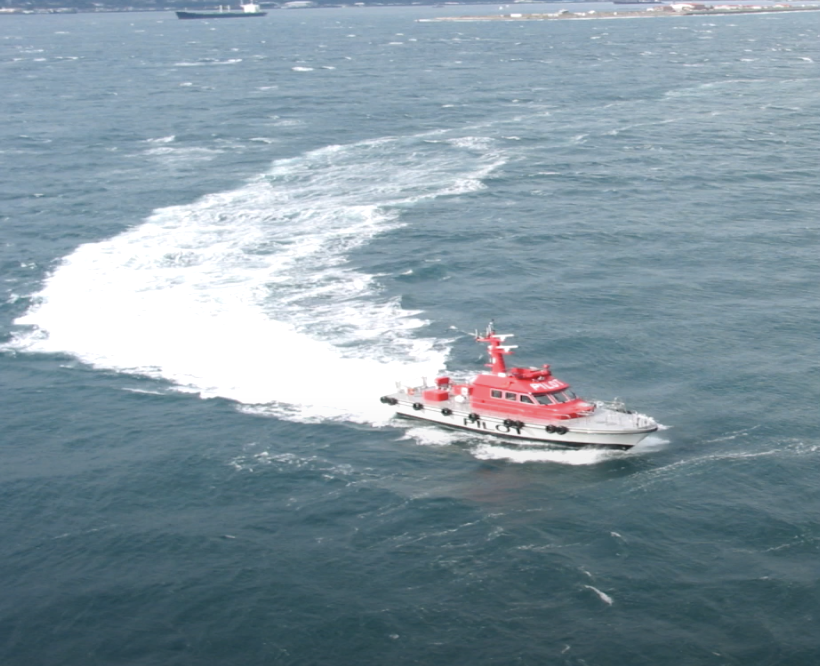
The changes would directly impact the forecast for Rhode Island and New England coastal waters.
GET THE LATEST BREAKING NEWS HERE -- SIGN UP FOR GOLOCAL FREE DAILY EBLASTAccording to NWS, the proposed version includes “enhanced detail over the ocean zones.”
“The NWS, through this experimental product, will now provide wave height, period, and direction in the Coastal Waters Forecast (CWF),” says NWS. “Currently, some Weather Forecast Offices (WFOs) only provide significant wave height, while others only provide wind wave and swell, creating inconsistencies. The Experimental CWF Wave Component Update will enable NWS WFOs to provide enhanced wave information.”
More About Changes
“There are three fundamental properties of ocean waves: height, period, and direction. Wave height generally refers to how tall a wave is from trough to crest, wave direction is the direction the wave is coming from, and wave period is the time it takes for successive waves to pass a fixed point, such as a buoy,” says NWS. “The period is also directly related to how fast waves move, how deep they extend into the ocean, how much energy they contain, which, in turn, influences the size of breaking waves at the coast, and more. “
“In addition, it is common for there to be multiple, coexisting wave groups that coincide at any given point in the ocean. Some users may only be interested in short period waves because they present hazardous, choppy waves for smaller boats, others may take particular interest in the long period waves given the shoaling hazards they create near shore, while others may be interested in both,” NWS continues. “The point is, no two wave systems are created equal, any wave system present may be hazardous or of interest to different marine groups, and therefore we feel we should not ignore them.”
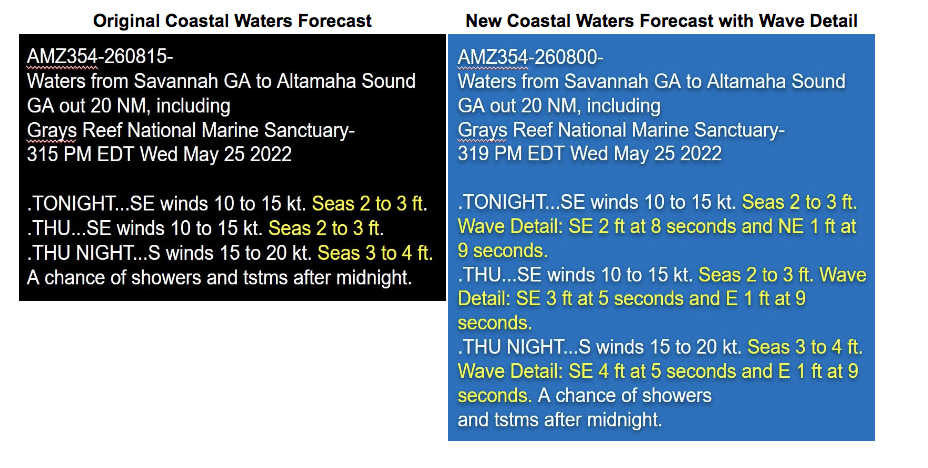
“Currently, some Weather Forecast Offices (WFOs) only provide significant wave height, while others only provide wind wave and swell, creating inconsistencies. ‘Significant Wave Heights’ is the average height of the highest one third of all waves at a particular point or region in the ocean. Significant Wave Height is a fundamental variable of the sea state that our customers are used to seeing, and also something very accessible from buoys to help gauge the current sea state and the accuracy of a forecast,” says NWS. “As such, the proposed Coastal Waters Forecasts maintains that variable, but also supplements it with wave detail as described above and provided in forecast.”
Those in the southern New England region can click here to check out the experimental coastal waters forecast wave component update webpage.