


Brown Issues Statement to Correct “Misinformation” Regarding Campus Assault Case
GoLocalProv News Team
Brown Issues Statement to Correct “Misinformation” Regarding Campus Assault Case
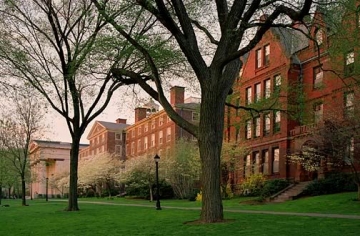
According to the statement, “Over the past week students, alumni, and former student organizations have widely disseminated their own communications, much of it inaccurate or incomplete.”
“While our preference, out of respect for the privacy of the involved individuals, would be to issue no further statements about this case, we recognize that misinformation and rumors are harmful to students and must be corrected.”
GET THE LATEST BREAKING NEWS HERE -- SIGN UP FOR GOLOCAL FREE DAILY EBLASTThe statement, issued by Russell Carey, Executive Vice President for Planning and Policy and Margaret Klawunn, Vice President for Campus Life and Student Services, went on to describe what it called the facts of the case:
-In the fall, two students reported that they were given alcoholic punch containing a date rape drug at the unauthorized party at Phi Kappa Psi. Subsequent to that report two drug tests were performed by two different external laboratories; a urine test for one student and a hair test for one student.
-Brown was initially told by the first laboratory that the urine test confirmed the presence of exogenous (not naturally occurring) GHB (gamma hydroxybutyrate). We reported that information to the community on November 8. However, upon subsequent investigation and review by an independent medical expert, this laboratory revised its assessment and concluded that the level of GHB was low enough to be consistent with endogenous (naturally occurring) GHB. We have been told that the laboratory has since suspended conducting this particular test. The revision in the laboratory’s assessment made clear that the test they conducted neither proved nor disproved that the student had ingested GHB. That test was excluded from further consideration in the case.
-The laboratory that conducted the second test, the hair test, concluded from the outset that it could not confirm the presence of exogenous GHB. Brown received inconsistent accounts from the laboratory about how the test was conducted, leading to concerns about the reliability of the information from the laboratory. For this reason, the results from this test were never used as evidence by the student conduct panel hearing the allegations made against Phi Kappa Psi.
-For both of these tests, a failure to positively identify the presence of exogenous GHB does not prove that GHB or another drug was not ingested. GHB, in particular, is difficult to detect since it leaves the body quickly. GHB is only one of a number of possible date rape drugs (including alcohol, the drug most commonly associated with sexual assault).
The final finding and sanction against Phi Kappa Psi did not rely on the results of any physical drug tests. Other evidence, including witness statements, video evidence, and the statements of the students who filed complaints, was sufficient to support the conclusion that the two students consumed alcohol and/or some other drug diminishing their normal functions to a degree that placed them at risk of harm. The sanctions imposed were based on this evidence as well as the past disciplinary record of the fraternity, and were fair and appropriate. It should be noted that, although Phi Kappa Psi was found responsible for holding an unregistered party and placing students at risk of harm, no member of Phi Kappa Psi was charged with sexual misconduct.
The statement went on to say that the University would no longer use either laboratory involved in the controversial testing.
The Brown Alumni Who Run This Country

Jack A. Markell
Governor of Delaware (2009 - Current)
Class of 1982
After obtaining his undergraduate degree in economics and graduate studies from Brown in 1982, Governor Markell went on to earn his MBA at the University of Chicago. He left the private sector in 1998 upon his election as State Treasurer of Delaware, a role which he served until becoming his home state's Governor in 2009.
Photo: SenRockefeller, Flickr

Piyush "Bobby" Jindal
Governor of Louisiana (2008 - Current)
Chairman of the Republican Governors Association
Class of 1992
Governor Jindal is one of the more recognizable names to come out of Brown, largely due to his role in dealing with the Deepwater Horizon oil spill off of his state's coast in 2010. He earned degrees in biology and public policy from Brown in 1991, and has since held many public offices; including a term in Congress as the Representative of Louisiana's 1st District.
Photo: Derek Bridges, Flickr

Lincoln Chafee
Governor of Rhode Island (2011 - Current)
Class of 1975

Maggie Hassan
Governor of New Hampshire (2013 - Current)
Class of 1980
After Graduating from Brown in 1980, Governor Hassan went on to the Northeastern University School of Law. After working as an attorney for several years, Hassan went on to hold a seat in the New Hampshire State Senate for three terms before losing her seat in 2010. She won last year's Gubernatorial election, carrying every county in New Hampshire.
Photo: Roger H. Goun, Wikimedia

David Cicilline
U.S. Representative - Rhode Island - 1st District (2011 - Current)
Class of 1983
Along with John F. Kennedy Jr., Cicilline established Brown University's branch of the College Democrats of America. He held several roles in Rhode Island politics, including Mayor of Providence from 2003 to 2011 before representing Rhode Island's 1st District in the U.S. House.

Dan Maffei
U.S. Representative - New York - 24th District (2013 - Current)
Formerly U.S. Representative - New York - 25th District (2009 - 2011)
Class of 1990
Representative Maffei received his degree from Brown in history before beginning a career in journalism. He worked as a reporter and producer for ABC's Syracuse, NY affiliate for several years, then worked behind the scenes in politics until deciding to run for office himself.

John Hugh "Buddy" Dyer
Mayor of Orlando, FL (2003 - Current)
Class of 1980
Mayor Dyer received a law degree from the University of Florida after earning his Bachelor's Degree from Brown. He went on to serve ten years in Florida's State Senate before becoming Orlando's 32nd Mayor.
Photo: Carol Cox, Flickr

Janet Yellen
Federal Reserve Board of Governors: Vice Chair (2010 - Current)
Federal Reserve Board of Governors: Chair (Nominated)
Class of 1967
Yellen graduated summa cum laude from Brown University in 1967 with a degree in Economics. She went on to hold many prestigious titles in the field of economics, including serving as Chair of the Council of Economic advisers under President Bill Clinton. She was recently nominated by Barrack Obama to become the Chair of the Federal Reserve, if confirmed, she will become the first woman in U.S. history to hold that title.

Richard G. Olson
U.S. Ambassador to Pakistan (2012 - Current)
Class of 1981
Ambassador Olson graduated with honors from Brown with 1991 with a degree in law and society. Before being appointed to his current role, he also served as Ambassador to the United Arab Emirates, U.S. Consul General in Dubai, and as Deputy Chief of Mission to the the U.S. Mission to NATO.

Rosemary DiCarlo
U.S. Deputy Permanent Representative to the United Nations (2010 - Current)
Class of 1969 (M.A. 1971, Ph.D. 1979)
Ambassador Dicarlo has led a very distinguished career in diplomacy following her graduation from Brown University. She has received multiple honors, including the Department of Sate's Sustained Superior Achievement Award. She also served as acting U.S. Ambassador to the UN in July of 2013.

Thomas Perez
U.S. Secretary of Labor (2013 - Current)
Class of 1983
Following his 1983 graduation from Brown, Secretary Perez began a long and distinguished career in the public sector. Before the 2013 appointment to his current role, Perez worked for the Department of Justice as Assistant Attorney General in their Civil Rights Division.

Jim Yong Kim
President of the World Bank Group (2012 - Current)
Class of 1982
Before being elected as the 12th President of the World Bank Group, Dr. Jim Yong Kim was a shining star at Brown. He graduated magna cum laude in 1982, and went on to become a physician and anthropologist, serving as an adviser to the World Health Organization. In 2009, he was named President of Dartmouth College, becoming the first Asian-American to head an Ivy League school.

Norman L. Eisen
U.S. Ambassador to the Czech Republic (2011 - Current)
Class of 1985
After graduating with honors from Brown in 1985, Ambassador Eisen went on to study at Harvard Law and was classmates owith future President, Barack Obama. In the private sector, Eisen made a name for himself, earning the distinction as one of Washington's top lawyers by Washingtonian Magazine.

Adam Namm
U.S. Ambassador to Ecuador (2012 - Current)
Class of 1985
Ambassador Namm graduated magna cum laude from Brown in 1985 with a degree in International Relations. He has spent his entire career in foreign service, and was the Acting Director of the Bureau of Overseas Buildings Operations before being appointed to his current post.

David Wade
Chief of Staff to Secretary of State John Kerry (2013 - Current)
Class of 1997
While at Brown, Mr. Wade was awarded the prestigious Harry S. Truman scholarship. He went on to serve some of this Nation's top leaders, first acting as Joseph Biden's National Spokesman and Communications Advisor. He then became Senator John Kerry's Chief of Staff in 2008, transitioning with the same title in Kerry's new role as Secretary of State.


