


Brown Professor Wants “1619” Creator Hannah-Jones' Pulitzer Prize Rescinded
GoLocalProv News Team
Brown Professor Wants “1619” Creator Hannah-Jones' Pulitzer Prize Rescinded
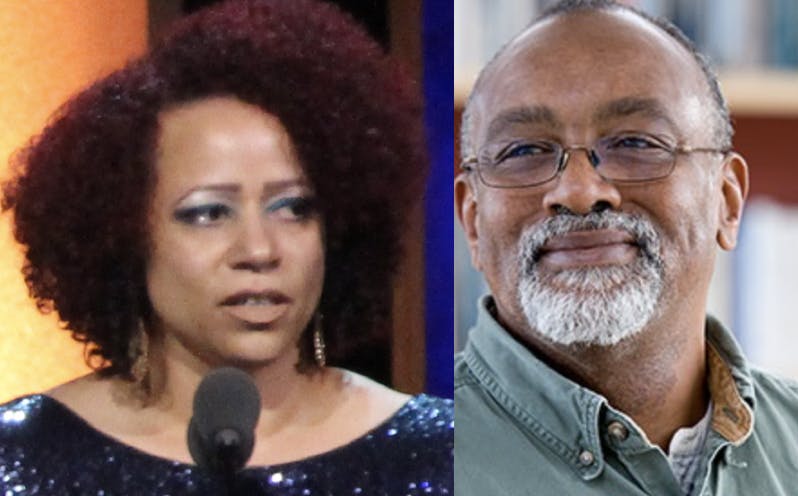
Hannah-Jones won a Pulitzer for the New York Times’ multimedia initiative which "aims to reframe the country’s history by placing the consequences of slavery and the contributions of black Americans at the very center of [the United States'] national narrative.”
Now, she is facing calls from academic scholars to have the prize rescinded — including from Brown Professor Glenn Loury.
GET THE LATEST BREAKING NEWS HERE -- SIGN UP FOR GOLOCAL FREE DAILY EBLASTLoury, along with 20 other signatories through the National Academy of Scholars, called Hannah-Jones’ “1619” premise “false.”
“We call on the Pulitzer Prize Board to rescind the 2020 Prize for Commentary awarded to Nikole Hannah-Jones for her lead essay in ‘The 1619 Project,’” they wrote. “That essay was entitled, ‘Our democracy’s founding ideals were false when they were written.’ But it turns out the article itself was false when written, making a large claim that protecting the institution of slavery was a primary motive for the American Revolution, a claim for which there is simply no evidence.”
Loury did not respond to request for further comment.
Academic Freedom — and Critique
Loury, along with the signatories of letter, wrote in part:
Beginning almost immediately after its publication, though, the essay and the Project ran into controversy. It has been subjected to searching criticism by many of the foremost historians of our time and by the Times’ own fact checker.
The scrutiny has left the essay discredited, so much so that the Times has felt the need to go back and change a crucial passage in it, softening but not eliminating its unsupported assertion about slavery and the Revolution.
Loury is not the only Brown Professor critical of the scholarship.

As GoLocal reported, Wood said the following.
"Demonstrating the importance of slavery in the history of our country is essential and commendable," said Wood. "But that necessary and worthy goal will be seriously harmed if the facts in the project turn out to be wrong and the interpretations of events are deemed to be perverse and distorted."
The NYT published Wood’s — along with four other historians — letter online contesting the series with what the academics said were “strong reservations about important aspects” of the NYT project.
Wood did not respond to request for comment about the National Academy of Scholars letter -- or the call to have her Pulitzer rescinded.
Hannah Jones Responds
Hannah Jones responded on Twitter shortly after the National Academy of Scholars letter was made public with the following two Tweets.
"In 1894, the NYT called Ida B. Wells a 'slanderous and nasty-minded mulattress' for daring to tell the truth about lynching. 100 years later she earned the Pulitzer Prize. These efforts to discredit my work simply put me in a long tradition of BW who failed to know their places.
If my work makes comfortable powerful people who believe they are the gatekeepers of the American narrative and who should tell it, I am failing. In other words, I am unbothered. I take these actions as a badge of honor."