


Delta Variant Is Making Kids Sicker
Nick Landekic, Guest MINDSETTER™
Delta Variant Is Making Kids Sicker
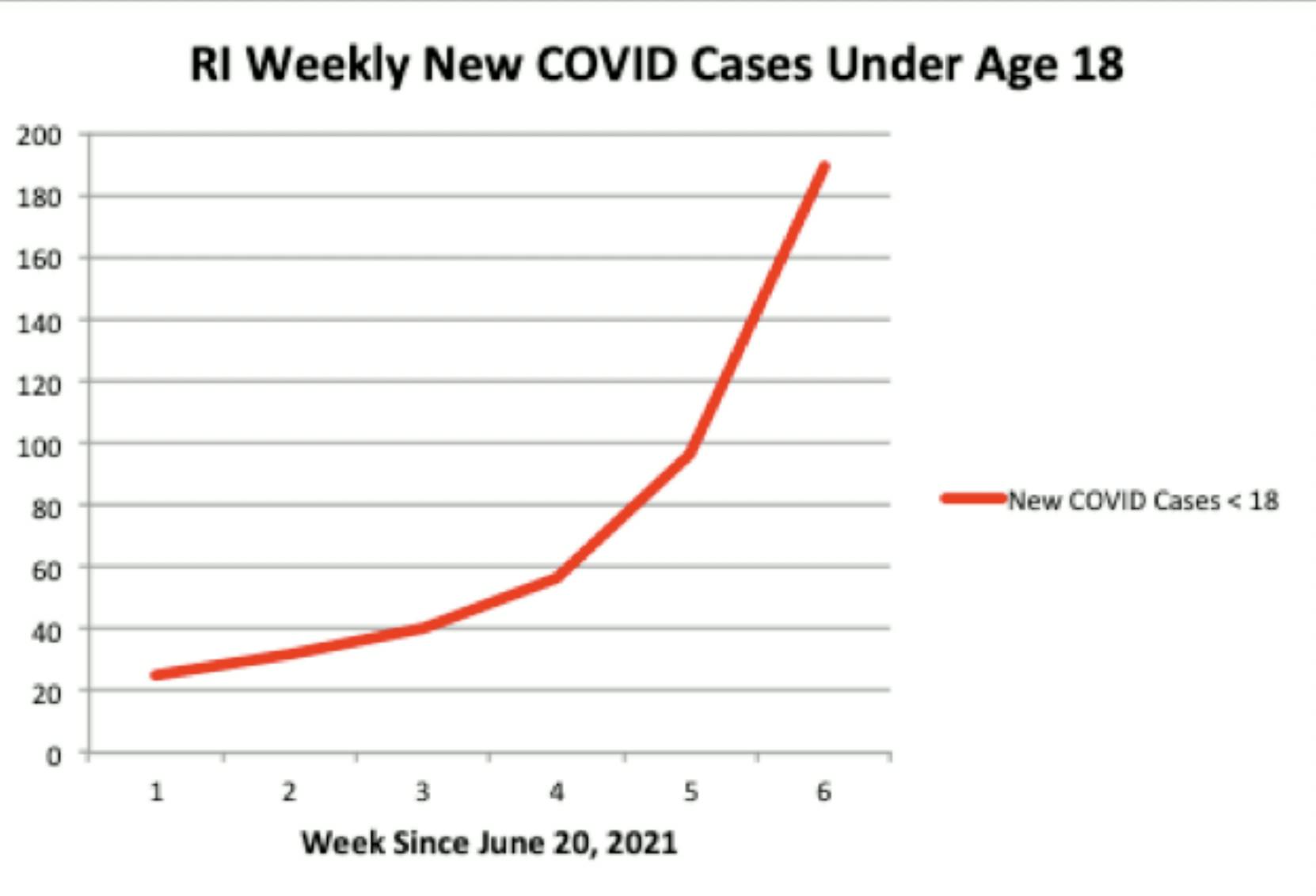
COVID cases in children are rising sharply across the country, including in Rhode Island. Data from studies are only just beginning to come in, but it appears that Delta may be infecting more children than previous variants, makes children sicker than other strains, and has a higher risk of long-term health problems.
Until recently it was commonly thought that children might not have been as severely impacted as adults by the SARS-CoV-2 virus. The reality of the situation with the Delta variant is different, which now accounts for 95% of all COVID cases.
GET THE LATEST BREAKING NEWS HERE -- SIGN UP FOR GOLOCAL FREE DAILY EBLAST
1. Delta variant cases in children are rising sharply
Since the start of the pandemic, nearly 4.3 million children have tested positive for COVID. The American Academy of Pediatrics reported 94,000 COVID cases in children across the country last week. This was up from 72,000 cases the week before – a more than 30% increase.
Across the country, 15% of all COVID cases are now in children. The rate in Rhode Island is somewhat higher, with about 20% of all new COVID cases in recent weeks being in those under age 18.
2. The Delta variant appears to be causing more severe COVID infections in children
The Delta variant causes more severe infection in adults, with double the risk of hospitalization.
It was previously believed that COVID did not impact children as hard as adults, and that children were mostly safe from serious disease. That may no longer be true with the Delta variant.
COVID caused by the Delta variant does not appear to be as ‘mild’ as infections by previous strains were believed. A recent study evaluated children hospitalized for COVID, and found 44% needed intensive therapy, 17% were put on a ventilator, and 3% died.
3. The Delta variant may have a greater risk of long COVID in children
A number of studies have shown a significant incidence of long-term health problems (“long COVID”) after SARS-CoV-2 infection. One recent study reported 76% of adults having at least one persistent, long-term health problem, and many having multiple problems including fatigue, muscle weakness, sleep difficulties, anxiety, and depression.
The extent of long-term COVID health problems in children is still uncertain. Estimates vary, but it is clearly a problem, and appears to be increasing due to the Delta variant.
A recent study in Acta Pediatrica found that 5 months after acute infection, 36% of children had 1 or 2 problems, and 23% had 3 or more. Many symptoms were reported, including fatigue, weight loss, skin rashes, heart palpitations, and chest pains. The incidence of persistent problems was similar regardless of whether the initial infection was asymptomatic and symptomatic. About half of all children were distressed by their long COVID problems.
Recent clinical observations in the U.K. report that 13% of 12-16-year-olds have continuing health problems and symptoms 5 weeks after their initial infection.
Dr. Francis Collins, Director of the National Institutes of Health, cited a study suggesting that between 11 percent and 15 percent of infected youths might “end up with this long-term consequence, which can be pretty devastating in terms of things like school performance.”
4. More children are being hospitalized for COVID
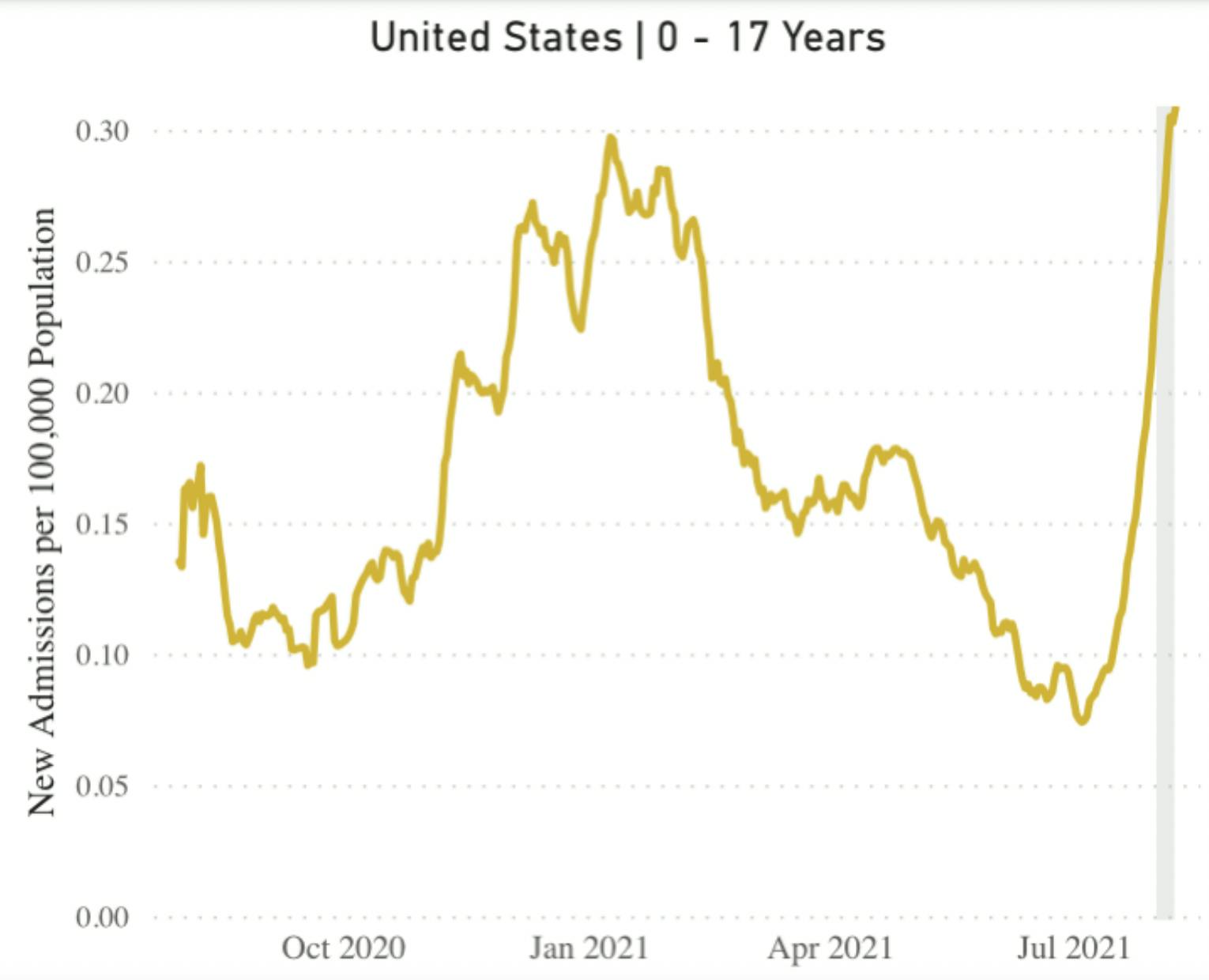
Hospitalizations for children under age 18 are rising fast. This past week an average of 225 children were hospitalized each day – a 27% increase from just the week before. Children are now being hospitalized for COVID faster than ever before in the pandemic.
5. Children continue to be at risk of MIS-C
Children are susceptible to a still uncommon but increasingly seen very serious condition called Multiple Inflammatory Syndrome, MIS-C. This is a devastating disorder where different body parts can become inflamed, including the heart, lungs, kidneys, brain, skin, eyes, or gastrointestinal organs.
To date, there have been 4,404 reported cases and 37 deaths in children from MIS-C.
RSV, Respiratory Syncytial Virus, is a highly contagious flu-like illness that affects children more than adults. Each year in the United States, RSV causes about 58,000 hospitalizations and 100-500 deaths in children younger than 5 years old. It is usually seen in winter, but in recent weeks there has been an unusual surge of cases in children.
Over 18,000 RSV cases have been detected since the beginning of April https://www.cdc.gov/surveillance/nrevss/images/trend_images/RSV14Num_Nat.htm. This off-season spike of RSV in addition to the Delta variant may put children at additional risk.
There is still a great deal that is unknown about the SARS-CoV-2 virus and the Delta variant. It’s not yet definitively known if the Delta variant is specifically worse for children. However, it is clear that more children are getting infected and becoming ill. While children might still be at less risk than adults of serious problems from COVID, this does not mean they are at no risk. A growing number of children are getting very sick. A fifth of all COVID cases in Rhode Island are now in children under age 18. Masks might be a touchy subject, but aren’t they better than the potentially ravaging and long-term health problems of COVID?
“Everybody is a little bit nervous about the possibility that the Delta variant could in fact be, in some way, more dangerous in kids,” said Dr. Richard Malley, a pediatric infectious disease specialist at Boston Children’s Hospital.
Nick Landekic is a retired scientist and biotechnology executive with over 35 years of experience in the pharmaceutical industry.