


Documents Show Raimondo’s Donor Sackler Tied to Targeting Veterans with Opioids
GoLocalProv News Team
Documents Show Raimondo’s Donor Sackler Tied to Targeting Veterans with Opioids

A key player named in lawsuits in the multi-billion dollar scheme is Jonathan Sackler. He and his wife are major donors to Governor Gina Raimondo and she has repeatedly refused to return the Sacklers' donations.
According to the lawsuit filed by the Commonwealth of Massachusetts, the Sackers were directly involved in the Purdue Pharma marketing strategy — a strategy that more than 1,600 lawsuits across the country allege was fraudulent and has led to hundreds of thousands of deaths.
GET THE LATEST BREAKING NEWS HERE -- SIGN UP FOR GOLOCAL FREE DAILY EBLAST“That same month, Richard and Jonathan’s father, Raymond Sackler, sent David, Jonathan, and Richard Sackler a confidential memo about Purdue’s strategy, including specifically putting patients on high doses of opioids for long periods of time,” cites the Massachusetts lawsuit against Purdue Pharma and Raimondo’s donor individually.
“The memo recounted that some physicians had argued that patients should not be given high doses of Purdue opioids, or kept on Purdue opioids for long periods of time, but Purdue had defeated efforts to impose a maximum dose limit or a maximum duration of use. Raymond asked David, Jonathan, and Richard to talk with him about the report,” the lawsuit states, which cites a May 5, 2014 memo from Burt Rosen, Vice President for Federal Government Relations of Purdue Pharmaceuticals.
The key to the Purdue marketing strategies was to push for higher dosages -- stronger and stronger highly addictive pain medication. The higher dosages generated higher profits.
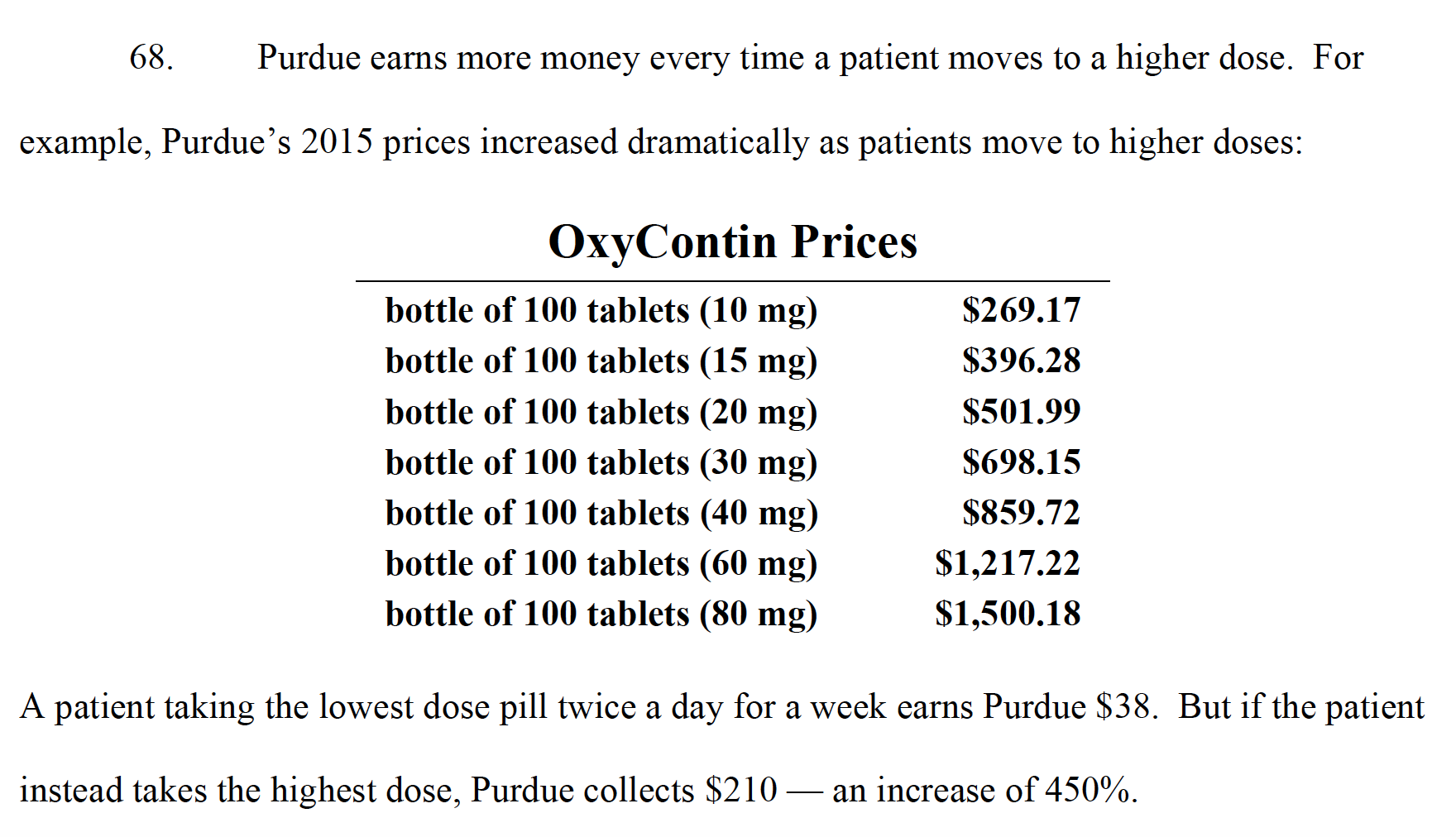
The Sacklers are the 19th richest family in America with a net worth of $13 billion. They rank five places above the Rockefeller family according to Business Insider.
How They Targeted Veterans
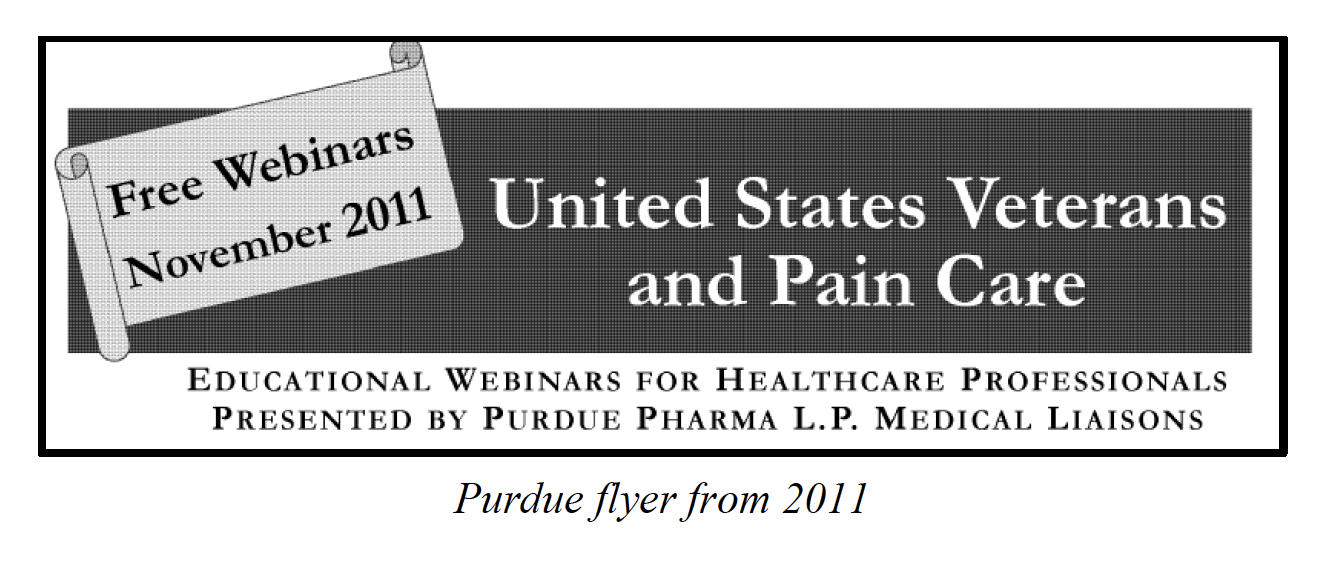
According to the Massachusetts lawsuit, "Purdue falsely denied the risk of addiction, falsely implied that addiction requires patients to get 'high,' and falsely promised that patients would not become addicted if they took opioids as prescribed. Purdue funded and distributed many more publications that were similarly misleading. Exit Wounds: A Survival Guide to Pain Management for Returning Veterans and Their Families misleadingly claimed 'long experience with opioids shows that people who are not predisposed to addiction are unlikely to become addicted to opioid pain medications.'"
The Massachusetts lawsuit says, "Purdue’s campaign to target veterans had a terrible cost. Compared to nonveterans, Massachusetts veterans are three times more likely to die from opioid overdose."
Further, the lawsuit states, "Purdue also targeted veterans with its deceptive claims that they should take opioids. Like the elderly, many veterans’ prescriptions are paid for by the public, providing another source of revenue when Purdue got veterans on its drugs. Records of sales meetings in Massachusetts show that Purdue reps emphasized insurance coverage by the veterans’ Tricare program more than 500 times. To target veterans, Purdue funded a book, Exit Wounds, which was packaged as the story of a wounded veteran but was really part of Purdue’s deceptive marketing campaign. The book repeated Purdue’s lie that patients would not become addicted to opioids:
The pain-relieving properties of opioids are unsurpassed; they
are today considered the ‘gold standard’ of pain medications, and
so are often the main medications used in the treatment of chronic
pain. Yet, despite their great benefits, opioids are underused. For
a number of reasons, healthcare providers may be afraid to
prescribe them, and patients may be afraid to take them. At the
core of this wariness is the fear of addiction, so I want to tackle
this issue head-on … Long experience with opioids shows that
people who are not predisposed to addiction are unlikely to
become addicted to opioid pain medications.
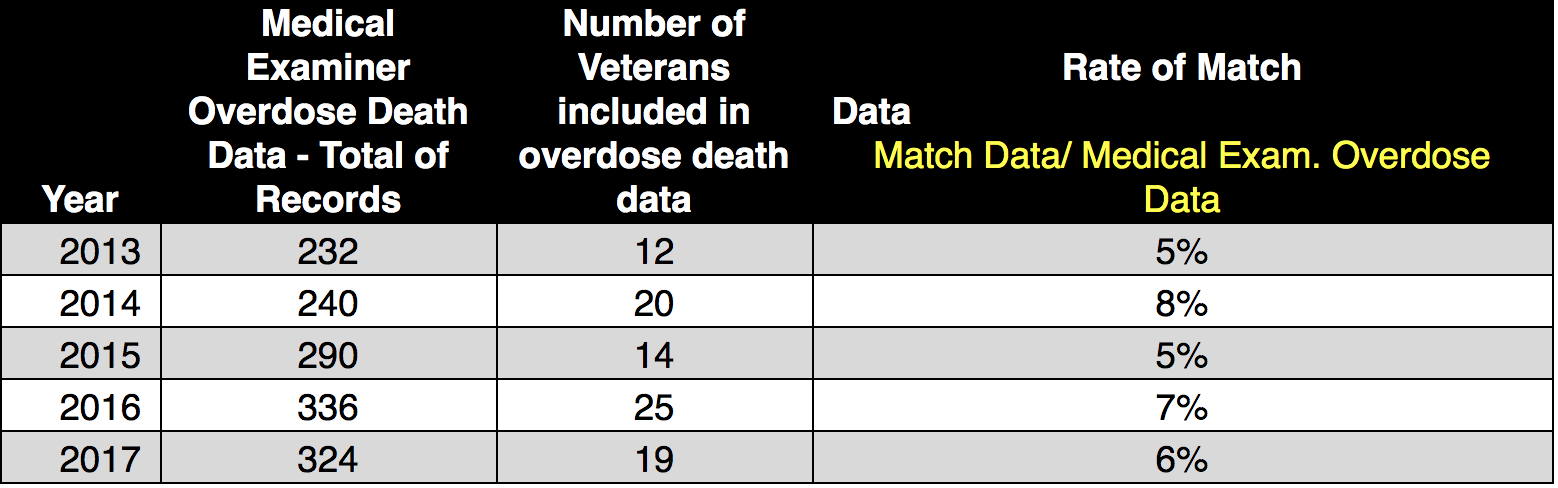
According to data from the Rhode Island Department of Health, nearly 100 Rhode Island veterans have died over the past from overdosing between 2013 and 2017.
Overall in Rhode Island, opioid death has remained constant. "Rhode Island is among the top ten states with the highest rates of opioid-related overdose deaths. In 2016, there were 279 opioid-related overdose deaths in Rhode Island—a rate of 26.7 deaths per 100,000 persons and more than twice the national rate of 13.3 deaths per 100,000," reports the National Institute of Drug Abuse.
“Do I think they have enough support to combat the addiction? No, because they don't report it -- because they're afraid they'll be kicked out of the military. Do I think it's a significant issue? Yes,” said Karen Dalton, founder of Dare to Dream Ranch, Inc, of military members' drug use.
“[The] number one reason they don't report any mental issues physical issues or substance abuse issues is they're afraid to be kicked out of the military. The resources are there but people are not utilizing them to the full extent,” said Dalton, whose organization’s programs are designed to help our service members, veterans, and their families with PTSD, anxiety, depression, military sexual trauma and mild traumatic brain injury.
According to the Providence Veterans Administration Hospital in Providence, “Having a mental health diagnoses increase the likelihood of receiving an opioid prescription. Specifically, Veterans with a diagnosis of PTSD (17.8%) or another mental health disorder (11.7%) were more likely to receive an opioid prescription than those without mental health diagnoses (6.5%).” This information is from a study conducted by the Department of Psychiatry and Behavioral Sciences, Medical University of South Carolina by Jenni Teeters and Cynthia L Lancaster.
“Director Yarn has made education and outreach on substance use disorders a priority. He is an active member of Governor Raimondo’s Overdose Prevention and Intervention Task Force and continues to evaluate ways we can connect veterans to resources in the areas of prevention, treatment, rescue (e.g., naloxone), and recovery. Through our RIServes initiative – a collaborative network of care with over three dozen community partners – we stand ready to assist any veteran who needs help accessing the many resources available. While there’s no silver bullet, he recognizes treatment works and long-term recovery is possible,” said Jolin.