


Fox, Paiva Weed Re-Elected Legislative Leaders
GoLocalProv News Team
Fox, Paiva Weed Re-Elected Legislative Leaders
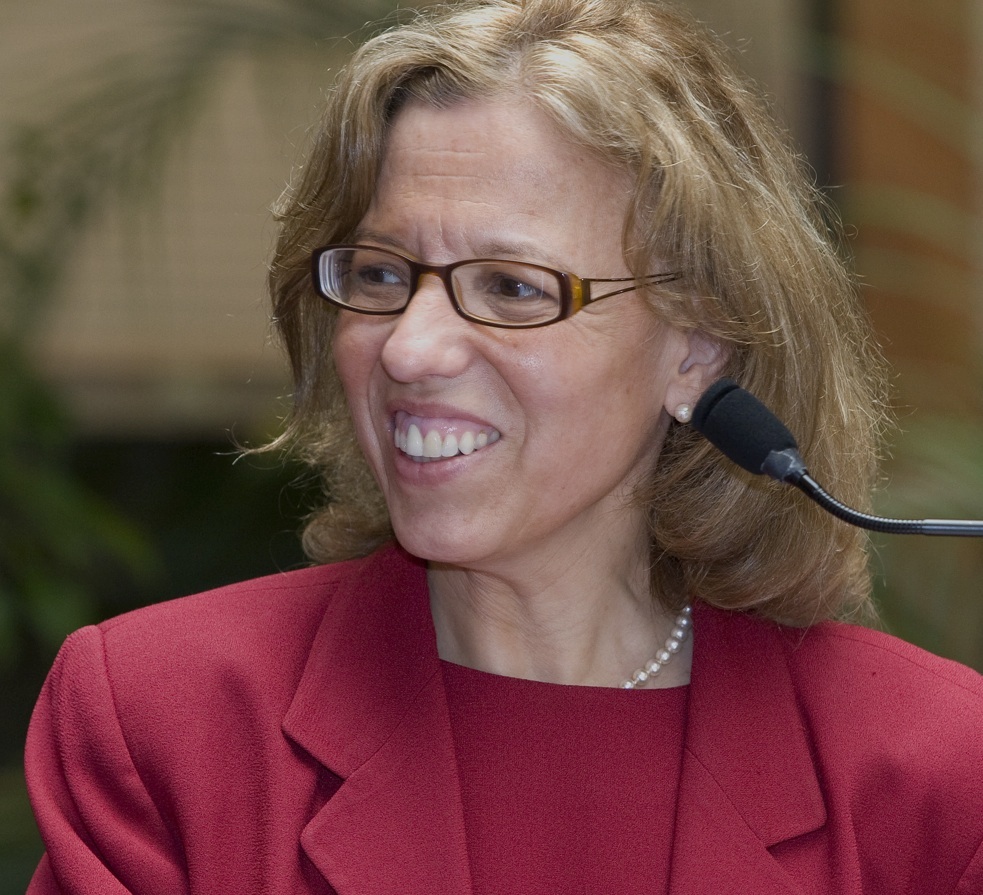
The Rhode Island Senate re-elected M. Teresa Paiva Weed, D-Newport, as President yesterday on a vote of 33 to 5. Also, Sen. Juan Pichardo, D-Providence, was chosen as President Pro Tempore—the first Latino to serve in that position in either the House or Senate.
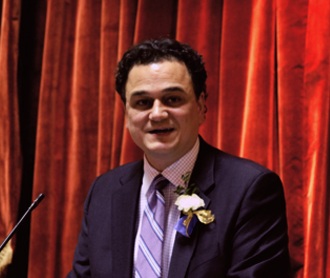
On the House side, Gordon Fox, D-Providence was overwhelming re-elected as Speaker—despite facing two challengers. Fox won in a landside of 54 votes. Democratic challenger Thomas Winfield, of Smithfield, received 11 votes and House Minority Leader Bob Watson drew 10 votes.
Both Fox and Paiva Weed stressed economic and budget issues in their speeches. Paiva Weed said the Senate’s priority has to be creating jobs. Fox called for a “pragmatic progressive” approach to dealing with the state’s budget problems and was emphatic in saying that he does not favor raising taxes to close the gap—something that Governor Lincoln Chafee, who was in the audience, had proposed while on the campaign trail. (In a copy of his prepared remarks, Fox had the words "do not" underlined and in bold.)
GET THE LATEST BREAKING NEWS HERE -- SIGN UP FOR GOLOCAL FREE DAILY EBLASTBelow are extensive excerpts from both their speeches.
Excerpts from Paiva Weed’s inauguration speech
….The last two years have been filled with challenges. Challenges that the Senate has not shied away from. Many more lie ahead, as our economy continues to struggle both nationally and locally. I am confident that we will, as leaders, overcome these challenges as we lead our state during these difficult times.
• opportunities to foster job creation and build a thriving economy, while making wise investments in higher education and workforce development;
• opportunities to establish the greatest pre-K, elementary and secondary schools in the nation, through implementation of the funding formula, new tools provided through Race To The Top, and a serious and sustained commitment among leaders in government to build quality schools;
• opportunities to increase access to affordable, quality health care, including through prudent implementation of the health care reform act;
• opportunities to increase the efficiency and sustainability of government, such as through smart purchasing decisions, or sharing of municipal services when possible.
• In 2011, we will continue to listen to Rhode Island businesses and build upon the success of the 2010 session Senate Initiative, “Making it Easy to do Business.”
• We will continue to work towards a goal of fewer students who need remedial education when transitioning from high school to college.
• We will continue the work of the Joint Port Commission, co-chaired by Senator Walaska, which worked through 2009 and 2010 towards an objective of realizing the full potential of Rhode Island’s working waterfronts.
And, while an education funding formula is in place, this year we will focus on aspects that still need to be addressed, such as categorical aid. Education Committee Chairwoman Hanna Gallo, who championed the funding formula in the Senate, will chair a commission to begin meeting this month to address such issues as the funding of vocational schools – an issue which impacts every community in the state.
The federal health care reform act requires numerous decisions on the part of the state. Access to quality health care remains unaffordable for many. Health and Human Services Committee Chairwoman Rhoda Perry and Lieutenant Governor Roberts have provided invaluable leadership on health care issues. We look forward to working with the Chafee administration to ensure the best health care outcomes for Rhode Islanders.
The financial challenges faced by our cities and towns were recently highlighted in Central Falls, but the crisis faced by Central Falls is not unique. Prudent, statewide action is needed. We must continue the pursuit of government efficiencies through shared municipal services and address pension challenges. Chairman DaPonte is the Chair of the Municipal Pension Commission which has been looking at the alternatives available, and we look forward to their findings and recommendations.
This is certainly not an exhaustive list of the challenges we will face in 2011. One of the most prominent challenges we will face is an estimated budget gap which could be as much as $300 million which must be closed in the 2012 budget – a fact which will mean tough choices for all of us, and long nights for the members of the Finance Committee. …
Excerpts from Fox’s inauguration speech
In my mind, this dilemma necessitates a “Pragmatic Progressive approach” to the budget debate ahead. Through this approach we will strive to continue to provide greater opportunities for all by prudently investing our state’s resources, but those investments must always be measured by the time-tested notion of living within our means.
I do not favor raising taxes. We need to tackle the budgetary structural problems that we face and we must resist the temptations of one-year quick fixes.
Adding to the budget challenges will be the pressing need to address the fiscal health of our municipalities. We must look for ways to enhance the well-being of our local communities. We are now well aware of the problems facing Central Falls, but unfortunately these fiscal troubles are not unique to this one community.
In the coming days, I will be appointing a Special Commission to begin holding hearings and soliciting expert testimony on the financial health of our municipalities, while directly analyzing the Central Falls’ issues. Our House must carefully scrutinize this looming crisis that has the potential to dramatically impact local bond ratings and jeopardize pension plans that are already woefully underfunded.
Retired Superior Court Judge Mark Pfeiffer, now the receiver in Central Falls, offered a series of recommendations to assist that city and also to serve as a model for other communities facing possible financial peril. His ideas will be diligently studied and fully vetted during our session by this House Commission.
I am hopeful the solutions that we craft to address the Central Falls’ situation will provide protocols for the state and other municipalities to proactively deal with similar financial issues.
No discussion of our state’s budget picture can be undertaken without the goal of enhancing revenues in our state. Strengthening our economic development efforts is paramount on the House agenda. I am proud that we unanimously passed income tax reform legislation last June that will make our state more competitive with our neighbors.
We must continue to encourage investment in Rhode Island, particularly in the knowledge-based and technology sectors, as we did last year.
We certainly must be willing to embrace new ideas to help our businesses flourish. We made great strides in enacting legislation last year to cut through the regulatory red tape and extend access to capital, but there is much more that needs to be done.
I look forward to participating in the SBA’s Economic Summit this Friday to hear from business leaders and assure them that state government will better facilitate and assist them to thrive and create jobs.
I was also proud to lend the House’s support to a $10 million federal grant obtained by the Port of Providence this past fall. These funds will help develop more good-paying blue collar jobs that are essential to our state’s economy. In conjunction with the Senate, we are going to revitalize our Port Commission this session and work towards meaningful and long-lasting solutions at our existing ports that have been underutilized for far too long. Ports represent a great opportunity for economic growth.
Placing an increased importance on the value of education will also be prominent on the House agenda for the next two years. The enactment of the education funding formula was a major step taken by this legislature last year, one that was fifteen years in the making.
But our work is not complete. We need to properly fund public education, while seeking greater efficiencies and demanding excellence from our teachers. Again, no easy task.
I was so proud to travel to Washington on three occasions last year to bring the full weight of this House behind the Race to the Top grant. The $75 million dollars that we obtained is an unprecedented investment in our teachers and our students. It is an opportunity to change the face of education in our state.
Over the next two years, this House must work toward enhancing the quality of life for all Rhode Islanders, and that work begins in the classrooms!
While we must continue to make strides at the elementary and secondary levels, I have a new challenge to place before all House members today: We must reverse the trend of ever-increasing tuitions at our public institutions of higher education.