


Interview with Hedrick Smith, Pulitzer Prize Winner
Kate Nagle, GoLocal News Editor
Interview with Hedrick Smith, Pulitzer Prize Winner
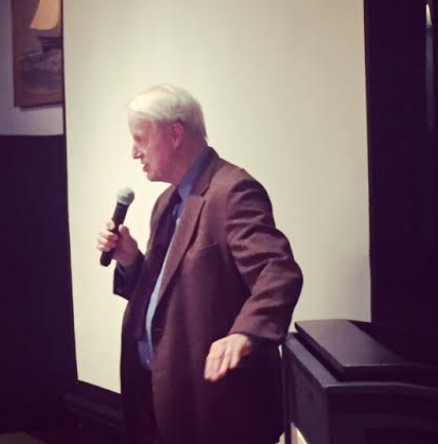
In 1971 as the New York Times chief diplomatic correspondent, Smith was a member of the team which produced the Pulitzer-winning Pentagon Papers series. In 1974, he was awarded a Pulitzer for International Reporting for his coverage of the Soviet Union and its allies in Eastern Europe.
Hedrick, who wrote national best-sellers The Russians and Who Stole the American Dream? in 2012, talked about the future of the U.S -- and where things stand with Russia, Vladimir Putin, and the 2016 Presidential field.
GET THE LATEST BREAKING NEWS HERE -- SIGN UP FOR GOLOCAL FREE DAILY EBLASTQ&A with Hedrick Smith
Who Stole the American Dream? came out in 2012. Where are we now in 2016?
The situation in America is worse now than when I wrote [the book], because that was about inequality of income, and inequality of power in America. We've had six years of recovery, 14 million new jobs, and the average American family is worse off today than it was in 1999, while Wall Street is near record heights and the percentage of the national income going to the top 1% is greater than it's ever been, with the exception of the end of the 1920s.
So what's the outlook moving forward in the U.S. in an election year?
The outlook is not good unless we start fixing fundamental structures, and what's interesting about the Presidential race is that both Donald Trump and Bernie Sanders are riding high and strong because of the enormous widespread unhappiness and disenchantment both with the political system and the economic system.
What's going on is the unhappiness of a lot of middle class, working class Americans -- and young people -- and it's translating from figures and polls into voting at the booths. Politicians have to start paying attention to that. Hillary Clinton is in trouble because she appears to be the voice of Wall Street within the Democratic party and there's a huge faction of the Democratic party that's not buying that.
Donald Trump has routed the establishment candidates of the Republican party because they continue to insist on trickle down economics. And Trump, for all the terrible things he's said and done in his campaign -- which I'm certainly not approving -- has tapped into the frustration of white middle class workers, mostly men, who have been left behind by trade deals and the trickle down economics of the Republican party. So the answer is rebellion is afoot and it's either going to bring change as a result of this election, or if not this one, then next election.
Turning to Russia, can you encapsulate the state of Russian-American relations right now?
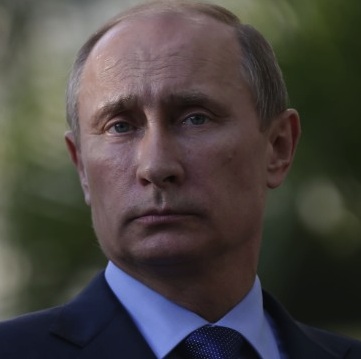
Syria is another question. It's difficult to understand. The Russians and Putin want to be a factor in the Mediterranean and Arab world. Do they want to be tied to Bashar al-Assad from now on, that's not so certain. But they don't want to shift to somebody else without making it look like they made a good deal. And they'll continue to be active there.
And he'll continue to try to divide Western Europe from America. [Western Europe] wants a civil war ended in Syria and they'll buy a cease fire and peace deal on any terms, to stop the refugee problem. We won't buy a peace deal to the same degree. Putin's going to work us. Because he's like Clinton, he's a power player, he likes the power game. This isn't going away, but it doesn't need to escalate. The real question is will he try to push into Lithuania, Estonia, Latvia, one of the NATO countries we're technically bound to defend. I think he probably won't, I don't think he wants that kind of showdown, but he's a gambler and his gambles have paid off.
But he's playing from a hand of weakness. People in America think he's playing from a hand of strength because he's bold. But what he does understand is when we have a divided government, and Western Europe and America are divided, it's a great time for Russia to push for an opening. We have to get our home act in order.
What about the candidates?
I would say that Putin's a cocky guy, and he can easily read that Trump doesn't know what he's talking about, but that Trump thinks he's a deal maker. So Putin will be comfortable with a guy like Trump, he'll think he can take him easily. Cruz, he might be concerned he'd use force in ways that are unpredictable.
I think he figures Clinton will be tougher to deal with than Sanders. He's met her, he knows her, he knows her toughness. But leaders like predictability. If you can get a known quantity even if it's a tough adversary, it's better than someone who's unpredictable.
GoLocal’s Top 15 Stories of 2015

#15
Johnston Blocks Black Church Says Reverend, City Official Calls Him “F___ing Black Owner”
In a video tape exclusively obtained by GoLocalProv, a Johnston town official is heard making a racially charged statement regarding a church pastor’s attempts to rehabilitate a historic church in town — and the reverend is calling the town’s treatment of his efforts racist. (Starting at the 2:25 mark of the video).
In a meeting with his supervisor and the contractor on the project that was taped, Johnston building inspector Ben Nascenzi can be heard referring to Reverend Dr. Chris Abhulime as “the fucking black owner” of the former historic Belknap Church.

#14
Top 20 Salaries in Governor Raimondo's Office
Here are the salaries for the top twenty paid staffers in Rhode Island Governor Gina Raimondo's office.
In total, a recent Access to Public Records Act (APRA) request shows that the recently selected staff of 30 has a salary range between $35,756 and $167,118.

#13
EXCLUSIVE: New PawSox Stadium Location Emerges in Providence
A new stadium location in Providence emerged as an alternative to the proposed 195 Commission land, GoLocalProv exclusively learned.
The eight-acre parcel at the location of the former Victory Plating company offers a number of potential benefits over the park land proposed by the new ownership group of the Pawtucket Red Sox. Jim Skeffington,
President of the PawSox, has been asking for state for highly valuable land as part of $120 million in concessions the PawSox are demanding from the state of Rhode Island and the City of Providence.

#12
Prov. Municipal Judge Caprio's Cars Registered in Narragansett
Frank Caprio, the Chief of Providence’s Municipal Court, registers six luxury cars to his home in Narragansett at a fraction of the tax payments of registering them in Providence where he claims to live.
The six vehicles include: two Mercedes, two Lincolns, and Infinity G37 and a Toyota Highlander and all of the vehicles are late model.
Combined, Caprio’s vehicles are worth hundreds of thousands of dollars and by registering them in Narragansett versus his claimed home in Providence he has saved tens of thousands of dollars over the past few years.

#11
EXCLUSIVE: President's Daughter Malia is Scheduled to Tour Brown Next Week
GoLocalProv has exclusively learned that Barack and Michelle Obama’s oldest daughter was visiting Brown University k as part of her college tour.
According to press sources, she has previously visited NYU, Columbia, Stanford and Cal Berkley.
If the first daughter selected Brown University it would be the second President’s daughter to attend Brown - Amy Carter attend in the 1980s. John Kennedy Jr., the son of John F. Kennedy, attended Brown as well.

#10
Rhode Island’s 50 Wealthiest and Most Influential - 2015 Edition
GoLocalProv's 2015 Edition of the 50 Wealthiest and Most Influential Rhode Islanders looks at those individuals who combine wealth, influence, and philanthropy in our state.
This list is not of simply those with the greatest wealth. Or those with political muster - this list are those exclusive few who have the combination of both.
Represented are many of the public business leaders of Rhode Island - and some are more private - but all get their phone calls returned.

#9
50 RI School Cafeterias with the Most Health Code Violations
A review of over 350 cafeterias in Rhode Island by GoLocalProv has found thousands of health violations at schools and facilities across the state over the past three years.
Inspectors noted at some cafeterias observations that included lack of adequate hand washing facilities, accumulation of food and debris on equipment, improper food storage -- and open holes in doors and flooring, which is an infraction under "insects, rodents, and animals not present."

#8
Big Radio Companies Facing Bankruptcy - WPRO and WHJY’s Parent Co’s in Financial Turmoil
Most of Rhode Island's favorite radio stations may be impacted by a building Wall Street financial meltdown in the radio industry.
The two biggest radio companies in the United States are on the verge of massive restructuring or bankruptcy, as they each have billions of dollars in debt and little chance of managing the building financial obligations.
How bad is the situation? According to one leading radio analyst, the problem is catastrophic. “$20.5 billion in debt for iHeart — billions more than the city of Detroit when it went bankrupt."

#7
EXCLUSIVE: Star RI Startup Nabsys Closes in Providence
Providence-based startup Nabsys -- who had raised over $40 million and was considered a rising rock star in the genome-mapping world -- has closed its downtown office.
The company, which had been most recently located at 60 Clifford Street in Providence, was shuttered with a For Lease sign in the window. A parking lot attendant across the street said that the forty plus employees had previously parked there were gone.

#6
Vendors Claim RI Commerce Corp Board Member's Club Owes Tens of Thousands
Vendors who worked on Manchester 65, the West Warwick club owned by a Rhode Island Commerce Corporation board member, have told GoLocal that they never were paid for services they provided.
The club faced an eviction hearing as the result of a lawsuit filed by the building landlord against Manchester 65,which is owned by the Commerce Corp's Vanessa Toledo Vickers, and de facto run by her husband Jim Vickers.

#5
Providence Pension Watchdog Riley Releases Report, Calls for More Answers
Financial analyst and GoLocal MINDSETTER Michael Riley has released a report entitled "Providence Fraudulent Accounting and Theft," following multiple columns in which he addressed a number of issues which he said pertained to city pension payments -- and what he claims was a $66 million dollar pension fund payment that was due by June 30, which the city said Tuesday will be paid instead next month.
Writes Riley in his report, "Providence, Rhode Island is misleading its municipal bond investors and has been for as many as 20 years. Misleading municipal bond Investors is a violation of Federal securities laws."

#4
EXCLUSIVE: Dunkin' Donuts Worker Writes '#BlackLivesMatter' on Police Officer's Cup
A Providence Police officer went to purchase a coffee on Friday night and his cup had a message from the Dunkin' Donuts employee writen on the cup, "#BlackLivesMattter."
The event happened at the Dunkin' Donuts located on Atwells Avenue at the corner of Bradford Street. William "Billy" O'Donnell posted a picture of the cup and a description of the events.

#3
The Top High Schools in Rhode Island 2015
The grades are in — GoLocalProv’s sixth annual Top High Schools in Rhode Island has determined that East Greenwich is head of the class for 2015.
Based on a formula developed at Babson College to assess and weight each school's latest NECAP and SAT scores, plus per pupil funding, student-teacher ratios, and graduation rates, GoLocal has provided a comprehensive performance list of the state's public, charter, and technical high schools.

#2
Providence's Dancing Cop Denied Holiday Work Over #BlackLivesMatter Comments
Providence's Dancing Cop has been denied the chance to dance this season by the City of Providence, following his outspoken comments after a Dunkin' Donuts worker wrote "BlackLivesMatter" on a police officer's cup.
Retired Providence Police officer Tony Lepore, Sr, who usually "dances" during the holiday season in the city, provided the following message on his Facebook page after meeting with the City.
Photo/Flickr: Jef Nickerson

#1
Moses Brown Cancels School for Blizzard Juno with Hilarious Video
Moses Brown Head of School Matt Glendinning took to YouTube for a special message to the students of the Providence prep school to announce a school closure due to snow. Set to the tune of Frozen's "Let it Go", here's Glendinning's rendition of "School is Closed."


