


Is Providence Ready to Handle Toxic Algae in Drinking Water?
Nicholas Handy, GoLocalProv Contributor
Is Providence Ready to Handle Toxic Algae in Drinking Water?

Many concerned citizens throughout the nation are turning to their city in hopes that a plan in place incase the algae begins to bloom in their local drinking water supply. The good news for Providence residents is that plenty of testing goes on to ensure drinking water is clean for consumption.
“We run numerous tests for our water quality in the range of more than a thousand a month,” said Ricky Caruolo, the General Manager of the Providence Water Supply Board. “In the past two months we have started to run tests for blue green algae as well. We have no indication that blue green algae will be making an appearance in our water anytime soon.”
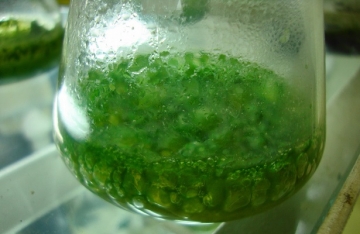
GET THE LATEST BREAKING NEWS HERE -- SIGN UP FOR GOLOCAL FREE DAILY EBLASTThe primary concern with cyanobacteria is that when it blooms, it releases toxins into the water, which can cause skin and eye irritation, gastrointestinal symptoms, and liver or neurological damage.
Supply and Demand
The Providence Water Supply board is a large entity that supplies water to more than 73,800 customers throughout Providence, Johnston, North Providence and Cranston as well as nine wholesale communities throughout the state.
The Department of Public Health does have a protocol in place when dealing with blue green algae, according to Caruolo, but he stresses that it is preventative maintenance and testing that keeps blue green algae from becoming a problem.
Recreational Waters
Additionally, the state of Rhode Island makes sure that recreational bodies of water are monitored and tested, to ensure that blue green algae blooms do not arise.
If, for some reason, the algae does bloom and rises to levels that are unsafe, then the Department of Environmental Management releases an advisory, alerting the public that the water is unsafe for human and animal contact.
“We do a lot of work in taking samples of water around the state where we have reports of cyanobacteria,” said Elizabeth Scott, Deputy Chief of Surface Water Protection for the Rhode Island Department of Environmental Management. “That is our primary role. If the level of cyanobacteria rises to an unsafe level then we send out an advisory for that body of water, advising people and their pets to not come into contact with the water until the levels have decreased.”
The History of Disease Outbreaks in New England

New England Smallpox 1633
European settlers brought Smallpox to America in the 17th century, and it is estimated that more than 70% of the Native American population in the northeast was wiped out by the disease between 1633 and 1634.
Smallpox has been eradicated from the United States for over 60 years.

Boston Smallpox 1721
Nearly 6,000 Bostonians contracted Smallpox in 1721, with 844 of them ultimately dying from the disease.
The Smallpox outbreak in Boston incited great debate about the use of inoculation in the United States, a practice that is obviously observed today.

Tuberculosis 1800-1922
With a near 80% mortality rate among those infected, "The White Plague" struck worldwide and at home in the United States, particularly in industrial areas.
According to research by the Harvard Medical Library, nearly 40% of deaths of working-class people in urban American cities were cause by Tuberculosis.

Influenza 1918
A worldwide pandemic that struck during World War 1, the "Spanish Flu" caused mass destruction in the United States and abroad.
20 million people across the globe are estimated to have died from the flu pandemic, with 675,000 Americans among the death toll.

Polio 1952
58,000 cases of Polio and over 3,000 resulting deaths were reported in the 1952 epidemic in the United States.
The disease affects the nervous system, and President Franklin D. Roosevelt is probably the most notable person to live with the disease.
Polio has been eradicated in the United States for over 30 years.

Asian Flu 1957
While not as lethal as the 1918 Influenza Pandemic, the "Asian Flu" caused almost 70,000 American deaths in before it was eradicated.
The Asian Flu is caused by the same virus that causes bird flu and swine flu.

Holy Cross Hepatitis 1969
After being trounced on the second Saturday of the 1969 college football season by Dartmouth, the Holy Cross football team had each member get blood work done to determine if there was a medical reason for their poor performance.
90 out of 97 players on the team had elevated levels of a liver enzyme, and 30 of those 90 players showed symptoms of Hepatitis-A.
Dr. Leonard Morse, who went on to become the Commissioner of Public Health in Worcester, helped determine the cause of the sickness- a contaminated drinking water supply that only the football players had accessed.
The remainder of the season was canceled (an NCAA first) and the 30 players showing symptoms were quarantined in a single dormitory.

AIDS Epidemic 1980s
While not documented until 1981, the HIV virus and AIDS continues to be one of the most debilitating diseases alive today in the United States.
Progress has been made over the years, as education about the virus and how to prevent it have brought the world from "AIDS is Preventable" to "AIDS is Treatable."

NH Hepatitis 2012
30 people were diagnosed with Hepatitis-C in 2012 after a former hospital worker stole syringes and intentionally contaminated them with the disease, of which he was afflicted.
After pleading guilty to charges in New Hampshire, the perpetrator was sentenced to 39 months in jail.

VT Whooping Cough 2012
Vermont declared a whooping cough epidemic in 2012 after over 500 cases of the disease were reported. 90% of the afflicted were children who had received the not-so-foolproof vaccine.
Whooping cough- also known as Pertussis- is difficult to diagnose initially because it starts with cold-like symptoms and progresses into a life threatening illness.


