


Leonardo Angiulo: US Incarceration Rate May be Unsustainable
Leonardo Angiulo, GoLocalProv Legal Contributor
Leonardo Angiulo: US Incarceration Rate May be Unsustainable
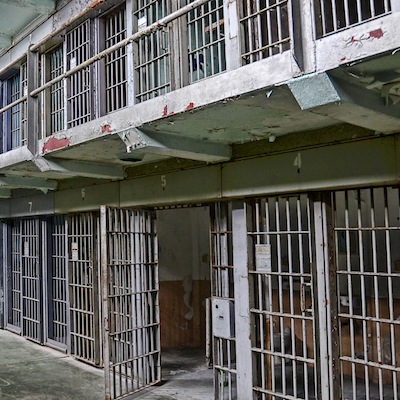
A typical human reaction to criticism like this is to question the source. It just so happens that the National Research Council stands up well to scrutiny. In 1863 an act signed into law by President Lincoln created the National Academy of Sciences in order to advise the Federal Government on various issues that require expert opinion. The National Research Council is a division of the National Academy and is committed to shaping public policy and informing public opinions on various policy concerns. Given the fact that the Academies have researched topics for Congress as varied as oyster farms, inorganic arsenic, and agro-defense facilities in Kansas, it's fair to say that they are an objective body when it comes to criminal justice policy.
Since the opinion comes from a group that regularly advises the legislature and makes specific comments on our national incarceration rates, these findings could serve as a spark to a new public dialogue. Specifically, a review of the accompanying press release offers staggering data such as Black men under age 35 who did not finish high school are more likely to be incarcerated than employed. In addition, 60 percent of the people incarcerated in 2011 were Black or Hispanic. From a financial standpoint, state spending on corrections is third behind Medicaid and education.
GET THE LATEST BREAKING NEWS HERE -- SIGN UP FOR GOLOCAL FREE DAILY EBLASTThe report's authors also looked to what happens when inmates return to their communities in order to investigate whether or not the states, and therefore it's residents, are receiving a return on their investment. The summary finding is that they were unable to determine the effect of our incarceration rates on individual communities because of a lack of reliable statistical estimates. Given the ongoing public concern with the stock market, real estate values and 401(k) balances it seems incongruous that one of the largest categories of public expenditure could have any unknown effects.
There are, however, some known effects of current incarceration policies in the recent press release supporting the Council's call for reform. Some of those effects identified by Council Committee members include the already discussed financial burden on the public, the disproportionate impact on minorities, as well as the correlation between child behavioral problems and a father's incarceration. In the face of such costs, and the inability to prove high incarceration rates effectively prevent crime, policy makers are now faced with the question of what to do now. The report concludes that improving the way in which we use incarceration could recognize appropriate limits on the power of the government, reduce the numbers in institutions, improve family relationships and contribute to better mental and physical health in the population.
While these statements seem ground breaking, the truly revolutionary part is the way in which an objective public policy agency tied the assertions to evidence. In practice, these ideas were already being internalized and acted upon before this report was actually released. At the federal level this past year alone, the Sentencing Commission members spoke about the need to change the current sentencing structure and the U.S. Attorney General supported policy decisions to lower minimum mandatory sentences for non-violent drug offenses. At the state level, local courts are implementing intensive probation conditions through drug courts to help offenders identify the source of their problems rather than imposing incarceration. Two additional examples in Worcester County are Sheriff Lewis Envangalidis' inclusion of recovery programs in the House of Correction and the formation of an after incarceration support services program to encourage successful reintegration into the community.
It is without question that certain behaviors are criminalized for a reason and consequences for wrongdoing serves legitimate purposes such as punishment and prevention. The question presented by the National Research Counsel, and people serving in the judiciary and law enforcement right now, is whether the current mode of punishment benefits those it is designed to serve: the citizens of the United States.

New England's Strangest Laws

Horse Test Drive
Rhode Island
Illegal to test drive a horse on the highway
11-22-11 Testing speed of horse. Every person who shall drive any horse over any of the public highways, for the purpose of racing or trying the speed of the horse, shall be fined not more than twenty dollars ($20.00) or imprisoned not exceeding ten (10) days.
TITLE 11
Criminal Offenses
CHAPTER 11-22
Highways
SECTION 11-22-11

Alcohol in Hospitals
Massachusetts
Illegal to provide alcohol or narcotics to a hospital patient
Chapter 270: Section 5. Giving, selling or delivering alcoholic beverages or drugs to hospital patients; possession.
Section 5. Whoever, except under the direction of a physician, gives, sells or delivers alcoholic beverages, as defined in section one of chapter one hundred and thirty-eight, or a narcotic drug to a patient in any hospital who is suffering from inebriety or from the effect of inebriety, or from excessive use of narcotic drugs or from the effect of such use, and whoever has in his possession within the precincts of any hospital any such beverage or drug with intent to convey or deliver it to any such patient, except under direction as aforesaid, shall be punished by a fine of not more than fifty dollars or by imprisonment for not more than two months.

High-flying Kites
Connecticut
Meriden Town Ordinance
Illegal to fly a kite higher than 500 feet
Chapter 153
Article I

Seaweed Collections
New Hampshire
Illegal to collect seaweed from the beach
TITLE XVIII
FISH AND GAME
CHAPTER 207
GENERAL PROVISIONS AS TO FISH AND GAME
Collecting Seaweed
Section 207:48
In Night. If any person shall carry away or collect for the purpose of carrying away any seaweed or rockweed from the seashore below high-water mark, between daylight in the evening and daylight in the morning, he shall be guilty of a violation.
Source. 1973, 532:10, eff. Nov. 1, 1973.

Passing on Left
Rhode Island
Illegal to pass on left without making a loud noise
31-15-4 Overtaking on left.
The following rules shall govern the overtaking and passing of vehicles proceeding in the same direction, subject to those limitations, exceptions, and special rules stated in this section:
(1) The driver of a vehicle overtaking another vehicle proceeding in the same direction shall give a timely, audible signal and shall pass to the left at a safe distance and shall not again drive to the right side of the roadway until safely clear of the overtaken vehicle.
(2) Except when overtaking and passing on the right is permitted, the driver of the front vehicle on the audible signal of the overtaking vehicle shall give way to the right, and shall not increase speed until completely passed by the overtaking vehicle.

Dog Leashes
Maine
Waterboro Town Ordinance
Illegal for dog leashes to exceed 8 feet in length
Section 3: Control
It shall be unlawful for any dog, licensed or unlicensed, to run at large, except when used for lawful hunting purposes.
At large means off the premises of the owner or keeper and not under the control of any person by means of personal presence and attention as will reasonably control the conduct of such dog.
Reasonable control, for the purposes of this Ordinance shall mean the use of a leash, cord, chain or otherwise, of not more than 8 feet in length, or unless confined within a vehicle, under restraint in an open vehicle being either driven or parked, or under voice control or command in the case of a trained dog providing that such control is strictly maintained.
(Adopted Annual Town Meeting June 8, 1991. Amended Special Town Meeting June 23, 2001)

Deceased Animals
Massachusetts
Dead Animals Have No Monetary Value
Value of diseased animal

Bathing Not Optional
Vermont
Barre Town Ordinance
All residents required to bathe on Saturdays.
A town ordinance in Barre, VT requires that all residents bathe on Saturdays. Other days, residents can use their own discretion.

Small Arcade
Connecticut
Rocky Hill Town Ordinance
Illegal for an arcade to have more than 4 amusement devices
81-2. Definitions.
As used in this chapter, the following terms shall have the meanings indicated:
MECHANICAL AMUSEMENT DEVICE
A. Any mechanical pinball amusement device which is so constructed that the result of its operation depends upon chance, or upon the skill of the operator, or upon both;
B. Any mechanical device which in its operation shoots or propels an electric light, ray or impulse to a target;
C. Any table bowling, shuffleboard or other mechanical table game or amusement device involving the propulsion of spheres or other projectiles, mechanically or by hand; or
D. Any coin-operated or coin-in-the-slot table amusement device or game.
PERSON -- An individual, partnership, corporation, club or association.
81-3. License required; number restricted.
A. No person shall have in any place within a permanent structure open to the general public or occupied by any club or association any mechanical amusement device without first having obtained a license therefor.
B. Notwithstanding the provisions of Subsection A, no person shall have in any place within a permanent structure open to the general public more than four mechanical amusement devices.

No Roller Skating
Maine
Biddeford Town Ordinance
Illegal to roller skate on the sidewalk
Sec. 62-58. Riding bicycles, skating on sidewalks prohibited; penalty.
(a) No person shall ride a bicycle upon any public sidewalk in the city. No person shall skate on any sidewalk in the city.
(b) Whoever violates or fails to comply with any of the provisions of this section may be punished by a fine of not more than $10.00.
(Code 1975, 6-1, 6-14, 15-12)

No Place for a Picnic
New Hampshire
Claremont Town Ordinance
Illegal to drink or picnic in a cemetery
No person shall:
(4) Use the cemeteries as picnic grounds, or consume alcoholic beverages in a cemetery, or bring the same upon the premises.
(9) No child under the age of ten (10) years shall be allowed in any cemetery unless accompanied by an adult.
(11) Be within the cemetery at any time other than daylight hours except cemetery employees, police officers, or by authorization of the superintendent.
(Ord. No. 182, 3, 5-10-78)

Maximum Capacity
Vermont
Middlebury Town Ordinance
Illegal for more than one person to ride a skateboard at a time

Highway Hunting
Connecticut
Illegal to fire gun from public highways (fine: up to $100)
General Statutes of Connecticut, Revised to 1997
Title-53 - Crimes
Sec. 53-204. Hunting or discharging firearm from public highway.
Any person who hunts or discharges any firearm from any public highway shall be fined not more than one hundred dollars. This section shall not apply to any law or conservation enforcement officer in the performance of his duty. Enforcement officers of the Department of Environmental Protection are empowered to arrest for the violation of the provisions of this section.
(1955, S. 3290d; 1957, P.A. 344.)

Airport Gambling
Maine
Biddeford Town Ordinance
Illegal to gamble at the airport

Defrauding an Inkeeper
New Hampshire
Illegal to check into a hotel under an assumed name
TITLE XXXI
TRADE AND COMMERCE
CHAPTER 353
HOTELS, TOURIST CABINS, ETC.
Defrauding an Innkeeper
Section 353:10
Evidence. In prosecutions brought under this subdivision, it shall be prima facie evidence of intent to defraud or of intent to avoid paying an owner of an inn or hotel if service was obtained from, in, or through an inn or hotel, by:
I. A false of fictitious show or pretense of any baggage or other property; or
II. The use of a false or fictitious name; or
III. The use of any credit card, the privilege to use which has been revoked, canceled, unauthorized, or in any way invalidated by the issue thereof; or
IV. Absconding without paying or offering to pay for the service prior to leaving such establishment unless a written agreement for credit has been executed; or
V. Surreptitiously removing or attempting to remove baggage or other property without having made payment; or
VI. Failing to make payment for any service after the owner, upon probable cause believing that the person has obtained service from, in, or through the inn or hotel with such intent to defraud or avoid payment, demands payment for such service.
Source. 1969, 295:1. RSA 580:9-d. 1973, 532:21, eff. Nov. 1, 1973.

No Laundry Library
Vermont
Burlington City Ordinance
Illegal to do laundry in the library restroom

Unopened Containers
Rhode Island
Scituate Town Ordinance
Illegal to transport alcohol on town roads... even if unopened
Sec. 8-4. Possession, consumption of alcoholic beverages on town property.
(a) No person shall be in possession of alcoholic beverages upon any lands owned or controlled by the town without permission of the town council, nor shall any person consume any alcoholic beverage within or upon any land so controlled or upon any street, highway, sidewalk, or within any motor vehicle parked within or upon any land owned or controlled by the town, or within any motor vehicle parked upon any road, highway or lane within the boundaries of the town.
(b) Any person violating this section shall be punished in accordance with section 1-4.
(Ord. of 8-10-72(2))

Good Fence/Good Neighbor
New Hampshire
Illegal to build a "spite fence" higher than 5 feet
TITLE XLVII
BOUNDARIES, FENCES AND COMMON FIELDS
CHAPTER 476
SPITE FENCES
Section 476:1
476:1 Fence as Private Nuisance. –
Any fence or other structure in the nature of a fence, unnecessarily exceeding 5 feet in height, erected or maintained for the purpose of annoying the owners or occupants of adjoining property shall be deemed a private nuisance.
Source. 1887, 91:1. PS 143:28. PL 219:32. RL 269:32.

Liquor and File Cabinets
Connecticut
Illegal to keep town records where alcohol is sold
Chapter 545
Sec. 30-97. Town and probate records not to be kept where
liquor is sold.
Town or probate records shall not be kept in any room in
which alcoholic liquor is sold, nor in any room from which
there is direct access to a room in which such liquor is
sold. Any town clerk or judge of probate violating the
provisions of this section shall be subject to the
penalties provided in section 30-113.
(1949 Rev., S. 4298.)

Butter Disclosure
Vermont
Illegal to pass off margarine as butter
Chapter 183 of Vermont State Laws
Sections 4334 to Section 4342
It is illegal to use colored margarine in restaurants unless the menu indicates so, in letters two inches high.

Drunk on Candy
Massachusetts
Illegal for candy to contain more than 1% alcohol
Chapter 270: Section 8. Selling candy containing alcohol.
Section 8. Whoever sells to a person any candy enclosing or containing liquid or syrup having more than one per cent of alcohol shall be punished by a fine of not more than one hundred dollars.

Park Maintenance
New Hampshire
White Mountain National Forest Rules
Illegal to maintain the national forest without a permit.
In the White Mountain National Forest, persons caught raking the beaches, picking up litter, hauling away trash, building a bench for the park, or any similar activity without a permit, he/she may be fined $150 for ''maintaining the national forest without a permit."

Do Not Feed The Deer
Maine
Wells Town Ordinance
Illegal to feed or bait deer
80-17. Prohibited conduct; exceptions.
No person, except the Commissioner of the Maine Department of Inland Fisheries and Wildlife or his/her designee or the Director of the United States Fish and Wildlife Service or his/her designee, shall feed or bait deer in the Town of Wells. This prohibition shall not apply within the boundaries of the Rachel Carson National Wildlife Refuge, which is property owned by the United States and managed by the United States Fish and Wildlife Service.

Unflattering Imitation
Rhode Island
Illegal to impersonate the town sealer, auctioneer, corder, or fence-viewer
TITLE 11
Criminal Offenses
CHAPTER 11-14
False Personation
SECTION 11-14-2
11-14-2 Impersonation of town sealer, auctioneer, corder, or fence-viewer. Every person who shall falsely assume or pretend to be a town sealer of weights and measures, auctioneer, corder of wood, or fence-viewer, and shall act as such, shall be fined not less than twenty dollars ($20.00) nor more than one hundred dollars ($100).

Silly String
Connecticut
Southington Town Ordinance
Sale, use, or possession of silly string banned
In 1996, in wake of a disruption at the town's Apple Harvest Festival where several parade attendees sprayed police officers and others with silly string, the town council passed an ordinance that bans the sale, use or possession of canned silly string at carnivals or parades and in public places. Violators will be fined $99.

Non-human Target
Massachusetts
Illegal to shoot at targets that resemble humans
PART I. ADMINISTRATION OF THE GOVERNMENT.
TITLE XX. PUBLIC SAFETY AND GOOD ORDER.
CHAPTER 140. LICENSES.
Chapter 140: Section 131. Licenses to carry firearms; Class A and B; conditions and restrictions.
[ Text applicable as provided by 1998, 180, Sec. 80.]
Section 131. All licenses to carry firearms shall be designated Class A or Class B, and the issuance and possession of any such license shall be subject to the following conditions and restrictions:
(a) A Class A license shall entitle a holder thereof to purchase, rent, lease, borrow, possess and carry: (i) firearms, including large capacity firearms, and feeding devices and ammunition therefor, for all lawful purposes, subject to such restrictions relative to the possession, use or carrying of firearms as the licensing authority deems proper; and (ii) rifles and shotguns, including large capacity weapons, and feeding devices and ammunition therefor, for all lawful purposes; provided, however, that the licensing authority may impose such restrictions relative to the possession, use or carrying of large capacity rifles and shotguns as it deems proper. A violation of a restriction imposed by the licensing authority under the provisions of this paragraph shall be cause for suspension or revocation and shall, unless otherwise provided, be punished by a fine of not less than $1,000 nor more than $10,000; provided, however, that the provisions of section 10 of chapter 269 shall not apply to such violation.
The colonel of state police may, after an investigation, granta Class A license to a club or facility with an on-site shooting range or gallery, which club is incorporated under the laws of the commonwealth for the possession, storage and use of large capacity weapons, ammunition therefor and large capacity feeding devices for use with such weapons on the premises of such club; provided, however, that not less than one shareholder of such club shall be qualified and suitable to be issued such license; and provided further, that such large capacity weapons and ammunition feeding devices may be used under such Class A club license only by such members that possess a valid firearm identification card issued under section 129B or a valid Class A or Class B license to carry firearms, or by such other persons that the club permits while under the direct supervision of a certified firearms safety instructor or club member who, in the case of a large capacity firearm, possesses a valid Class A license to carry firearms or, in the case of a large capacity rifle or shotgun, possesses a valid Class A or Class B license to carry firearms. Such club shall not permit shooting at targets that depict human figures, human effigies, human silhouettes or any human images thereof, except by public safety personnel performing in line with their official duties.

Homeless Fine
Vermont
Fine for being a vagrant: Up to $100 and 6 months imprisonment
3901. Vagrant defined
A transient person, roving from place to place and living without visible means of support, who begs, or who rides or attempts to ride on a railroad freight train or engine without the consent of the person in charge thereof, or who enters or attempts to enter a dwelling house, barn or other building without the permission of the owners or occupants thereof, shall be deemed a vagrant. The act of applying to a town service officer for general assistance or to a police officer for lodging or subsistence shall not be evidence that such a person is a vagrant. (Amended 1967, No. 147, 11, eff. Oct. 1, 1968.)
3902. Penalty A vagrant shall be imprisoned for not more than six months or fined not more than $100.00. The court may further order, in case a fine is imposed, that, if such fine is not paid within 24 hours, the respondent be imprisoned for as many days as twice the number of dollars in the sentence, including the costs of detention and commitment. (Amended 1969, No. 131, 1, eff. April 23, 1969.)

No Mercury
Maine
Freeport City Ordinance
Illegal to sell mercury thermometers in the city
MERCURY THERMOMETER ORDINANCE
CHAPTER 42
Section 2.
Retail Sale Prohibited. A person shall not sell or supply (including online retail) mercury fever thermometers to consumers and patients, except by prescription. The manufacturers of mercury fever thermometers shall supply clear instructions on the careful handling of the thermometer to avoid breakage and proper cleanup should a breakage occur with all mercury fever thermometers sold through prescriptions.
(ADOPTED JANUARY 16, 2001)

License to Play
Rhode Island
Illegal to play athletic games on Sunday without license... except Hockey and Ice Polo
TITLE 41
Sports, Racing, and Athletics
CHAPTER 41-6
Athletic Games on Sunday
SECTION 41-6-3
41-6-3 Professional games permissible by license. Professional athletic games, except ice polo and hockey, may be played and held in any city or town on the first day of the week under a license therefor issued by the licensing authorities of the town or city in the manner designated under this chapter; provided, however, that the bureau of licenses of the city of Providence may license ice polo and hockey to be played or held in rinks or other enclosed buildings on the first day of the week.

Finders Keepers
Massachusetts
Owners have one year to claim thair lost animals (Stray Beasts), but owe restitution to finder
If the owner of stray beasts appears within one year after the finding thereof, and proves title thereto, he shall, if they have not been sold under the preceding section, have restitution thereof upon payment, except as provided in section two, of all reasonable expenses incurred by the finder in keeping such beasts and in complying with this chapter; but if they have been sold he shall be entitled to receive the proceeds of the sale after deducting the expenses aforesaid. If no such owner appears within said year the beasts, or the proceeds, shall enure to the finder, provided he has complied with this chapter.


