


MA Receives Nearly $12 Million in Federal Funding to Fight Opioid Epidemic
GoLocalProv News Team
MA Receives Nearly $12 Million in Federal Funding to Fight Opioid Epidemic
“Our administration strongly supported the 21st Century Cures Act as an effort to advance Massachusetts’ leadership in biomedical innovation and expedite new ways to treat disease and addiction. We are grateful for the opportunity to use these funds for prevention and treatment activities to address the opioid crisis that has devastated families in every corner of Massachusetts,” said Baker.
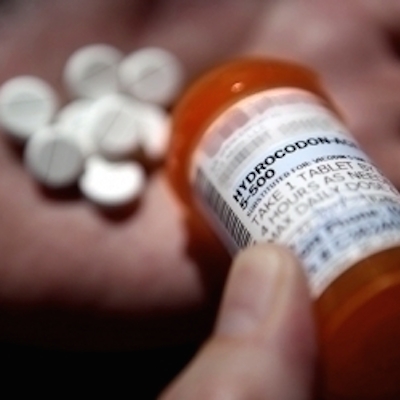
The federal funding will be used mostly for outpatient opioid treatment, recovery services and expanded community overdose prevention programs.
GET THE LATEST BREAKING NEWS HERE -- SIGN UP FOR GOLOCAL FREE DAILY EBLASTThe Federal Funding
The majority of the $11.7 million in funding will be used to increase outpatient opioid treatment and recovery services and expand community overdose prevention programs.
“This funding comes at a critical time and supports our comprehensive response to this deadly epidemic. Investing in prevention, intervention, treatment and recovery saves lives and this funding helps us in each of those areas,” said DPH Commissioner Monica Bharel, MD, MPH.
The funding will also support new programs to promote treatment and recovery for at-risk populations, including pregnant and post-partum women and correctional inmates scheduled for release.
Key Components of the State Targeted Response to the Opioid Crisis Grant Include:
Expansion of Overdose Prevention Initiatives
· Expansion of the Overdose Education and Naloxone Distribution (OEND) program in communities with a significant number of opioid overdoses
· Enhance, expand and evaluate community first responder initiatives to provide follow-up, in-person, outreach and support services after 911 calls for an overdose
· Overdose prevention training and technical assistance for health and human services providers throughout Massachusetts
· Improving access to naloxone at pharmacies throughout the state
Expansion of Treatment and Recovery Support Programs
· Implement an Opioid Access to Recovery (ATR) program focused on individuals affected by opioid addiction in the cities of Boston and Springfield, and in two additional cities that will be determined following a competitive procurement process.
· Expansion of Office-Based Opioid Treatment (OBOT) to at least seven new community-based sites
· Improving re-entry treatment and recovery support services for correctional inmates, including access to pre-release Medication Assisted Treatment (MAT), treatment and recovery planning, and post-release linkages to services and recovery support and case management
· New peer-support programming to assist pregnant, post-partum and parenting women with their recovery
Rhode Island Doctors Getting the Most Drug Company Money

#25
Doctor: Christopher Born
Specialty: Orthopaedic Trauma
Location: Providence, RI
Amount Paid: $83,353
Payments Exceeding $5,000 From: Stryker Corporation

#24
Doctor: Robert Marchand
Specialty: Orthopaedic Surgery
Location: Wakefield, RI
Amount Paid: $83,400
Payments Exceeding $4,000 From: Stryker Corporation and MAKO Surgical Corp

#23
Doctor: Jon Ruel
Specialty: Prosthodontics
Location: Portsmouth, RI
Amount Paid: $85,412
Payments Exceeding $5,000 From: BIomet 3i LLC
#22
Doctor: Edward Akelman
Specialty: Orthopaedic & Hand Surgery
Location: Providence, RI
Amount Paid: $86,978
Payments Exceeding $5,000 From: Integra LifeSciences Corporation
#21
Doctor: Samir Shah
Specialty: Internal Medicine and Gastroenterology
Location: Providence, RI
Amount Paid: $88,840
Payments Exceeding $4,000 From: Takeda Pharmaceuticals America Inc and AbbVie Inc
#20
Doctor: Robert Bierwirth
Specialty: Internal Medicine & Gastroenterology
Location: Cranston, RI
Amount Paid: $92,107
Payments Exceeding $4,000 From: Janssen Products, LP
#19
Doctor: Stephen Chabot
Specialty: Neurology & Psychiatry
Location: Pawtucket, RI
Amount Paid: $94,892
Payments Exceeding $4,000 From: Takeda Pharmaceuticals U.S.A. Inc.
#18
Doctor: Damian Dupuy
Specialty: Diagnostic Radiology
Location: East Providence,RI
Amount Paid: $96,840
Payments Exceeding $5,000 From: BSD Medical Corporation
#17
Doctor: Joseph Renzulli
Specialty: Urology
Location: Providence, RI
Amount Paid: $101,000
Payments Exceeding $4,000 From: Algeta US LLC and Bayer HealthCare Pharmaceuticals Inc
#16
Doctor: Albert Marano
Specialty: Psychiatry & Neurology
Location: Johnston, RI
Amount Paid: $105,000
Payments Exceeding $2,000 From: Teva Pharmaceuticals USA Inc and Biogen Idec Inc.
#15
Doctor: David Caldarella
Specialty: Primary Podiatric Medicine
Location: Pawtucket, RI
Amount Paid: $106,000
Payments Exceeding $5,000 From: Biomet Orthopedics LLC and Trilliant Surgical Ltd
#14
Doctor: J Easton
Specialty: Psychiatry & Neurology
Location: Providence, RI
Amount Paid: $117,000
Payments Exceeding $5,000 From: Novartis Pharmaceuticals Corporation, AstraZeneca Pharmaceuticals LP, Boehringer Ingelheim Pharmaceuticals Inc, Novartis Pharma AG, and Sanofi-Aventis U.S. LLC
#13
Doctor: Paul Akerman
Specialty: Gastroenterology
Location: Providence, RI
Amount Paid: $121,000
Payments Exceeding $5,000 From: CONMED Corporation, Spirus Medical LLC, Olympus Corporation of the Americas, Covidien LP
#12
Doctor: Thomas Sepe
Specialty: Gastroenterology
Location: Providence, RI
Amount Paid: $131,000
Payments Exceeding $5,000 From: CONMED Corporation
#11
Doctor: Anthony Mega
Specialty: Internal Medicine, Hematology & Oncology
Location: Providence, RI
Amount Paid: $133,000
Payments Exceeding $4,000 From: Bayer HealthCare Pharmaceuticals Inc
#10
Doctor: Russell Settipane
Specialty: Allergy & Immunology
Location:Providence, RI
Amount Paid: $133,000
Payments Exceeding $5,000 From: Mylan Specialty L.P
#9
Doctor: Jerrold Rosenberg
Specialty: Physical Medicine & Rehabilitation
Location: Providence, RI
Amount Paid: $152,000
Payments Exceeding $4,000 From: INSYS Therapeutics Inc
#8
Doctor: Ellen Frankel
Specialty: Procedural Dermatology
Location: Cranston, RI
Amount Paid: $162,000
Payments Exceeding $3,000 From: AbbVie Inc and Merz North America Inc
#7
Doctor: Joseph Lowney
Specialty: Medicine, Gastroenterology
Location: Warwick, RI
Amount Paid: $172,000
Payments Exceeding $3,000 From: AbbVie Inc and Cubist Pharmaceuticals Inc
#6
Doctor: Arnold-Peter Weiss
Specialty: Orthopaedic & Hand Surgery
Location: Providence, RI
Amount Paid: $173,000
Payments Exceeding $5,000 From: Medartis Inc and DePuy Synthes Products LLC
#5
Doctor: Christopher Digiovanni
Specialty: Foot and Ankle Surgery
Location: Providence, RI
Amount Paid: $212,000
Payments Exceeding $5,000 From: Extremity Medical and BioMimetic Therapeutics LLC
#4
Doctor: Andrew Green
Specialty: Sports Medicine
Location: Providence, RI
Amount Paid: $224,000
Payments Exceeding $5,000 From: Tornier Inc and Encore Medical LP
#3
Doctor: Syed Rizvi
Specialty: Psychiatry & Neurology
Location: Providence, RI
Amount Paid: $242,000
Payments Exceeding $5,000 From: Biogen Idec Inc and Teva Pharmaceuticals USA Inc
#2
Doctor: Michael Bradley
Specialty: Orthopaedic Surgery
Location: Wakefield, RI
Amount Paid: $261,000
Payments Exceeding $5,000 From: Arthrex Inc, Encore Medical LP, Arthrex Inc,
#1
Doctor: Warren Ong
Specialty: Psychiatry & Neurology
Location: Johnston, RI
Amount Paid: $304,000
Payments Exceeding $4,000 From: Takeda Pharmaceuticals U.S.A. Inc


