


Measles in U.S. Reaching "Critical Stages" - Warren Alpert Medical School at Brown University LIVE
"Smart Health" on GoLocal LIVE
Measles in U.S. Reaching "Critical Stages" - Warren Alpert Medical School at Brown University LIVE
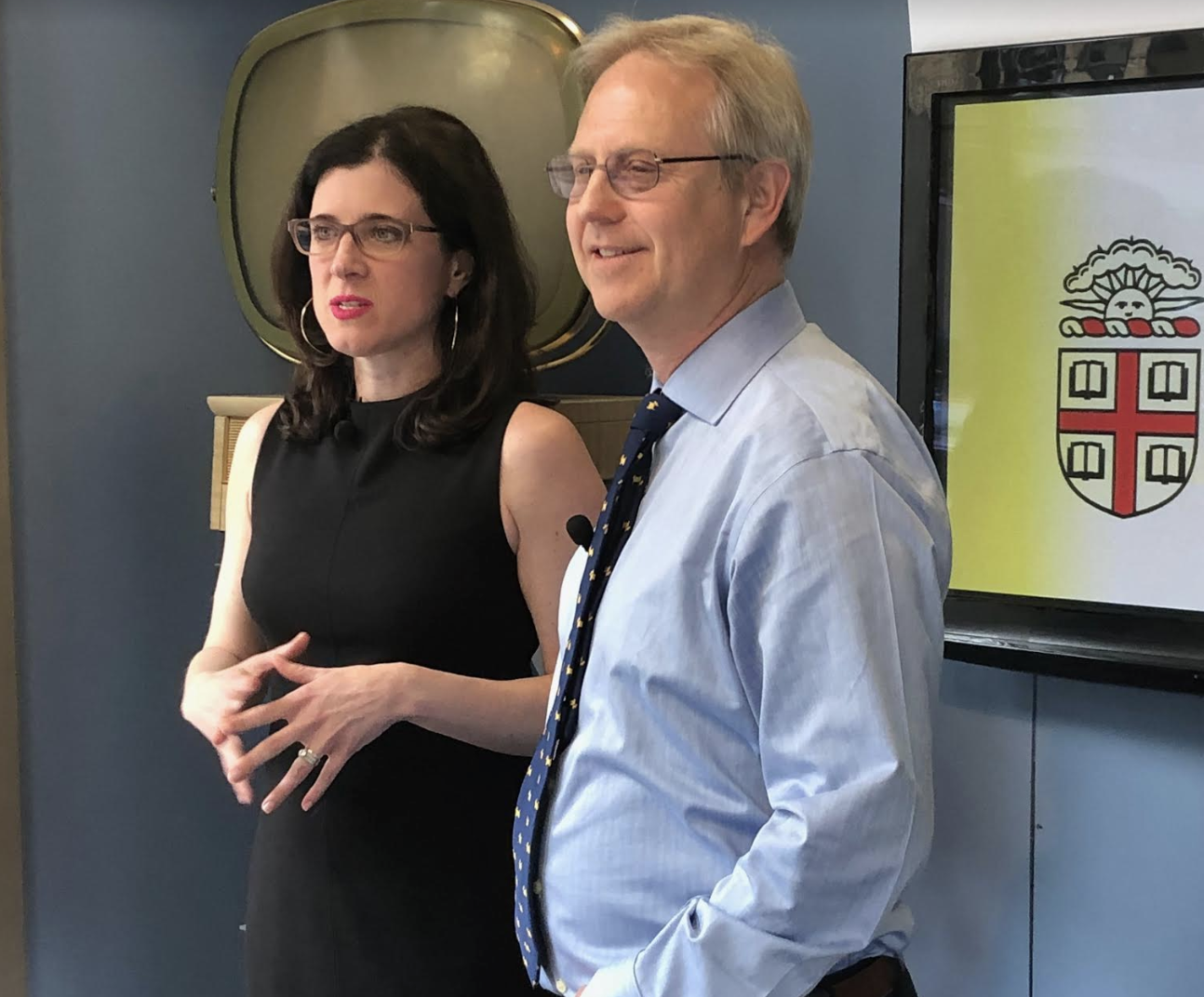
The Centers for Disease Control and Prevention reported this week that from January 1 to May 10, 2019, 839 individual cases of measles have been confirmed in 23 states, an increase of 75 cases from the previous week — and the greatest number of cases reported in the U.S. since 1994 and since measles was declared eliminated in 2000.
"I’m disappointed that this has happened and to some extent, I’m not that surprised, because we know that over the last few years, certainly the last decade, there are have been small pockets of outbreaks that have occurred throughout the country and [in] other parts of the world where we see fairly large outbreaks," said Michelow.
GET THE LATEST BREAKING NEWS HERE -- SIGN UP FOR GOLOCAL FREE DAILY EBLAST"I think there are pockets in the country where people are not having their children vaccinated and that puts people at risk. I think the most important thing to consider is the important role that vaccines play," said Michelow. "We know that vaccines are highly effective with a whole lot of infectious diseases and particularly measles. If we can vaccinate sufficient people we establish protection in that whole community and if we can roll it out and especially in communities where people are under-vaccinated and we can achieve a certain portion in that community — which is around over 90% of people — then we can protect everybody in that community."
Michelow, who is a specialist in pediatric infectious diseases at Hasbro Children's Hospital and Rhode Island Hospital with Lifespan, includes among his Warren Alpert Medical School activities the study of malaria pathogenesis and vaccine discovery, Ebola virus disease, clinical epidemiology and biomarkers of pneumonia and viral infections in hospitalized children, and pediatric osteoarticular infections. His research is at the interface between infectious diseases and immunology.
Critical Information for Parents
Michelow also spoke to the schedule of measles vaccinations for parents of small children — and when families might want — or need — to consider vaccinating earlier.
"The problem really is in cases where children for whatever reason cannot get the vaccine if they are immunocompromised of if weakened immune systems or are allergic to components of the vaccine, or they’re too young, that’s really the situation that arises [where] it’s so important for those particular children…that everybody around that child gets vaccinated," said Michelow. "The recommendation is for children to be vaccinated routinely between 12 months and 15 months as their first vaccine and then as a second follow-up vaccine between 4 and 6 years which is about pre-school entry. It can be recommended in certain circumstances by physicians that a child gets a second dose as long as it’s one month after the first dose — and that is highly protective, about 93 percent, in fact up to 97 percent."
"So absolutely if it’s an outbreak, in a certain situation of people traveling abroad then that would be a consideration if they’re under one year of age there is a possibility for families to be able to give a child between six months and one year of age their first dose of vaccine which will protect them to some extent and then they’ll get their second dose after one year of age then get a third dose as well," said Michelow. "So there are definitely circumstances where we recommend those at an earlier age."
"I think this is reaching really critical stages throughout the country and I think that you know for physician groups and health authorities are trying to react to this in a way that’s going to protect communities and that is maybe changing laws in states. So if you’ve noticed in some parts of the country, mandated vaccination is taking place, people are being excluded from some areas," said Michelow "Unfortunately it’s gotten to this point because people are getting desperate to protect the community. I think what’s going to happen going forward is a lot of campaigning to educate people about the value of getting vaccines and why getting vaccinated is so important."
Discussion at Brown
"Fortunately I am involved with teaching students and so we’ve used this opportunity. We’ve hosted discussions with medical students of all stages to discuss all sorts of things, including just what to look out for, because the students are just learning to recognize was measles look like — because most physicians in the U.S. haven’t seen it, so they could miss that," said Michelow.
"So it’s important they recognize what the disease looks like. Secondly, that they understand how to test for it, and thirdly how to prevent the spread of the disease," said Michelow. "And also we want to talk about the ethics — who should get vaccinated and the reasons why."
"Smart Health" is a sponsored content series by the Warren Alpert Medical School at Brown University