


Most Dangerous Intersections in New England
Kate Nagle, GoLocalProv Contributor
Most Dangerous Intersections in New England
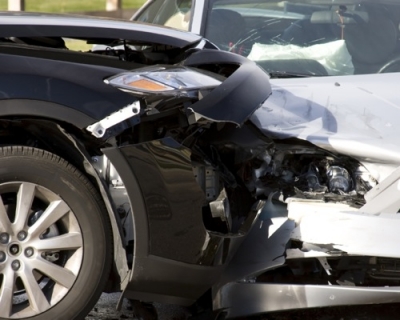
Whether you're traveling on I-95, heading to the mountains or the beaches, or commuting to urban centers, there are thousands of intersections where accidents can -- and do occur -- throughout the region.
See New England's 60 Most Dangerous Intersections BELOW
GoLocal looked at the most available data available from each of the six England states to see where the accidents were that caused the most property damage, injury, or death to determine the 10 most dangerous intersections in each state and the 60 most dangerous intersections in all of New England. See GoLocal's methodology here.
GET THE LATEST BREAKING NEWS HERE -- SIGN UP FOR GOLOCAL FREE DAILY EBLASTTogether, the 60 most dangerous intersections accounted for over 5,000 accidents, more than 3,000 injuries -- and over 30 with fatalities.
"From a national perspective, New England roads aren't the most dangerous roads," said Ted Miller with the Pacific Institute for Research and Evaluation, which has offices in ten states, including Rhode Island. "Those tend to be down south, and in Hawaii in particular, due to tourists driving on roads they're not familiar with."
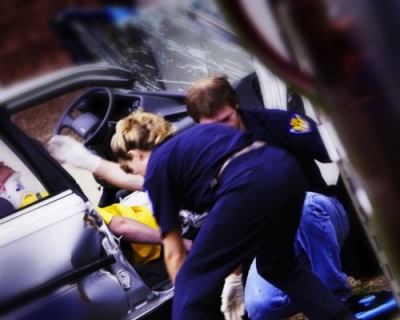
Kevin Nursick with the Connecticut Department of Transportation addressed what he saw as an issue with identifying dangerous roads.
"One of the difficulties we have trying to reduce crashes is trying to deal with a public perception that somehow the roads are the cause of the crashes," said Nursick. "Realistically there's no such thing as a dangerous road, and statistics prove that 95% plus of crashes are a result of driver error. I don't care if you have perfectly straight or flat roads, or curvatures."
"If you follow the rules of the road, and the posted signage, you shouldn't have any problem navigating. It's the cooperation and responsibility of everyone on the roadway, including pedestrians, bicyclists," said Nursick. "The more we have that approach that the roads are dangerous, the more we empower people to drive recklessly."
Addressing Problem Intersections
"The mentalities are changing in building roads," said Nursick. "We used to build the most ideal conditions -- flat, straight, with nice wide lanes, shoulders, sight lines. We found that people feel so comfortable, that they drive like maniacs. When we give an irresponsible motorist a "perfect" road -- you're doing 55 [MPH] on a road with a 40 [MPH] posting . You can see perfectly comfortably, so people then are texting and driving."
See Connecticut's most Dangerous intersections HERE.
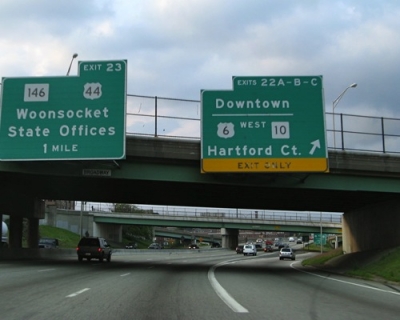
Duane Brunell with the Maine Department of Transportation addressed the issue of problematic areas.
"We don't classify roads as most dangerous," said Brunell. "It's kind of a popular topic, but it's not a black or white one."
"You're always trying to prioritize," said Brunell. "For instance, we look, where reasonable, for roundabout possibilities. They only go one direction, you eliminate T-Bone crashes, get lower speeds. You might get some rear ends, but they're a good solution. It's an expensive option -- there might be property issues involved. You've got to pick your opportunities."
See Maine's Most Dangerous Intersections HERE
Russ Rader at the Insurance Institute for Highway Safety said that among intersection issues it looks at, that "running the red" was one of the biggest ones.
"One of the biggest factors in intersection crashes involves red light running," said Rader. Some states are being more aggressive red light cameras, which can improve the conditions. There's concrete data that red light cameras reduce accidents."
Rader, like Maine's Brunell, saw roundabouts as a top option. "The best thing to do with intersection safety is to use roundabouts instead. Not all can be converted to a roundabout, you need space for them. Putting them in in the first place is the best way to go; but there have been conversions....they are intuitively user friendly, and one things that makes them popular is that they keep traffic moving."
"There are less costly ways -- protected left turns -- using an arrow signal to let them turn left, to protect them from oncoming traffic. Things as simple as moving a bus stop can help," said Rader. "It's hard to compare states by number of crashes, because they'll vary by rural and urban areas."
Focus on Driver Responsibility
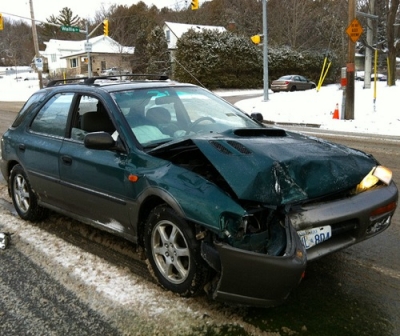
See Rhode Island's Most Dangerous Intersections HERE
The Rhode Island Department of Transportation worked with community experts and stakeholders in the creation of the plan, including AAA of Southern New England.
"We're a stakeholder in the creation of the plan, we get involved with others on a host of issues," said Lloyd Albert, Senior Vice President at AAA. "Among the areas of focus are teen driver safety, how they're licensed and brought online. The fatalities aren't hight, but there are a lot of fender benders."
"We also look at seniors, and the aging population," continued Albert. "Most drivers outlive their safe driving age by 7 or 8 years. We provide driving improvement classes. They're about 8 hours, free of charge. We take groups, whether in their 60s, 70s, 80s, trying to help them, and tips to be a better and safer driver. We provide software to keep seniors brain functioning at as high level as possible."
Among the intersections identified as being most dangerous was on Rt. 138 Hopkinton, due to a crash with high fatalities there recently.
"There was a very bad accident there a few years back, due to excessive speed, but in general that's not an area of concern," said Hopkinton Chief of Police David Palmer. The Hopkinton Police Department noted on its website that stop signs are being installed at the intersection of Fairview Avenue. and Dye Hill Road.
"We did put a stop sign there because of resident input," said Palmer. "A woman who lived in the neighborhood contacted us. There's a school bus stop there, so we investigated, and brought it to the town council. We get a lot of input from residents. We also bring things to the state's attention, they'll come and do studies based on the investigation. In general, people want signs, and they'll express concerns for speeding."
In New Hampshire, which had only 10 intersections ranking in the top 60 in New England -- and none in the top 20 -- an initiative called "Driving Towards Zero" is focusing on identifying and creating opportunities for changing American culture as it relates to highway safety; the New Hampshire Traffic Safety Institute offers courses in defensive driving to promote safer highways through education.
See Most Dangerous Intersections in New Hampshire HERE
Change in Data Reporting
Under new federal transportation legislation signed into law last year, states are no longer required to report under the previous 5% requirement, although some projects funded are still impacted.
“In general, the Moving Ahead for Progress in the 21st Century Act (MAP-21) eliminates the High Risk Rural Roads (HRRR) Program and no longer requires states to submit a transparency (5 percent) report. However, because HRRR funds apportioned under the Safe, Accountable, Flexible, Efficient Transportation Equity Act: A Legacy for Users Act ( SAFETEA-LU) are subject to the SAFETEA-LU HRRR requirements, States must continue reporting on HRRR expenditures under SAFETEA-LU as part of their HSIP reports," said Neil Gaffney with the Federal Highway Administration.
"I don't think it was any info of use," said Connecticut's Nursick. "It was part of the old transportation bill. It was telling you things you already knew. It was viewed from a transparency standpoint, to talk about high frequency crash locations -- does that equate to safety? Absolutely not."
"All of our crash data is available to the public, media -- it's public, it's all out there. I've been here ten years," said Nusick. I'm a communications guy -- I try to keep people in touch with reality."
MassDOT Highway Division obtains crash data from the Massachusetts Registry of Motor Vehicles (RMV) and uses it for many purposes, with the "primary function is to provide the foundation for developing safety improvement projects."
See Massachusetts Most Dangerous Intersections HERE
Bruce Nyquist with the Vermont Agency of Transportation told GoLocal, "Intersections are included in our infrastructure plan, and are still identified as a top priority."
The data driven approach as yielded benefits in Vermont, according to Nyquist. "Regarding intersection crashes, our first plan was in 2006. The info that we have from the five year average through 2011 is that crashes have gone down 8%."
See Vermont's Most Dangerous Intersections HERE
60 Most Dangerous Intersections in New England - 2014

#60
Seymour, CT
Rt. 8 MM 18.58-18.81
Total Crashes: 11
Fatal Crashes: 0
Injury Crashes: 5
Crashes with Property Damage Only: 6
Source: CT DOT

#59
Wethersfield, CT
Rt. 287 Mile Marker 1.58 (Near Rte 287 + Merritt Parkway)
Total Crashes: 22
Fatal Crashes: 0
Injury Crashes: 6
Crashes with Property Damage Only: 16
Source: CT DOT

#58
Vernon, CT
Rt. 83 Mile Marker 11.80-11.89 (Route 83 + Route 30)
Total Crashes: 25
Fatal Crashes: 0
Injury Crashes: 7
Crashes with Property Damage Only: 18
Source: CT DOT

#57
Hudson, NH
NH 111 (Ferry St.) + NH 3A (Chester St./Derry Rd.)
Total Crashes: 27.6
Fatal Crashes: 0
Injury Crashes: 7.5
Crashes with Property Damage Only: 20.1
Source: NH DOT

#56
Tilton, NH
US 3 (Laconia Rd.) + NH 140 (Tilton Rd.)/1-93 NB Ex 20 Ramps)
Total Crashes: 20.7
Fatal Crashes: 0
Injury Crashes: 8.7
Crashes with Property Damage Only: 12
Source: NH DOT

#55
Nashua, NH
Main St. + Canal St./Franklin St.
Total Crashes: 24.6
Fatal Crashes: 0
Injury Crashes: 9.3
Crashes with Property Damage Only: 15.3
Photo: Flickr/Bettyx1138
Source: NH DOT

#54
Nashua, NH
Main St. + NH 111 (Spring St./Kinsley St.)
Total Crashes: 23.1
Fatal Crashes: 0
Injury Crashes: 9.6
Crashes with Property Damage Only: 13.5
Source: NH DOT

#53
Salem, NH
NH 28 (N/S Broadway) + NH 38/NH 97 (Main St.)
Total Crashes: 22.5
Fatal Crashes: 0
Injury Crashes: 10.2
Crashes with Property Damage Only: 12.3
Source: NH DOT

#52
Bridgeport, CT
Rt. 127 Mile Marker 1.02 (Rte 127 + Stillman St)
Total Crashes: 18
Fatal Crashes: 0
Injury Crashes: 11
Crashes with Property Damage Only: 7
Source: CT DOT

#51
Concord, NH
NH 9 (Loudon Rd.) + D'Amante Dr. (Steeplegate Mall)
Total Crashes: 21.6
Fatal Crashes: 0
Injury Crashes: 10.5
Crashes with Property Damage Only: 11.1
Source: NH DOT

#50
Williston, VT
94 US-2 + VT-2A
Total Crashes: 43.8
Fatal Crashes: 0
Injury Crashes: 8.4
Crashes with Property Damage Only: 38.4
Source: VT DOT

#49
Manchester, NH
Bridge St. + NH 285 (Beech St.)
Total Crashes: 20.7
Fatal Crashes: 0
Injury Crashes: 12.6
Crashes with Property Damage Only: 8.1
Source: NH DOT

#48
Concord, NH
NH 9 (Loudon Rd.) + Fort Eddy Rd./I-93 NB Ex 14 Off-Ramp
Total Crashes: 29.4
Fatal Crashes: 0
Injury Crashes: 11.7
Crashes with Property Damage Only: 17.7
Source: NH DOT

#47
Berlin, VT
23 VT-62 + Berlin State Highway: Fisher Rd.
Total Crashes: 37.2
Fatal Crashes: 0
Injury Crashes: 10.2
Crashes with Property Damage Only: 30
Source: VT DOT

#46
Bridgeport, CT
Rt. 127 Mile Marker .64 (Rte 127 + Barnum Ave)
Total Crashes: 31
Fatal Crashes: 0
Injury Crashes: 12
Crashes with Property Damage Only: 19
Source: CT DOT

#45
Nashua, NH
Main St. + East Hollis St./West Hollis St.
Total Crashes: 24.9
Fatal Crashes: 0
Injury Crashes: 14.1
Crashes with Property Damage Only: 10.8
Source: NH DOT

#44
Burlington, VT
11 US-7 + Main St., US-2
Total Crashes: 49.2
Fatal Crashes: 0
Injury Crashes: 10.2
Crashes with Property Damage Only: 42
Source: VT DOT

#43
Waterbury, CT
Rt. 69 MM 18.39-18.49
Total Crashes: 55
Fatal Crashes: 0
Injury Crashes: 14
Crashes with Property Damage Only: 41
Source: CT DOT

#42
Portland, ME
Fort Ave., Hartley St. + Forest Ave., Holly St.
Total Crashes: 45
Fatal Crashes: 0
Injury Crashes: 21
Crashes with Property Damage Only: 23
Source: ME DOT

#41
Portland, ME
Fore River Pkwy. + Valley St., W. Commercial St.
Total Crashes: 64
Fatal Crashes: 0
Injury Crashes: 18
Crashes with Property Damage Only: 46
Source: ME DOT

#40
Manchester, NH
NH 285 (Beech St.) + Cilley Rd.
Total Crashes: 20.4
Fatal Crashes: 0
Injury Crashes: 23.4
Crashes with Property Damage Only: 8.7
Source: NH DOT

#39
Portland, ME
Allen Ave., Entrance to McDonalds + Z Rd., Forest Ave.
Total Crashes: 58
Fatal Crashes: 0
Injury Crashes: 20
Crashes with Property Damage Only: 38
Source: ME DOT

#38
Westbrook, ME
Cumberland St. + Warren Ave.
Total Crashes: 83
Fatal Crashes: 0
Injury Crashes: 17
Crashes with Property Damage Only: 66
Source: ME DOT

#37
Wallingford, CT
Rt. 5 MM 9.35-9.36
Total Crashes: 51
Fatal Crashes: 0
Injury Crashes: 22
Crashes with Property Damage Only: 29
Source: CT DOT

#36
Berkshire, VT
4 FAS 0302, FAS 0307 + Town Rd. 0004
Total Crashes: 3.6
Fatal Crashes: 0.6
Injury Crashes: 3.6
Crashes with Property Damage Only: 0.6
Source: VT DOT

#35
Williston, VT
67 US-2 + Industrial Ave.
Total Crashes: 20.4
Fatal Crashes: 0.6
Injury Crashes: 3
Crashes with Property Damage Only: 18
Photo: Flickr/Craig O'Neal
Source: VT DOT

#34
Augusta, ME
Memorial Circle + Western Ave.
Total Crashes: 107
Fatal Crashes: 0
Injury Crashes: 19
Crashes with Property Damage Only: 88
Source: ME DOT

#33
Burlington, VT
35 Main St. + St. Paul St.
Total Crashes: 18
Fatal Crashes: 0.6
Injury Crashes: 4.8
Crashes with Property Damage Only: 13.2
Source: VT DOT

#32
Hartford, VT
7 US-5 + VT-14, US-4
Total Crashes: 31.8
Fatal Crashes: 0.6
Injury Crashes: 3.6
Crashes with Property Damage Only: 28.2
Source: VT DOT

#31
Burlington, VT
5 Colchester Ave. + Barrett St.
Total Crashes: 20.4
Fatal Crashes: 0.6
Injury Crashes: 5.4
Crashes with Property Damage Only: 15
Source: VT DOT

#30
Augusta, ME
Bangor St. + Cony Circle, Cony St.
Total Crashes: 126
Fatal Crashes: 0
Injury Crashes: 19
Crashes with Property Damage Only: 106
Photo: Flickr/Peter Gene
Source: ME DOT

#29
Winooski City, VT
2 US-7, E. Canal St. + W. Allen St., VT-15, W. Center St.
Total Crashes: 103.2
Fatal Crashes: 0
Injury Crashes: 22.8
Crashes with Property Damage Only: 86.4
Source: VT DOT

#28
Augusta, ME
Ramp off to Western Ave. + Western Ave.
Total Crashes: 99
Fatal Crashes: 0
Injury Crashes: 26
Crashes with Property Damage Only: 73
Source: ME DOT

#27
Lowell, MA
Bridge St. + Veterans of Foreign Wars Highway
Total Crashes: 112
Fatal Crashes: 0
Injury Crashes: 34
Crashes with Property Damage Only: 78
Photo: Flickr/Peter Gene
Source: MA DOT

#26
Hartford, CT
Rt. 44 Mile Marker 53.63 (Route 44 & Main St)
Total Crashes: 129
Fatal Crashes: 0
Injury Crashes: 38
Crashes with Property Damage Only: 91
Source: CT DOT

#25
Holyoke, MA
Holyoke St. + Holyoke Mall at Ingleside
Total Crashes: 198
Fatal Crashes: 0
Injury Crashes: 29
Crashes with Property Damage Only: 169
Source: MA DOT

#24
Lowell, MA
Veterans of Foreign Wars Highway + Varnum Ave.
Total Crashes: 165
Fatal Crashes: 0
Injury Crashes: 37
Crashes with Property Damage Only: 128
Source: MA DOT

#23
Lewiston, ME
Old Greene Rd. + Randall Rd., Sabattus St.
Total Crashes: 33
Fatal Crashes: 1
Injury Crashes: 9
Crashes with Property Damage Only: 23
Photo: Flickr/Perthhdproductions
Source: ME DOT

#22
Bangor, ME
Broadway, Hobart St. + Broadway, Burleigh Rd., Griffin Rd.
Total Crashes: 33
Fatal Crashes: 1
Injury Crashes: 13
Crashes with Property Damage Only: 19
Photo: Flickr/Ajimaxx
Source: ME DOT

#21
Rutland City, VT
47 US-7 + US-4
Total Crashes: 40.2
Fatal Crashes: 1.2
Injury Crashes: 6
Crashes with Property Damage Only: 35.4
Photo: Flickr/Doug Kerr
Source: VT DOT

#20
Cambridge, MA
Massachusetts Ave. + Vassar St.
Total Crashes: 41
Fatal Crashes: 1
Injury Crashes: 19
Crashes with Property Damage Only: 21
Photo: Flickr/The_th
Source: MA DOT

#19
Worcester, MA
Main St. + Mill St.
Total Crashes: 53
Fatal Crashes: 1
Injury Crashes: 18
Crashes with Property Damage Only: 34
Photo: Flickr/jburwen
Source: MA DOT

#18
Holyoke, MA
Main St. + Cabot St.
Total Crashes: 57
Fatal Crashes: 1
Injury Crashes: 18
Crashes with Property Damage Only: 38
Photo: Flickr/Nanypinya
Source: MA DOT

#17
Waltham, MA
Main St. + Lyman St.
Total Crashes: 73
Fatal Crashes: 1
Injury Crashes: 18
Crashes with Property Damage Only: 54
Source: MA DOT

#16
Bridgton, ME
Portland Rd., Willis Park Rd. + Portland Rd., Sandy Creek Rd.
Total Crashes: 20
Fatal Crashes: 2
Injury Crashes: 6
Crashes with Property Damage Only: 12
Photo: Flickr/gillicious
Source: ME DOT

#15
Lincoln, RI
Interstate 295 + Exit 9 (RI 146)
Total Crashes: 160
Fatal Crashes: 1
Injury Crashes: 36
Crashes with Property Damage Only: 123
Photo: Flickr/Doug Kerr
Source: RI DOT

#14
Stoughton, MA
Canton St. + School St.
Total Crashes: 39
Fatal Crashes: 2
Injury Crashes: 10
Crashes with Property Damage Only: 27
Photo: Flickr/Peter Gene
Source: MA DOT

#13
Chelsea, MA
Revere Beach Pkwy. + Washington Ave.
Total Crashes: 39
Fatal Crashes: 2
Injury Crashes: 11
Crashes with Property Damage Only: 26
Photo: Flickr/Bettyx1138
Source: MA DOT

#12
Warwick, RI
RI 37 + US 1 (Post Rd.)
Total Crashes: 293
Fatal Crashes: 0
Injury Crashes: 69
Crashes with Property Damage Only: 224
Photo: Flickr/eliduke
Source: RI DOT

#11
North Smithfield, RI
RI 146 + Sayles Hill Rd.
Total Crashes: 193
Fatal Crashes: 1
Injury Crashes: 37
Crashes with Property Damage Only: 155
Source: RI DOT

#10
Warwick, RI
Interstate 95 + Exit 14 (RI 37)/Exit 15 (Jefferson Blvd.)
Total Crashes: 181
Fatal Crashes: 1
Injury Crashes: 50
Crashes with Property Damage Only: 130
Photo: Flickr/ER24 EMS (Pty) Ltd.
Source: RI DOT

#9
Johnston, RI
Interstate 295 + Exit 6 (US 6/US 6A)
Total Crashes: 179
Fatal Crashes: 1
Injury Crashes: 54
Crashes with Property Damage Only: 124
Photo: Flickr/Doug Kerr
Source: RI DOT

#8
Cranston, RI
RI 2 Reservoir Ave. + RI 12 (Park Ave.)
Total Crashes: 234
Fatal Crashes: 1
Injury Crashes: 47
Crashes with Property Damage Only: 186
Source: RI DOT

#7
Hopkinton, RI
RI 138 (Spring St.) + Wincheck Pond Rd. to Soap House Ln.
Total Crashes: 4
Fatal Crashes: 3
Injury Crashes: 0
Crashes with Property Damage Only: 1
Source: RI DOT

#6
Middletown, CT
Rt. 17 MM 21.55-22.14
Total Crashes: 372
Fatal Crashes: 0
Injury Crashes: 107
Crashes with Property Damage Only: 265
Source: CT DOT

#5
Charlestown, RI
US Post Rd. SB + Kings Factory Rd. to RI 216 (Ross Hill Rd.)
Total Crashes: 51
Fatal Crashes: 3
Injury Crashes: 8
Crashes with Property Damage Only: 40
Source: RI DOT

#4
Providence, RI
Interstate 95 + Exit 18 (Thurbers Ave.)
Total Crashes: 296
Fatal Crashes: 1
Injury Crashes: 79
Crashes with Property Damage Only: 216
Source: RI DOT

#3
Somerville, MA
Mystic Ave. + Fellsway
Total Crashes: 91
Fatal Crashes: 3
Injury Crashes: 24
Crashes with Property Damage Only: 64
Source: MA DOT

#2
Pawtucket, RI
Interstate 95 + Exit 29 (US 1/Broadway/Cottage St.)
Total Crashes: 191
Fatal Crashes: 2
Injury Crashes: 55
Crashes with Property Damage Only: 134
Source: RI DOT

#1
New Haven, CT
Merritt Parkway Mile Marker 46.42-47.03
Total Crashes: 561
Fatal Crashes: 0
Injury Crashes: 125
Crashes with Property Damage Only: 436
Source: CT DOT


