


Battle Lines Drawn Over Efforts to Force Brown and Other Colleges to Pay More to Host Towns
GoLocalProv News Team
Battle Lines Drawn Over Efforts to Force Brown and Other Colleges to Pay More to Host Towns

Off and on, Providence Mayors have battled with Brown over payments in lieu of taxes, but the Ivy League institution has consistently won out.
In contrast to Brown University, Yale University recently agreed to pay New Haven more than $135 million over the next six years.
GET THE LATEST BREAKING NEWS HERE -- SIGN UP FOR GOLOCAL FREE DAILY EBLASTIn Rhode Island, a group of legislators and supporters is urging the passage of two bills now pending at the Rhode Island General Assembly— one would enable municipalities to tax properties owned by private colleges and universities and the other piece of legislation would allow host communities to impose up to a 2% tax on institution's endowments. The endowment tax revenue would be directed to support public education in the host community.
Representative David Morales is the sponsor of the property tax bill and Senator Tiara Mack is leading the effort for the endowment tax. Both Morales and Mack are Brown grads. Both are Democrats.
Brown announced this summer that its endowment hit a record $6.9 billion.
According to Morales, Brown's properties, if they were not tax-exempt, would generate an estimated $49 million annually for Providence. Providence College would owe $16.2 million; Johnson & Wales University, almost $12.8 million; and Rhode Island School of Design, $11.6 million. Brown does contribute about $4.4 million annually to the city through a memorandum of understanding signed in 2003, but that agreement expires next year.

“Given that our thriving higher education institutions are generating enormous amounts of income and have vast wealth and property holdings, they should be fully supporting our community through tax contributions, the same as working people and small businesses. Now is the time we establish standards of accountability and finally require fair investments into our communities,” he added.
Brown Opposes the Two Bills
Brian Clark, the spokesperson for Brown said in a statement:
"Brown continues to believe that taxes imposed through legislative efforts impede the efforts of higher education institutions to help students, improve education, expand the boundaries of knowledge, advance technological innovation, and enhance health and well-being in our local communities. Each year we spend funds from our endowment to support this critical work that benefits Providence and Rhode Island. We oppose both the effort to tax properties used for the academic activity that enables universities like Brown to benefit the local economy so extensively, as well as the tax on charitable giving to institutions that contribute to the public good in significant and enduring ways. Endowments are not kept in reserve to be drawn on only occasionally or on a rainy day. In fact, the collection of thousands of restricted, donor-designated funds that makes up an endowment supports a significant and growing portion of our operations, providing a bulk of annual revenues, and enabling us to make a positive impact.
Legislative efforts such as these tend to overlook that Brown provides extensive contributions to the community we call home in significant areas that meet public need and offset the need for greater public resources. From teacher training, tutoring, mentoring and other programs in public schools; to care provided through health clinics, addiction centers, and programs for victims of violence; to public health surveys for lead paint and partnerships with the city and state on other community health concerns, the University makes a significant impact every day. This is in addition to the millions of dollars in voluntary payments to Providence annually, the taxes Brown pays on all commercial properties, and our role as top employer, employing 4,700 local residents. We also inject more than $200 million in research spending into the local economy each year and continue to play a transformative role in the Jewelry District, having invested more than $225 million to bring new economic vitality to that area of the city."
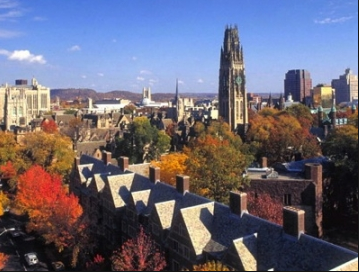
In November, Yale University announced a major increase in payments to New Haven.
“A significant increase in Yale’s voluntary payments to the city, totaling $52 million in new money over six years. When combined with Yale’s existing voluntary payments, Yale will contribute approximately $135.4 million to the city over this six-year period. This amount is unprecedented nationally,” said Yale at the announcement.
In contrast, despite the record growth of its endowment and fundraising, Brown University only pays a fraction of the amount Yale contributes.
Before the announcement, Yale already paid New Haven two-and-half times more than Brown pays Providence. Now, Yale is voluntarily making payments nearly four times the amount.
Neither amount includes fees.
Clark GoLocal in November, “In terms of direct payments to the city (as opposed to funding for PPSD, other programs, etc) for the most recent fiscal year, Brown paid $6.2 million to the city between the two voluntary payment agreements and commercial property taxes on property not used for educational purposes.”
Clark said the monies paid to Providence in direct payments includes "$1.4 million in voluntary payments per the terms of the 2003 Memorandum of Understanding and $2 million per the separate 2012 Memorandum of Agreement. The balance comprises municipal taxes that Brown pays for real estate we own and lease to commercial tenants, and transition payments for former commercial properties acquired by Brown and now used for institutional purposes."
"Both agreements will culminate by 2023 so there have been some preliminary, informal conversations on the right approach to considering a next agreement," he added.
Brown's math, however, may be a little fuzzy.
Numbers provided to GoLocal from the City of Providence puts Brown's contribution at $3.2 million annually.
Regardless of the number, Brown is contributing a tiny fraction of the amount Yale is investing in New Haven. And, Yale's payments are investment-driven into the city while Brown's payments are fees and de facto, real estate tax payments.