


Judge Upholds Champlin's Block Island Marina Agreement -- Neronha "Deeply Disappointed"
GoLocalProv News Team
Judge Upholds Champlin's Block Island Marina Agreement -- Neronha "Deeply Disappointed"
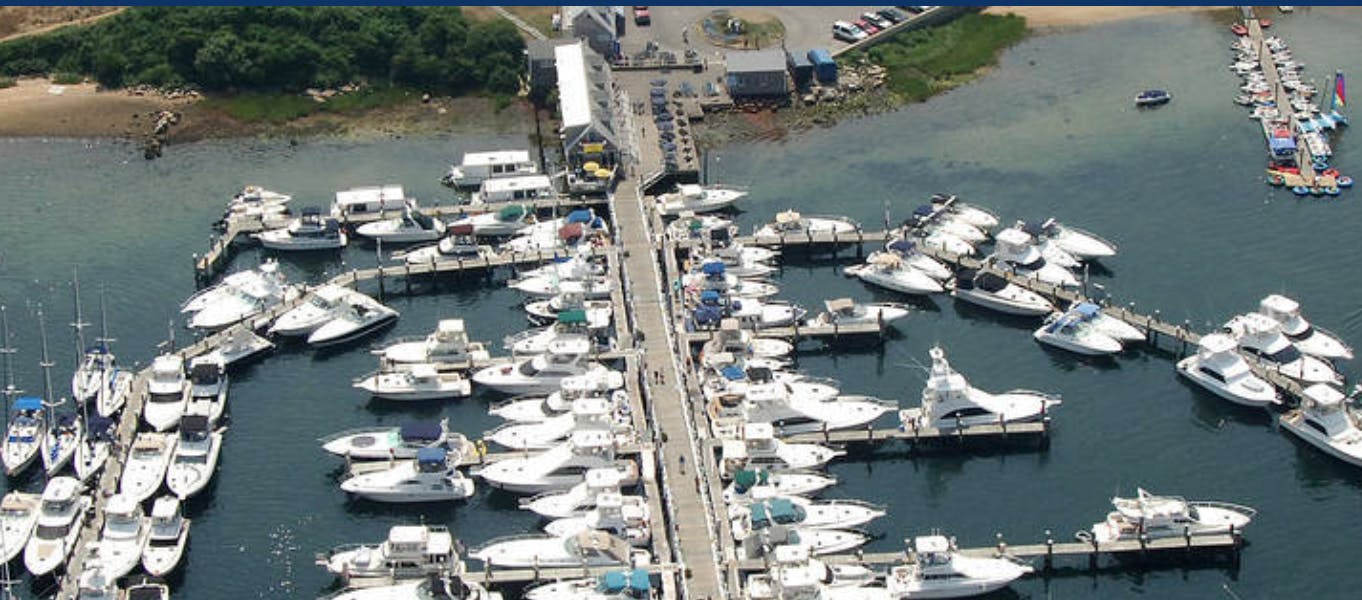
The decision is just the latest in the dispute over the proposed expansion of the marina that has been raging for more than 18 years and has entangled charges and counter-charges -- including from the Rhode Island Attorney General's office.
Champlin's on Thursday's Decision
GET THE LATEST BREAKING NEWS HERE -- SIGN UP FOR GOLOCAL FREE DAILY EBLAST"We are pleased with RI Superior Court Judge Jeffrey Lanphear’s ruling recognizing the validity of the MOU reached between Champlin’s and CRMC," said Robert Goldberg, Attorney for Champlin's Marina ."We hope that the ruling will resolve this 18-year dispute and allow Champlin’s to finally move forward with its modest expansion that protects the environment while also providing enhanced public access to the Great Salt Pond."
According to Goldberg, the MOU "represents several concessions from Champlin’s as it sought to expand the public access to the Great Salt Pond. The MOU doesn't allow for any additional boats and in terms of the expansion- it is less than 1/3 the size of the original plan"
"While the Supreme Court must now consider the lower court’s ruling, we are hopeful that the special interest intervenors in this case will put aside what has been an unnecessary and vicious campaign of name calling and misinformation," Goldberg continued. "We call on them to cease their attempts to tarnish Champlin’s, the CRMC, the mediator, the mediation process and even the judiciary."
Neronha Fires Back
Rhode Island Attorney General Peter Neronha, who had asked the Rhode Island Supreme Court to intervene in the proceedings to "address concerns about a recent closed-door mediation between the CRMC and Champlin’s that would allow for a marina expansion" said he was "deeply disappointed" in Thursday's decision.
"Regulatory agencies in Rhode Island have been given extraordinary powers by the General Assembly to make decisions that directly and significantly impact the people of this state. Under long-settled Rhode Island law, this extraordinary grant of power is conditioned on several things, including a requirement that their quasi-judicial decision-making process be transparent and provide for public input, and that every agency decision be supported by specific findings of fact and conclusions of law that objectively justify the decision," said Neronha.
"Every Rhode Island regulatory agency must follow these rules, codified in the Administrative Procedures Act. The Coastal Resources Management Council. The Department of Environmental Management. The Department of Health. The Department of Business Regulation. The Public Utilities Commission. And more. Proceeding in this way, and only in this way, ensures merit-based public decision-making, instills public confidence in that decision-making and, in the event of an appeal from the agency decision, allows a reviewing court to know precisely what the regulatory agency did and, most importantly, why," he added. "Today’s decision ignores all these things."
Neronha addressed the history of the legal dispute.

"Today, however, another Superior Court decision by a different judge has inexplicably tossed all the CRMC’s original transparent and fact-supported regulatory decision-making out the window and opened the door for its replacement with something the Administrative Procedures Act precisely forbids: a non-public, non-transparent, entirely unsupported mediation. This leaves unanswered whether the 'mediated' result allowing a smaller-scale version of the previously rejected marina expansion can stand – without a new public evaluation of potential impacts to resources, navigation, and competing uses of the Great Salt Pond," said Neronha,
"What makes it worse is that the CRMC – the agency charged with protecting Rhode Island’s natural resources – was complicit in the result," he added. "The CRMC could have stood up for the people of Rhode Island and defended the initial Superior Court decision, which denied the marina expansion in the Supreme Court. Instead, they bent to expediency and were rolled."
Former Rhode Island Supreme Court Justice Frank Williams in February had questioned Neronha's jurisdiction -- and motivation -- to petition the Rhode Island Supreme Court to intervene.
"It’s not known why Neronha's taken action," said Williams, who served as the mediator, at the time.. "I’ve already mediated and it's settled and it’s now before the court. From what I understand his staff are taking a position that if the parties refused to mediate -- the interveners refused to mediate -- then you can’t go forward with mediation. This stands mediation authority on its head."
This story was first published 9/9/21 6:24 PM