
NEW: RI ACLU Announces Racial Disparities Increasing During Motor Vehicle Stops
GoLocalProv News Team
NEW: RI ACLU Announces Racial Disparities Increasing During Motor Vehicle Stops
In 2003, 2006 and 2014, Northeastern University released three separate studies analyzing racial disparities in traffic stops and searches made by each of Rhode Island’s police departments. The data released today by the ACLU compared rates of what are called “discretionary searches,” or all searches that are not incident to arrest.
The ACLU believes that this most recent analysis indicates that the racial disparities in discretionary searches are not only continuing, but in many cases increasing.
GET THE LATEST BREAKING NEWS HERE -- SIGN UP FOR GOLOCAL FREE DAILY EBLAST“Ten years since racial profiling was prohibited by law, this data is both alarming and disheartening. Black and Hispanic drivers remain disproportionately searched by law enforcement, even though Northeastern University’s analysis demonstrates that white drivers are more likely to be found with contraband when searched,” says Hillary Davis, ACLU of Rhode Island policy associate. “As a result, these searches are both discriminatory and ineffective. A decade’s worth of conversations between law enforcement and the community have not resolved these disparities, and it is time for law enforcement to employ new means to ensure Rhode Islanders receive equal treatment in their interactions with the police.”
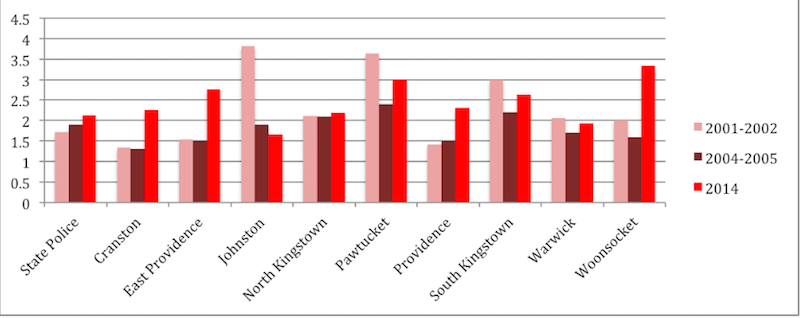
Of the ten Rhode Island police departments that stopped more than 2,000 individuals and/or engaged in more than 100 discretionary searches in 2004-2005, the data indicates that nine have seen a subsequent increase in the racial disparity of such searches.
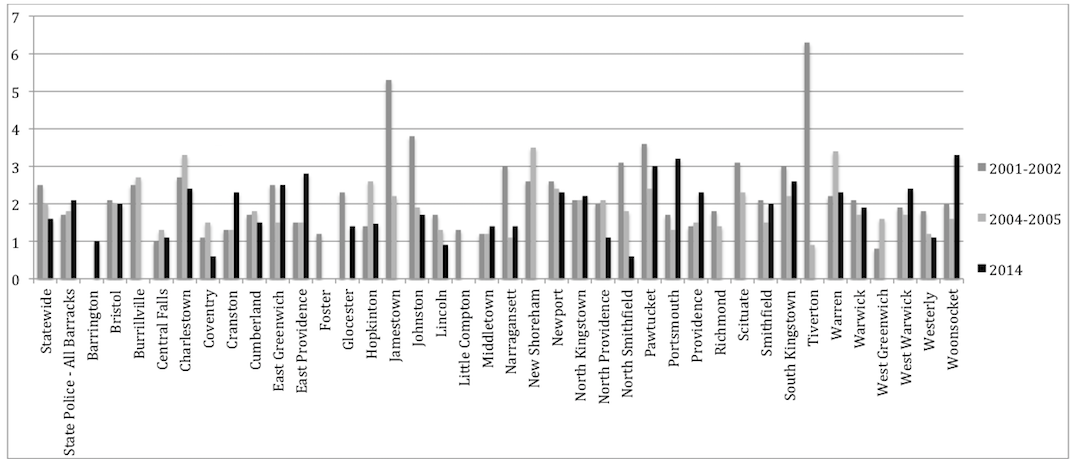
And, of the ten Rhode Island police departments that have seen an increase in racial disparity during searches since 2001-2002 include: Cranston, East Providence, North Kingstown, Providence, Woonsocket and the State Police. while Pawtucket and South Kingstown have seen an increase in this disparity since 2004-2005.
The ACLU believes that this analysis comes as part of a forthcoming larger analysis of racial disparities across Rhode Island, including in arrest rates and school suspension rates.
For more informaton or to become a member of the ACLU please contact Hillary Davis at 401-831-7171.
The Communities with the Greatest Racial Disparities in Traffic Stops

#37 Barrington
# of Stops: 7,634
% Non-White Stops: 7.8%
% Non-White Driving Population: 14.5%
Disparity: -6.7%

#36 West Greenwich
# of Stops: 1,376
% Non-White Stops: 5.2%
% Non-White Driving Population: 8.0%
Disparity: -2.8%

#35 Westerly
# of Stops: 5,304
% Non-White Stops: 8.9%
% Non-White Driving Population: 11.5%
Disparity: -2.6%

#34 Central Falls
# of Stops: 3,793
% Non-White Stops: 62.5%
% Non-White Driving Population: 64.8%
Disparity: -2.3%

#33 Bristol
# of Stops: 5,439
% Non-White Stops: 7.5%
% Non-White Driving Population: 7.7%
Disparity: -0.2%

#32 Coventry
# of Stops: 7,520
% Non-White Stops: 4.8%
% Non-White Driving Population: 5.0%
Disparity: -0.2%

#31 North Kingstown
# of Stops: 8,819
% Non-White Stops: 10.1%
% Non-White Driving Population: 10.3%
Disparity: -0.2%

#30 Warwick
# of Stops: 20,707
% Non-White Stops: 13.8%
% Non-White Driving Population: 13.9%
Disparity: -0.1%

#29 Burrillville
# of Stops: 2,628
% Non-White Stops: 4.6%
% Non-White Driving Population: 4.4%
Disparity: 0.2%

#28 East Greenwich
# of Stops: 4,738
% Non-White Stops: 9.9%
% Non-White Driving Population: 9.4%
Disparity: 0.4%

#27 East Providence
# of Stops: 12,612
% Non-White Stops: 19.9%
% Non-White Driving Population: 18.7%
Disparity: 1.2%

#26 Tiverton
# of Stops: 942
% Non-White Stops: 6.2%
% Non-White Driving Population: 4.9%
Disparity: 1.3%

#25 South Kingstown
# of Stops: 9,233
% Non-White Stops: 11.4%
% Non-White Driving Population: 10.0%
Disparity: 1.5%

#24 Little Compton
# of Stops: 1,967
% Non-White Stops: 4.5%
% Non-White Driving Population: 2.8%
Disparity: 1.7%

#23 Richmond
# of Stops: 1,418
% Non-White Stops: 6.6%
% Non-White Driving Population: 4.7%
Disparity: 2.0%

#22 Portsmouth
# of Stops: 9,347
% Non-White Stops: 10.1%
% Non-White Driving Population: 7.9%
Disparity: 2.2%

#19 Charlestown
# of Stops: 2,518
% Non-White Stops: 7.6%
% Non-White Driving Population: 5.0%
Disparity: 2.6%

#20 Narragansett
# of Stops: 5,151
% Non-White Stops: 7.5%
% Non-White Driving Population: 4.9%
Disparity: 2.7%

#19 Newport
# of Stops: 6,266
% Non-White Stops: 17.5%
% Non-White Driving Population: 14.5%
Disparity: 3.0%

#18 Glocester
# of Stops: 3,897
% Non-White Stops: 7.1%
% Non-White Driving Population: 3.9%
Disparity: 3.1%

#17 Scituate
# of Stops: 2,376
% Non-White Stops: 7.4%
% Non-White Driving Population: 4.1%
Disparity: 3.3%

#16 Smithfield
# of Stops: 6,848
% Non-White Stops: 11.2%
% Non-White Driving Population: 7.8%
Disparity: 3.4%

#15 Jamestown
# of Stops: 3,286
% Non-White Stops: 8.0%
% Non-White Driving Population: 4.4%
Disparity: 3.6%

#14 Warren
# of Stops: 2,308
% Non-White Stops: 10.0%
% Non-White Driving Population: 5.5%
Disparity: 4.5%

#13 Middletown
# of Stops: 8,008
% Non-White Stops: 18.1%
% Non-White Driving Population: 12.4%
Disparity: 5.6%

#12 Woonsocket
# of Stops: 4,863
% Non-White Stops: 27.5%
% Non-White Driving Population: 21.6%
Disparity: 5.9%

#11 Hopkinton
# of Stops: 5,217
% Non-White Stops: 11.4%
% Non-White Driving Population: 5.5%
Disparity: 5.9%

#10 West Warwick
# of Stops: 8,954
% Non-White Stops: 10.6%
% Non-White Driving Population: 4.6%
Disparity: 6.0%

#9 Cumberland
# of Stops: 5,314
% Non-White Stops: 16.9%
% Non-White Driving Population: 10.6%
Disparity: 6.3%

#8 Foster
# of Stops: 2,323
% Non-White Stops: 12.7%
% Non-White Driving Population: 4.7%
Disparity: 8.0%

#7 Pawtucket
# of Stops: 17,779
% Non-White Stops: 42.8%
% Non-White Driving Population: 34.5%
Disparity: 8.3%

#6 Johnston
# of Stops: 8,374
% Non-White Stops: 24.9%
% Non-White Driving Population: 11.9%
Disparity: 12.9%

#5 Lincoln
# of Stops: 2,197
% Non-White Stops: 24.9%
% Non-White Driving Population: 11.4%
Disparity: 13.6%

#4 North Providence
# of Stops: 5,305
% Non-White Stops: 32.0%
% Non-White Driving Population: 16.2%
Disparity: 15.8%

#3 Cranston
# of Stops: 12,875
% Non-White Stops: 38.6%
% Non-White Driving Population: 21.4%
Disparity: 17.1%

#2 North Smithfield
# of Stops: 3,120
% Non-White Stops: 27.1%
% Non-White Driving Population: 5.5%
Disparity: 21.7%

#1 Providence
# of Stops: 18,026
% Non-White Stops: 64.0%
% Non-White Driving Population: 39.9%
Disparity: 24.1%


