Our Environment: "A Walk on the Beach" by Scott Turner
Scott Turner, Environmental Columnist
Our Environment: "A Walk on the Beach" by Scott Turner
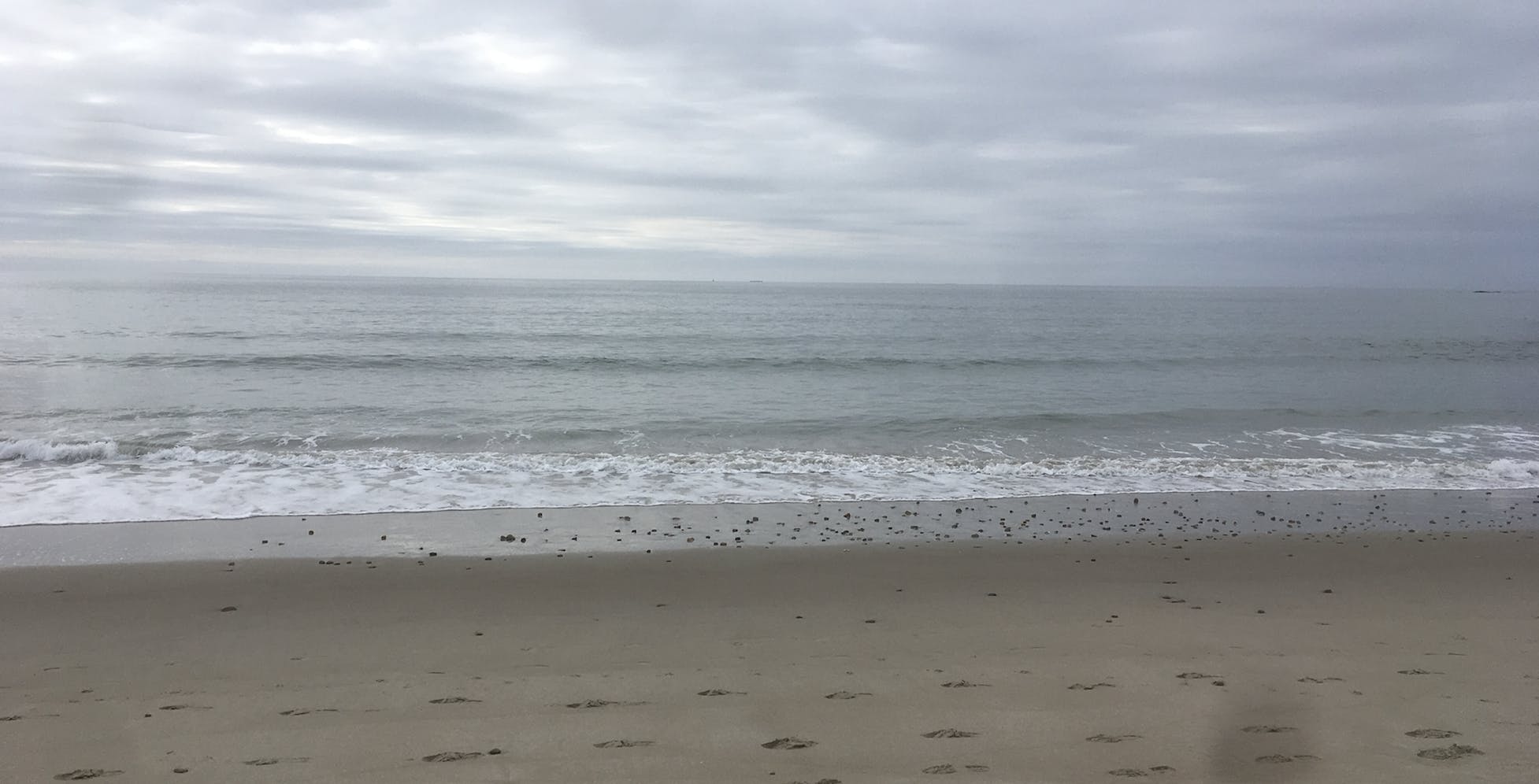
Except this was the first week of April, during a pandemic, and we were in need of cardio exercise. The beach was a town property that led onto conservancy land. At the moment, we were not breaking any stop-the-virus-spread rules, parking in the pitted-by-winter lot.
A low, thick cover of dim-colored clouds turned the typically blue ocean waters the color of slate. The air was a mix of two scents. The first was that of a spring meadow, and the second was the crisp smell of a salty sea.
GET THE LATEST BREAKING NEWS HERE -- SIGN UP FOR GOLOCAL FREE DAILY EBLASTThat it was two hours past high tide gave us a wide mudflat on which to stroll. But much of that ground was occupied—by piles of stones. Last winter the ocean must have discharged millions of rocks onto this shoreline, mostly in piles the length of full-sized cars.
In the words of Eric Burden and the band, War, in the song, “Spill the Wine,” those stones included, “… long ones, tall ones, short ones, brown ones, black ones, round ones, big ones, crazy ones…” In addition, there were blue, red, yellow, gray, white and other colored pebbles, cobblestones and slag spilled out over the mud. Also gifted from the sea were hundreds of large, sturdy quahog shells amid, around and atop the rock piles.

This visit to the sea came on day 23 of our stay-at-home routine to combat the spread of the coronavirus, The quick trip up and down the beach was a way to break the pattern. We fast-walked the one mile and turned around just as silvery sunlight spread over the sand. Feeling somewhat winded, we slowed the pace.
Now that power walking had become simple strolling, we were able to look more closely at the stones. We noticed a good number of rocks that were orange, gold and tan. Some were speckled. Others featured quartz rings.
Suddenly, one stone made a piping call. We realized we were approaching a Piping Plover, a threatened species of shorebird in Rhode Island. The round, small sandy-tan-brown bird ran a few feet from among the rocks toward the dunes.
We took that call to mean “I am here,” and since the dunes were a nesting site for the species, we walked as far away from the plover as possible, without stepping into the sea.
A Piping Plover on territory is nothing short of miraculous. As a ground nester in sand, the species relies on camouflage to lay eggs and raise young. Every breeding season, which is now, by the way, people step on nests. Vehicles drive over them. Dogs, in particular, walked by owners on land posted, “No Dogs,” hound the poor little birds. Cats kill plovers, which are also preyed upon by all sorts of wild creatures. Lastly, the species is climate endangered, with rising seas washing over plover nests.
This sighting suggested that we were not alone. Karen and I were with the eiders, egrets, and plovers. It was nice to consider such a connection outside in fresh air, instead of pondering in fear and isolation indoors the crisis we humans all share. This was a chance to look outward to a greater world—one in which all creatures belong.