Our Environment: "Distancing Through an Audubon Refuge" By Scott Turner
Scott Turner, Environmental Columnist
Our Environment: "Distancing Through an Audubon Refuge" By Scott Turner
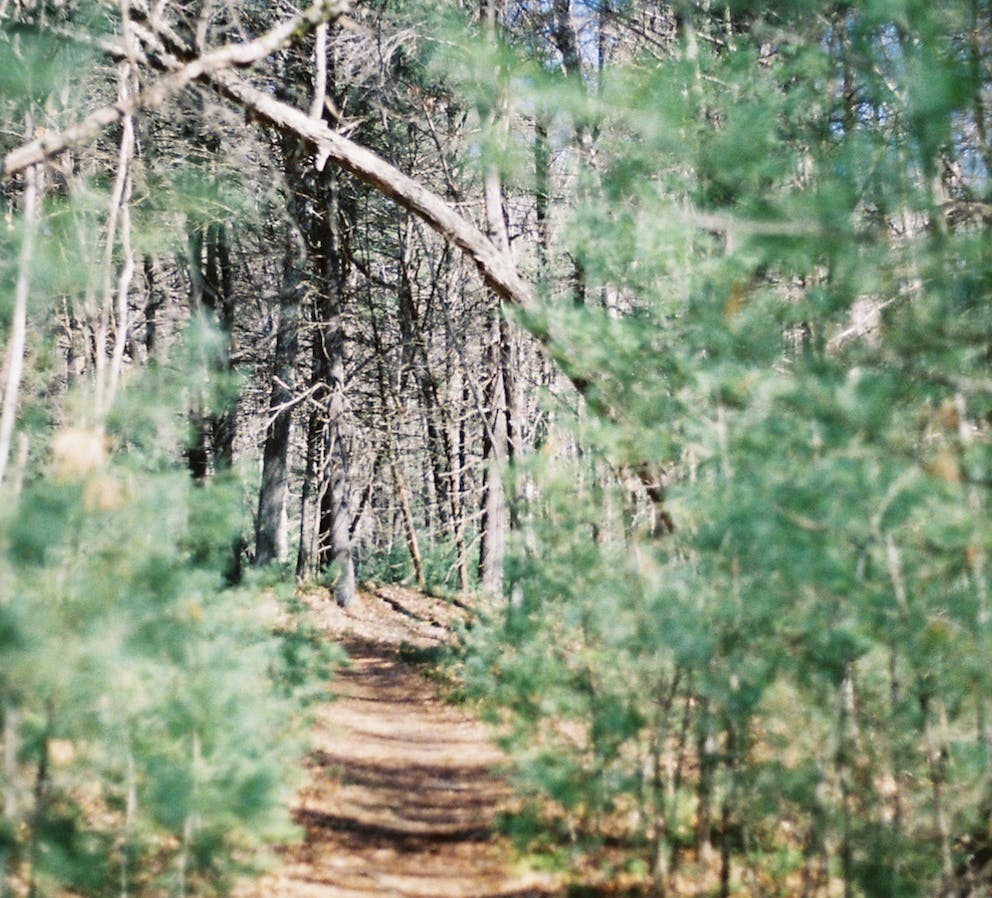
Although it was mid-April, and the leaves were not out, green was the dominant color in this 235-acre property. First and foremost, this flush to the landscape came from the abundance of Eastern white pines in the sanctuary’s forests. The refuge is home to some large white pines, but also mid-sized ones, and a good number of young members of the species in the understory.
The needles of Eastern white pine grow in feathery bundles of five, which help to produce the classic “swoosh” sound among the trees in a strong breeze. I’m glad that there were some wind gusts that morning, as they produced a soft-to-the ear, classic wind-in-the-pines resonance, during our walk.
GET THE LATEST BREAKING NEWS HERE -- SIGN UP FOR GOLOCAL FREE DAILY EBLASTThis was a bright sunny day, with early morning temperatures in the upper 30s. Sunlight lit up the woods, and as we strolled, we noticed that the light began to illuminate other green features of the forest. For example, there was lots of neon green moss on boulders and fallen tree trunks. Also, lichen in several different shades of green grew on most rocks and many standing trees.
Several times we discovered singular specimens or small stands of American holly. None of these evergreen trees with their leathery, pointy leaves, grew very tall. Thicker foliage on some of the trees reminded us of Christmas-time wreaths.
Also present, but not abundant, was wintergreen. This is a ground-hugging, evergreen with deeply forest-green leaves that contain a one-of-a-kind minty flavor.
Ground pine was in the refuge, as well, and it was profuse, sometimes blanketing the forest floor. Also called club moss, this dark-green perennial resides in moist northern woods. Ground pine gets its name from the fact that each one of these plants looks like a little conifer.
Joining the greenery in the refuge were trailside edges of star moss. This appropriately named plant looked like cushions of little light-green stars. To me, star moss always seems too fragile to step on but soft enough to sleep upon.
There was some “new” green in the refuge, hinting of springtime. Poking out of the water in a wet area, for example, were the unfurling bright-green leaves of skunk cabbage, as well as the young green shoots of emerging cattails.
However, what really told us that the season was changing was the richness among the white pines of singing Pine Warblers. From the tops of the towering trees came the trills of male birds, which, while yellow-throated, also display yellow-olive-green backs. It is always quite difficult to spot a Pine Warbler amidst conifer foliage high overhead. I don’t even try. But their territorial singing, a sign of early spring, told us that they were there and looking for mates.
Speaking of partners, I was with Karen, my wife, on the walk. Rachel, our daughter, was also there. Because of the pandemic, Rachel is home from California, as is her brother, Noah, who is back from Ohio.
When we all get out of this COVID-19 mess, Karen and I figure that our baby birds will take flight again. That means we must enjoy them as much as we can now, while we’re a quartet, and an early day hike in the woods proved an awful good way to spend time together.