
Playing with Matches: The Supreme Court’s Future - Gary Sasse
Gary Sasse, MINDSETTER™
Playing with Matches: The Supreme Court’s Future - Gary Sasse
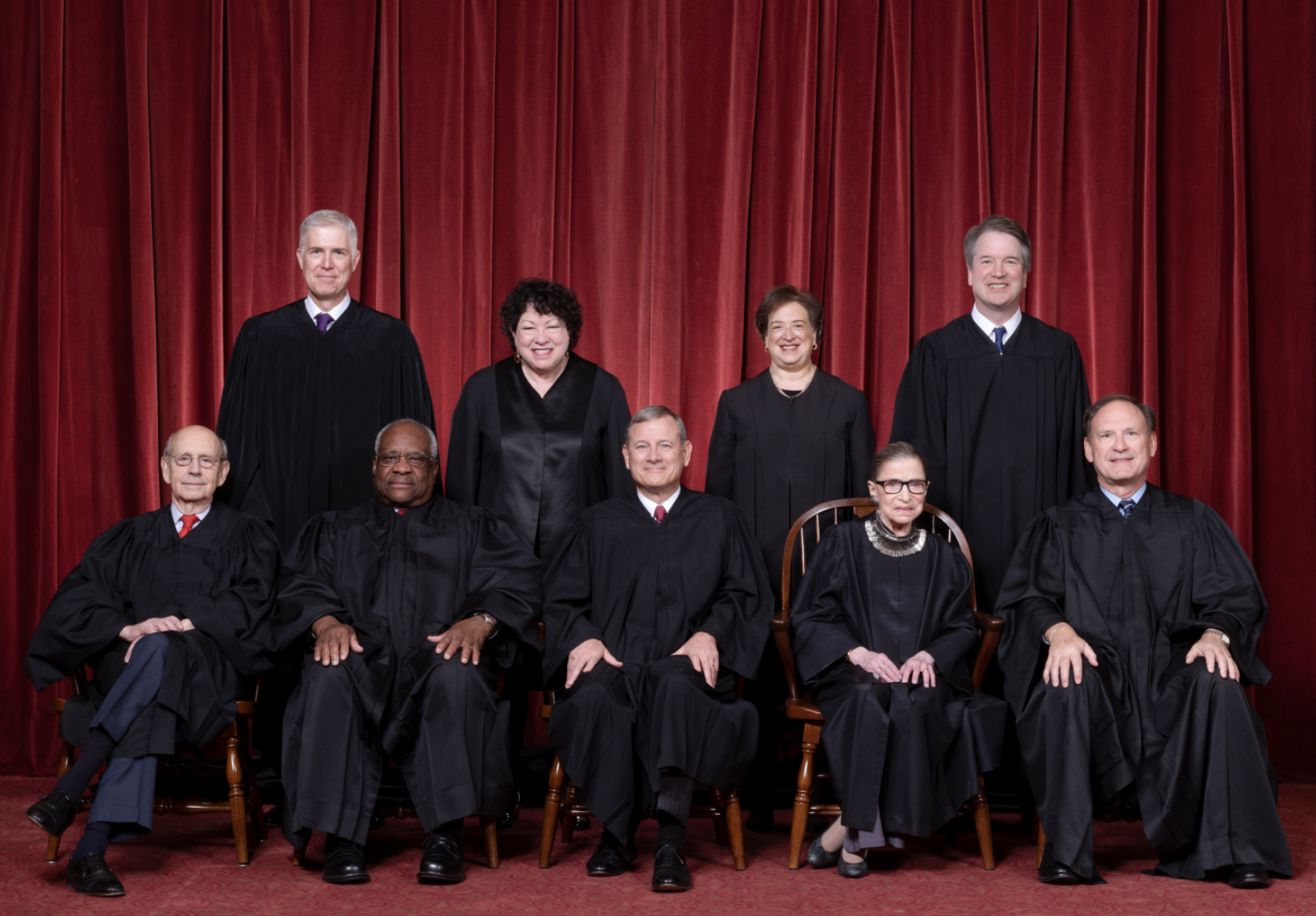
The nonpartisan Congressional Research Service summarized the role politics plays in judicial selection when it observed, “most presidents, it is assumed, will be inclined to select a nominee whose political and ideological views appear compatible with their own. This means that they want Justices on the Court who will vote to decide cases consistent with a president’s policy preferences.”
However, there is no guarantee that once appointed a Justice’s opinions will be predictable. Eisenhower remarked, “I have made two mistakes, and they are sitting on the Supreme Court.” He was referring to his choice of Earl Warren to be Chief Justice, and Associate Justice William Brennan. Felix Frankfurter was not the liberal FDR thought he appointed, nor was Kennedy’s choice of Byron White. Nixon and Ford appointed judges who they thought were solid conservatives but were not so in the case of Harry Blackmun and John Paul Stevens. The political scientist Ronald Feinman found that between 1939 and 2009 nine justices swung from one philosophical side to the opposite.
GET THE LATEST BREAKING NEWS HERE -- SIGN UP FOR GOLOCAL FREE DAILY EBLASTOver the last three decades, the confirmation of Supreme Court Justices has reached a political crescendo starting with the Democrat onslaught against Robert Bork over ideological differences, not legal scholarship. The timing of Republicans filling the vacancy resulting from Justice Ginsburg’s death is just the next chapter in the unhealthy and increasing politicization of judicial appointments. Indeed, it can be argued that the current Senate Majority Leader Mitch McConnell sees his legacy as installing conservative judges.
Because of super-charged partisan politics and resulting congressional gridlock, much of the lawmaking process has evolved to the courts. This makes judicial selection an even higher stakes political game.
Congress has repeatedly failed to enact legislation on issues of critical concern to many Americans regarding campaign finance, voting rights, gender equity, abortion, gun safety and climate change. On many of these matters the Supreme Court was put in the position of making decisions that should have been the prerogatives of elected officials.
Conservatives disagreed with many of these decisions. For decades their political goal has been to flip the majority of the court from liberal to conservative. That objective may be largely achieved once they confirm Trump’s nominee.
President Trump’s election was a reflection of the working-class believing that their values were being disregarded by elites who did not share their cultural outlook and were insensitive to their economic plight. As Wall Street Journal columnist Gerard Baker opined, “The Supreme Court was central to this sense of alienation: The transfer of lawmaking power to activist judges in a whole range of areas that were once decided by voters only deepened the impression that unaccountable elites made the rules a nation of deplorables must live by.”
The political calculus Republicans are making in confirming a justice weeks before a presidential election is not based on fair play or intellectual consistency, but on power politics that comes from controlling both the White House and the Senate.
The Senate’s decision to give advice and consent on this judicial appointment at this time may impact the public’s confidence in the integrity of the nation’s highest court. Potentially undermining trust in the Supreme Court is not a matter to be taken lightly and sacrificed on the alter of political expediency. The Court’s integrity is a cornerstone in our system of checks and balances.
While nobody has a crystal ball to predict the future, different scenarios may result from the outcome of the November general election.
If the GOP wins either the presidency or maintains a senate majority, the Supreme Court would be positioned to block enactment of an emerging progressive agenda for the next decade. Liberal activists would have to pay defense on such issues as reproductive rights, limiting of ability to address climate change, and expanding states’ rights.
On the other hand, if the Democrats gain the levers of power, proposals will be made to undo the conservative court majority. Liberals can be expected to try to nix the 60-vote filibuster rule and expand the Supreme Court’s membership. If they are successful the Republican approval of a new justice will prove to be a shortsighted pyrrhic victory.
These changes will not be easy to achieve. For example, The Hill reported, “Senator Dianne Feinstein (D-Calif) who would chair the Senate Judiciary Committee if the Democrats win back the majority is against nixing the legislative filibuster.” If the filibuster was not eliminated it would be difficult to expand the size of the Supreme Court.
Packing the court will also be challenging. In 1937 FDR tried to add justices to obtain favorable rulings on New Deal legislation the court ruled unconstitutional. President Roosevelt was soundly defeated, and there is no apparent FDR in today’s Democratic Party. The size of the Supreme Court was set at nine justices in 1869, and institutional changes are never as easy as advertised.
Several proposals have been advanced to reach a compromise where the Senate Republicans would hold confirmation until a new president is elected and Democrats would forego efforts to pack the court and eliminate the filibuster. Neither party has shown interest in such a solution.
As the nation faces a pandemic, increasing social unrest and economic dislocation, there is a limited chance of reversing the spiraling increase in hyper-partisanship with the current leadership. This does not bode well to maintain public confidence in the impartiality of the nation’s highest court.
.jpg)