


Prov. Pushing for Trolley Program that Has Failed in Other Cities
Kate Nagle, GoLocal Contributor
Prov. Pushing for Trolley Program that Has Failed in Other Cities

In an evaluation of census data in an Atlantic Cities piece by transportation analyst Yonah Freemark entitled, "Have U.S. Light Rail Systems Been Worth the Investment?," Freemark wrote that the initial five light rail systems established in the 1980s -- Buffalo, Portland, Sacramento, San Diego, and San Jose -- "neither rescued the center cities of their respective regions nor resulted in higher transit use — the dual goals of those first-generation lines."
The current Providence proposal is looking to both parlay public-private partnerships, as well as the opportunities available through the development of I-195 corridor, to secure a TIGER grant, after losing out last year to a competing application for roadwork in Apponaug.
GET THE LATEST BREAKING NEWS HERE -- SIGN UP FOR GOLOCAL FREE DAILY EBLASTSee Providence Streetcar Proposal HERE
Gary Sasse, former Director of Administration and Executive Director of the Rhode Island Expenditure Council, is cautiously optimistic at the potential benefit streetcars would bring to Providence.
"[A] city leader needs to be visionary. A well designed street car system that links Brown, the I-195 project, and downtown could be the type of infrastructure project to help revitalize Providence," said Sasse. "However, the return on investment is dependent on how the street car system is integrated with overall development plans and market needs."
URI Distinguished Professor of Business Edward Mazze took a much different view.
"With the social, educational and economic issues currently facing Providence, now is not the time to build a streetcar system even if federal funds were available," said Mazze. "Providence has a long way to go in attracting new businesses, retaining businesses and making the city welcome for middle and high income individuals and families."
Look Back at Data -- and Forward
Answering his own question, Freemark wrote, "Certainly not; in many cases, rail has provided the essential boost to reinvigorate communities, and in some cases it has also resulted in higher ridership than before: just look at Rosslyn-Ballston in the D.C. region or Kendall Square in the Boston region."
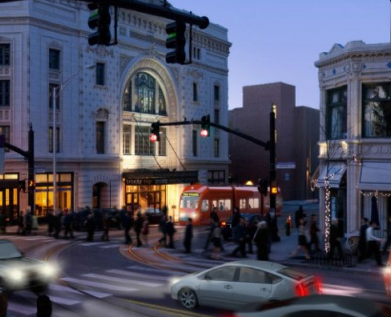
According to the City of Providence's proposal put forth this spring, the streetcar route would encompass 2.5 miles, with a one time cost of $114 million -- of which 34% would come from federal funding -- followed by annual costs of $3 million for the 12 stop line.
The result, says the city, would "spark economic development, create 6,000 new jobs over the next 20 years and 250 construction jobs, increase surrounding property values by $1.1 billion, and attract 1500 new city residents over the next 20 years."
Developer Stever Durkee spoke to the effort put forth by the city to try and secure federal funding for the street car this year, "I think the [TIGER] application is awesome. It's a great application that was put together by Bonne [Nickerson] and her team, with letters of support from Governor on down," said Durkee.
Durkee noted an example of a recently successful light rail program -- in Atlanta, Georgia, that had just gotten coverage in the Atlanta Business Chronicle for its projected positive economic impact in the Atlanta Business Chronicle.
"We need it here," said Durkee of a streetcar system in Providence. "it's one of those game changing investments,"
Council Role - and Prospects?
Providence City Councilman Luis Aponte spoke to the role a TIF -- and what he saw as the difference between last year's and this year's grant application.
"The last time the [TIGER] grant was put together and submitted, it was largely a city push. There's more private and non-profit sector buy-in in this application that helps us show what the added value and impact can be," said Aponte.
"What this means is a conditional infrastructure for undeveloped parcels of I-195, which means they'd become more attractive for development to move people in and out of the hub," said Aponte. "I think the strategy behind this application is to create public sector investment that will spur and incentivize private sector development."
Aponte noted that he thought the application was "strong," and the city should know if they get the funding by the end of the fiscal year. "The TIF ordinance has already been submitted to the Council."
URI's Mazze thought, however, that other matters were more pressing.
"First and foremost, Providence needs funds to fix its transportation system including city streets, highways, bridges and evening street lighting. Second, Providence needs funds to fix its schools and government buildings. And lastly, Providence needs funds for job training and recreational activities for young men and women," said Mazze.
"Many years ago Pittsburgh Pennsylvania built the bridge to nowhere, Providence can build a streetcar system that will only go one way.....out of Providence unless Providence takes care of its current social, educational and economic problems."
Current Tax Stabilization Agreements in Providence

130 Westminster St.
The Arcade - 103 Westminster St. Associates, LLC
Approval Date: 12/31/2012
Assessed Valuation: $1,826,200
Actual Tax Prior to TSA: $44,137
2013 True Tax: $67,113
2013 Stabilized Tax Payment: $16,742
Tax Status: Current
End Date of Agreement: 12/31/2022

122 Fountain St.
Sportsman Inn - HM Ventures, LLC
Approval Date: 4/20/2012
Assessed Valuation: $1,607,800
Actual Tax Prior to TSA: $77,010
2013 True Tax: $59,087
2013 Stabilized Tax Payment: $9,601
Tax Status: Past Due
End Date of Agreement: 12/31/2022

244 Oak St. + 33 Magnolia St.
Roger Williams Brewery, LLC
Approval Date: 1/1/2012
Assessed Valuation: $496,800
Actual Tax Prior to TSA: N/A
2013 True Tax: $18,257
2013 Stabilized Tax Payment: $18,140
Tax Status: Past Due
End Date of Agreement: 12/31/2024

1 AT&T Plaza
Hasbro - Empire LaSalle, LLC
Approval Date: 7/1/2012
Assessed Valuation: $25,092,400
Actual Tax Prior to TSA: $547,553
2013 True Tax: $922,146
2013 Stabilized Tax Payment: $47,568
Tax Status: Current
End Date of Agreement: 12/31/2024

100 Weybosset St.
Providence G Building - Providence Capital, LLC
Approval Date: 3/20/2012
Assessed Valuation: $2,575,400
Actual Tax Prior to TSA: $129,610
2013 True Tax: $94,609
2013 Stabilized Tax Payment: $32,557
Tax Status: Current
End Date of Agreement: 7/1/2025

11 Dorrance St.
The Biltmore
Approval Date: 3/15/2012
Assessed Valuation: $20,162,400
Actual Tax Prior to TSA: $694,575
2013 True Tax: $740,698
2013 Stabilized Tax Payment: $124,506
Tax Status: Past Due
End Date of Agreement: 12 Years from Commencement

1 Park Row West
Johnston & Wales University Dorms - Capitol Cove, LLC
Approval Date: 3/11/2005
Amendment Date: 3/8/2010
Assessed Valuation: $2,252,500
Actual Tax Prior to TSA: $518,247
2013 True Tax: $82,779
2013 Stabilized Tax Payment: $968,606
Tax Status: Current
End Date of Agreement: 12/31/2023

125 Washington St.
Mercantile Block Assoc., LLC
Approval Date: 11/16/2009
Assessed Valuation: $1,758,000
Actual Tax Prior to TSA: $59,851
2013 True Tax: $64,607
2013 Stabilized Tax Payment: $34,248
Tax Status: Current
End Date of Agreement: 12/31/2020

1 Sims Ave.
Milhaus LLC - The Steel Yard
Approval Date: 1/8/2007
Assessed Valuation: $323,400
Actual Tax Prior to TSA: N/A
2013 True Tax: $11,885
2013 Stabilized Tax Payment: $19,641
Tax Status: Current
End Date of Agreement: 12/31/2016

60 Valley St.
60 Valley St. LLC (c/o Armory Revival)
Approval Date: 9/26/2006
Assessed Valuation: $2,797,000
Actual Tax Prior to TSA: $14,333
2013 True Tax: $102,790
2013 Stabilized Tax Payment: $11,730
Tax Status: Current
End Date of Agreement: 12/31/2016

160 Niantic Ave.
160 Niantic Ave. Morvco Realty LLC
Approval Date: 5/27/2004
Assessed Valuation: $1,305,300
Actual Tax Prior to TSA: $50,612
2013 True Tax: $47,970
2013 Stabilized Tax Payment: $38,550
Tax Status: Current
End Date of Agreement: 12/31/2015

50 Holden St.
Promenade Building Assoc. - The Foundry
Approval Date: 5/17/2004
Assessed Valuation: $4,238,200
Actual Tax Prior to TSA: $42,802
2013 True Tax: $155,754
2013 Stabilized Tax Payment: $104,814
Tax Status: Current
End Date of Agreement: 12/31/2015

21 Gordon Ave.
South Providence Development Corp. (Keith Fernandez)
Approval Date: 1/16/2004
Assessed Valuation: $1,042,600
Actual Tax Prior to TSA: $5,708
2013 True Tax: $38,316
2013 Stabilized Tax Payment: $10,984
Tax Status: Past Due
End Date of Agreement: 12/31/2016

10 Memorial Blvd.
GTECH Corp. Headquarters
Approval Date: 7/15/2003
Assessed Valuation: $54,767,800
Actual Tax Prior to TSA: $236,619
2013 True Tax: $2,012,717
2013 Stabilized Tax Payment: $1,100,000
Tax Status: Current
End Date of Agreement: 12/31/2026

65 Eddy St.
Peerless Lofts
Approval Date: 11/22/2002
Assessed Valuation: $12,843,700
Actual Tax Prior to TSA: $80,100
2013 True Tax: $472,006
2013 Stabilized Tax Payment: $33,407
Tax Status: Current
End Date of Agreement: 12/31/2016

235 Promenade St.
Promenade Building Assoc. - The Foundry
Approval Date: 11/22/2002
Assessed Valuation: $15,810,300
Actual Tax Prior to TSA: $58,201
2013 True Tax: $581,029
2013 Stabilized Tax Payment: $30,345
Tax Status: Current
End Date of Agreement: 12/31/2015

236 Westminster St.
Alice Building LLC c/o Cornish Associates
Approval Date: 12/28/2001
Assessed Valuation: $3,680,500
Actual Tax Prior to TSA: $25,531
2013 True Tax: $135,258
2013 Stabilized Tax Payment: $13,439
Tax Status: Current
End Date of Agreement: 12/31/2014

100 Providence Place
The 903
Approval Date: 12/21/2001
Assessed Valuation: $68,573,700
Actual Tax Prior to TSA: $200,000
2013 True Tax: $2,520,083
2013 Stabilized Tax Payment: $620,474
Tax Status: Current
End Date of Agreement: 12/31/2015

95 Chestnut St.
Hacht Development, LLC
Approval Date: 4/15/2012
Assessed Valuation: $3,091,300
Actual Tax Prior to TSA: $110,665
2013 True Tax: $113,605
2013 Stabilized Tax Payment: $20,453
Tax Status: Past Due
End Date of Agreement: 12/31/2022

265 Oxford St.
Institute for Non-Violence
Approval Date: 1/1/2012
Assessed Valuation: $1,393,700
Actual Tax Prior to TSA: $32,928
2013 True Tax: $51,218
2013 Stabilized Tax Payment: $1,000
Tax Status: Current
End Date of Agreement: 12/31/2021

145 Globe St.
Victory Square - JAG Investment Realty, LLC
Approval Date: 7/18/2011
Assessed Valuation: $7,234,800
Actual Tax Prior to TSA: $294,485
2013 True Tax: $265,879
2013 Stabilized Tax Payment: $252,750
Tax Status: Current
End Date of Agreement: 12/31/2013

25 Eagle St.
Butcher Block Mill, LLC
Approval Date: 1/1/2011
Assessed Valuation: $590,500
Actual Tax Prior to TSA: $23,469
2013 True Tax: $21,701
2013 Stabilized Tax Payment: $11,431
Tax Status: Current
End Date of Agreement: 12/31/2023

50 Agnes St.
50 Agnes, LLC
Approval Date: 1/1/2012
Assessed Valuation: $521,800
Actual Tax Prior to TSA: $21,422
2013 True Tax: $19,176
2013 Stabilized Tax Payment: $16,807
Tax Status: Current
End Date of Agreement: 12/31/2024

103 Dike St.
Music House, LLC - Fete
Approval Date: 1/1/2012
Assessed Valuation: $589,700
Actual Tax Prior to TSA: $17,555
2013 True Tax: $21,671
2013 Stabilized Tax Payment: $5,417
Tax Status: Current
End Date of Agreement: 12/31/2024

41 Central St.
Yet Another LLC - Art Recreation Center
Approval Date: 4/16/2007
Assessed Valuation: $287,100
Actual Tax Prior to TSA: $12,879
2013 True Tax: $10,551
2013 Stabilized Tax Payment: $5,862
Tax Status: Past Due
End Date of Agreement: 12/31/2024

200 Allens Ave.
200 Allens Ave. LLC (Capstone Properties)
Approval Date: 1/8/2007
Assessed Valuation: $1,834,300
Actual Tax Prior to TSA: $74,754
2013 True Tax: $67,411
2013 Stabilized Tax Payment: $23,537
Tax Status: Past Due
End Date of Agreement: 12/31/2016

35 Hylestead St.
65 Pavillion LLC
Approval Date: 8/1/2005
Assessed Valuation: $675,500
Actual Tax Prior to TSA: $13,345
2013 True Tax: $24,825
2013 Stabilized Tax Payment: $9,752
Tax Status: Current
End Date of Agreement: 12/31/2016

203 Weybosset St.
Zampalis Realty (Zampalis Realty LLC)
Approval Date: 8/1/2005
Assessed Valuation: $547,900
Actual Tax Prior to TSA: $12,565
2013 True Tax: $20,135
2013 Stabilized Tax Payment: $31,300
Tax Status: Current
End Date of Agreement: 12/31/2024

166 Valley St.
Rising Mills Project (166 Valley St. LLC, Struever Bros)
Approval Date: 12/1/2003
Assessed Valuation: $16,749,900
Actual Tax Prior to TSA: $91,763
2013 True Tax: $615,559
2013 Stabilized Tax Payment: $80,535
Tax Status: Current
End Date of Agreement: 12/31/2011

100 Exchange St.
Intercontinental Fund IV F/K/A Cap Hill Prop
Approval Date: 1/16/2004
Assessed Valuation: $107,237,400
Actual Tax Prior to TSA: $1,888,763
2013 True Tax: $2,910,464
2013 Stabilized Tax Payment: $1,086,829
Tax Status: Current
End Date of Agreement: 12/31/2023

5 Avenue of the Arts
Masonic Temple - RP Providence Owner LLC
Approval Date: 7/15/2003
Assessed Valuation: $45,974,100
Actual Tax Prior to TSA: $79,072
2013 True Tax: $1,689,548
2013 Stabilized Tax Payment: $215,843
Tax Status: Current
End Date of Agreement: 12/31/2025

532 Kinsley Ave.
Monahasset Mills LLC
Approval Date: 11/22/2002
Assessed Valuation: $10,857,600
Actual Tax Prior to TSA: N/A
2013 True Tax: N/A
2013 Stabilized Tax Payment: $12,836
Tax Status: Credit
End Date of Agreement: 12/31/2017

210 Westminster St.
Harrisburg Assoc. LLC and Lerner Assoc. LLC
Approval Date: 11/8/2002
Assessed Valuation: $1,188,300
Actual Tax Prior to TSA: $19,404
2013 True Tax: $43,670
2013 Stabilized Tax Payment: $6,349
Tax Status: Current
End Date of Agreement: 12/31/2016

220 Westminster St.
Harrisburg Assoc. LLC and Lerner Assoc. LLC
Approval Date: 11/8/2002
Assessed Valuation: $2,004,800
Actual Tax Prior to TSA: $10,302
2013 True Tax: $73,676
2013 Stabilized Tax Payment: $10,302
Tax Status: Current
End Date of Agreement: 12/31/2016

100 Fountain St.
Steelwood (Palmer Building) (LAF Realty LLC Inc.)
Approval Date: 4/25/2002
Assessed Valuation: $503,300
Actual Tax Prior to TSA: $48,935
2013 True Tax: $18,496
2013 Stabilized Tax Payment: $22,970
Tax Status: Past Due
End Date of Agreement: 12/31/2016

77 Reservoir Ave.
Mashpaug Associates LLC
Approval Date: 11/9/2001
Assessed Valuation: $6,953,300
Actual Tax Prior to TSA: $113,538
2013 True Tax: $255,534
2013 Stabilized Tax Payment: $108,829
Tax Status: Current
End Date of Agreement: 12/31/2015


