


National Grid to Take Down Trees on South Main Street -- Opposition Mounts
GoLocalProv News Team
National Grid to Take Down Trees on South Main Street -- Opposition Mounts
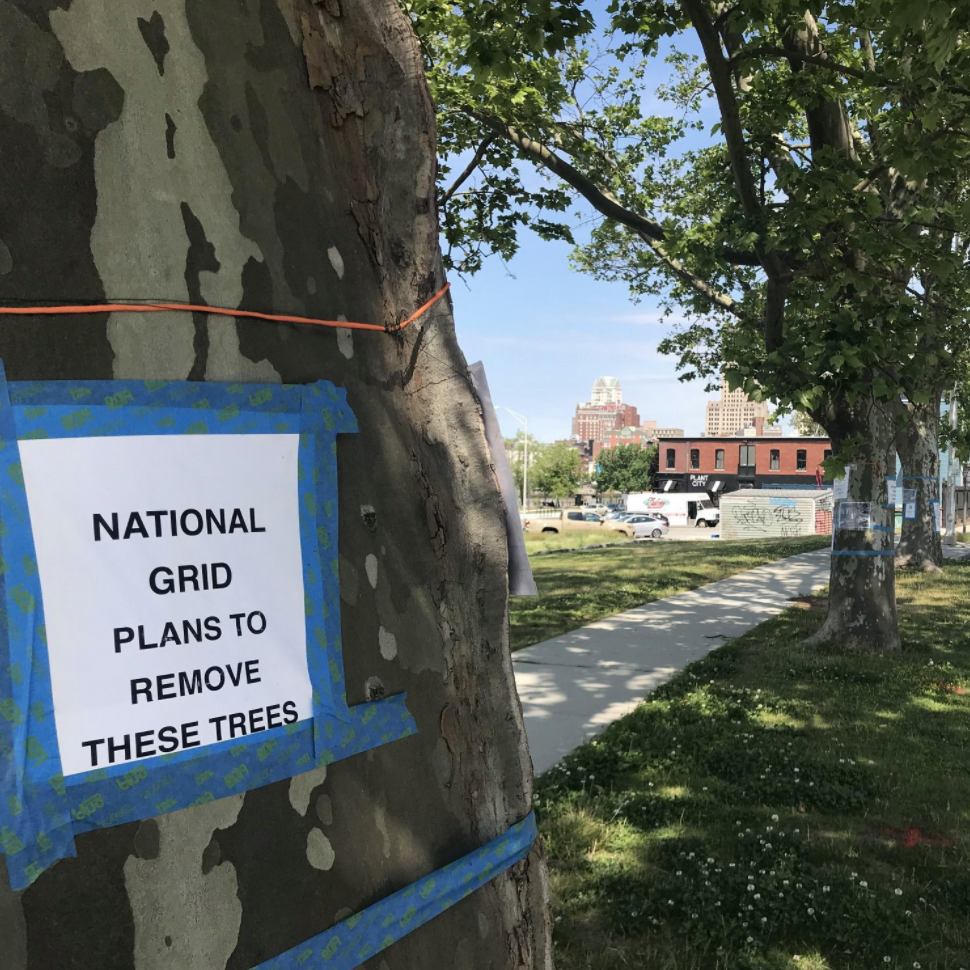
“As some of you may know, a group of neighborhood organizations, businesses, and residents have been circulating a petition expressing concern about the proposed removal of three mature trees on South Main Street near Transit Street,” said the FPNA.
“There will be a public meeting on this issue with National Grid on Thursday, June 11 at 6pm via Zoom,” FPNA continued. “To register in advance, click here."
GET THE LATEST BREAKING NEWS HERE -- SIGN UP FOR GOLOCAL FREE DAILY EBLAST“As we recognize the destruction of trees is made with care and is accordance with the Providence Tree Ordinance, we also recognize that trees like these are not replaceable to canopy equivalents,” writes FPNA.
See Full Appeal — and List of Signatories — HERE
Grid Responds
National Grid representative Ted Kresse provided the following to GoLocal, about the scope of work intended — and proposed tree removal.
"Earlier this year we began work on our Downtown Reliability Project, which includes the replacement of approximately two miles of existing 115kV transmission lines. These cables were installed in 1939 and 1946 and are located between the corner of Clarkson Street and Admiral Street Cable Terminal and Dollar Street in Providence. As part of this project, there are three London Plane trees on South Main (and Transit Street), which were planted years after the original cables were installed, and are now sitting over the existing duct bank and two manholes at this location. As this underground infrastructure needs to be upgraded with the installation of the new cable, our team – along with coordination from the City - have not identified a feasible path that would allow the trees to remain because of the reliability impacts, potential safety hazards to our workers during construction, and potential safety hazards to the public once the work is complete. National Grid goes to great lengths to try and preserve trees unless there’s clear indication that the trees and infrastructure cannot co-exist, unfortunately that appears to be the case here. I would also note that we have been working with the City for well over a year on a plan to limit any tree removal on the project and will continue to discuss any potential options with members of the community in the coming days.
The tree removal would likely need to occur in the next few weeks so that our construction work can stay on schedule and meet the required completion dates set by the regional system operator (ISO-NE). We have been working with the City on this plan for about a year, had public information sessions going back to November, and plans were finalized earlier this year. These transmission lines are a key source of electricity for the City and replacing them is a priority for both National Grid and the City of Providence. We recognize the great importance that trees have in an urban setting from both an aesthetic and environmental perspective, which is why we go to great lengths to preserve them. It’s also why we began working with the City of Providence, their arborist and the Parks Department more than a year ago on the project. As I said, we’re open to hearing from others in the days ahead to see if there are any additional options that National Grid has not yet considered. At this time, there appears to be no other option from a reliability and safety standpoint. We do intend to replace the trees according to City guidelines.
If there’s a way to do it that is cost effective, logistically feasible, won’t jeopardize reliability, and saving them wouldn’t create any potential safety risks – yes, we would consider [alternatives to removal]. However, our arborists, community liaisons, engineering folks, and City representatives have been looking at this extensively for some time and have not identified another avenue to meet the same safety and reliability standards required to complete the project. There are already some challenges with the existing right of way, other utility infrastructure in the vicinity, and the appetite to put transmission lines above ground is never well received. We should also note the parcel, where these trees are currently sitting, is slated for future development under the 195 Commission."