


Providence Ranked #5 Nationally in Wage Growth Since 2009
Kate Nagle, GoLocal Contributor
Providence Ranked #5 Nationally in Wage Growth Since 2009

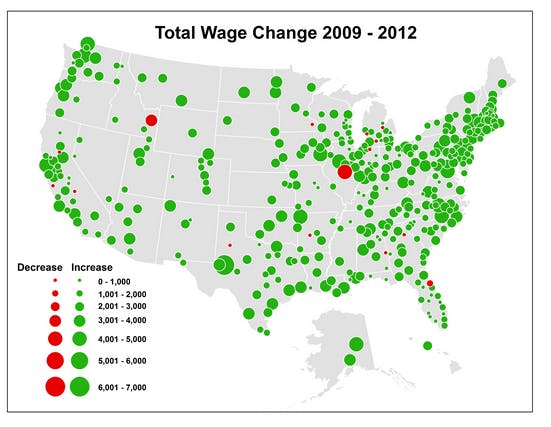
According to the reports, in 2009, the average wage in the greater Providence metro area, which included Warwick as well as Fall River, MA, was $43,600. In 2012, it rose to $47,340.
Only four large metro areas -- those with populations of one million or more - saw bigger wage gains over the three years, as researched by Charlotta Mellanda at the Martin Prosperity Institute and reported in The Atlantic Cites.
GET THE LATEST BREAKING NEWS HERE -- SIGN UP FOR GOLOCAL FREE DAILY EBLASTWashington DC, Seattle, San Francisco, and Houston metro areas came in ahead of Providence, while Oklahoma City, Cleveland, Phoenix, New York City, and New Orleans filled out the six through ten slots for wage growth.
"It’s always nice to see positive economic statistics. The fact that the [Rhode Island] metro area had greater average wage growth than most areas of the country during 2009-2012 is good news," said the Rhode Island Economic Development Corporation's Marcel Valois.
"However, we must be cautious about using one isolated data set to draw conclusions about the economic health of a region. When we see a combination of positive job growth, lowering unemployment and increasing average wages, then we will have many more reasons to celebrate," said Valois.
With unemployment in Rhode Island currently at 8.9 percent as of July, it is markedly lower than where it was at in 2009, when it was 11.1 percent in July of that year before it eventually peaked at 11.9 percent in the beginning of 2010.
However, in the current economy, Rhode Island ranks 3rd nationally in unemployment behind Illinois and Nevada at 9.2 and 9.5 percent respectively.
So are relatively higher wages helping Rhode Islanders, with unemployment being where it's at? GoLocal talked with members of the Rhode Island business and political community to get their opinions on what the data meant.
Higher Wages -- and Unemployment
"First the metro measurement should be of interest because ours is truly regional economy. The relative growth in wages and salaries is encouraging, nevertheless it would be interesting to disaggregate the information by counties and states," said Sasse.
Despite the financial gains for some of those in the working world, Sasse however saw the continuing high unemployment rate in Rhode Island as compared to the rest of the country as still being of concern.
"The appears to be bittersweet with Rhode Island's unemployment rate in the top 5 and with even higher unemployment in the inner cities. Indeed, Rhode Island's recovery from the Great Recession appears to still be uneven."
Valois recognized as well that Rhode Island has a ways to go. "Rhode Island needs to stay focused on creating the conditions for businesses in all sectors to grow and thrive. That will be the long term solution to creating more jobs and improving wages for all our citizens," he said.
Does Rhode Island Stack Up?

"At first glance, this would appear to be good news," said Chartier. "However, as it is but one part of the state's economic picture, it cannot be taken as a sign of substantive improvement."
Chartier continued, "Rhode Island's recovery continues to seriously lag behind other states, having replaced only 25% of the jobs lost during the recession while our neighbor, Massachusetts, has recovered 125% of jobs lost."
"Rhode Island cannot reconcile this "good news" of wage growth with still high unemployment. Our state has a brand issue that is very real and will not go away if our leaders continue to make only incremental changes to the business climate."
Said Chartier, "Finally, we would note with some dismay that the metropolitan area in this report with the highest increase in wages includes Washington, DC. It would be truly shameful and unacceptable if an upward trend in federal government wages exceeds those in the private sector, at the expense of the very taxpayers whom our government is supposed to serve."
Mike Stenhouse with the Rhode Island Center for Freedom and Prosperity similarly conjectured that the increase in wages could possibly be a factor of public sector growth.
"We did a study last year that showed that Rhode Island's public sector, after accounting for similarities such as education and demographics, out-earns the private sector, especially when you add benefits, which are much higher than the private sector." Stenhouse shared that the report could be found here.
"My first inclination is that looking at this list, if the first city and metro area is Washington DC, is that this this could be the result of the workforce measurement being heavily weighted towards public employees," said Stenhouse. "So is this data an indication that government employees are making a lot and driving the average wage up? I'm not sure, I haven't seen all the data this survey is looking at, but it could be the case."
Stenhouse continued, "What we do know in Rhode Island is that we have things backwards. We've got a burgeoning public sector, but clearly we don't have a good jobs market overall in the private sector."
"In a weak economy, we believe there will be greater disparities between low income earners and high," said Stenhouse. "In a booming economy, the lower income earners will benefit disproportionately better, along with everyone else."
Richard Florida, who penned the wage increase article in The Atlantic Cities, noted that nearly all U.S. metro areas - 96 percent of them - saw some increase in average annual wages over the years looked at.
Florida wrote, "The overall trend in wages give us cause for more optimism this Labor Day than we've had in quite a while. While there is still a ways to go and while too many workers in too many places remain out of work or underemployed, these data substantiate just how extensive the reach of wage recovery has been across the board."