


RI Pension Crisis—How Can It Be Fixed?
Stephen Beale, GoLocalProv News Editor
RI Pension Crisis—How Can It Be Fixed?
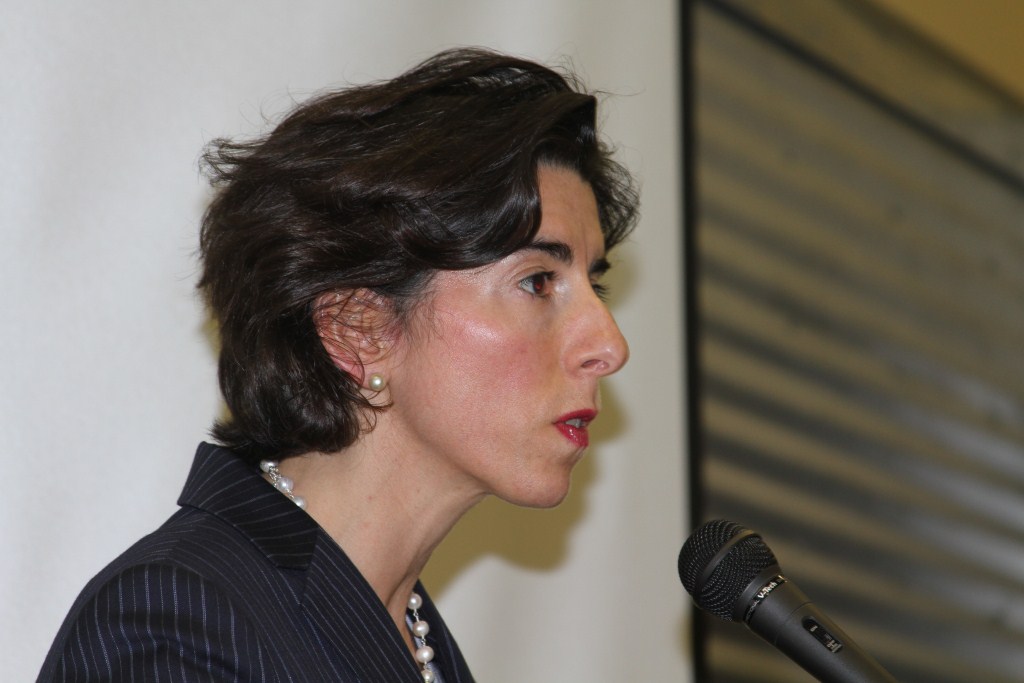
Raimondo released a comprehensive report on the problem titled “Truth in Numbers.” The report examines the costs of the pension system, how the unfunded liability grew, and how reform can be achieved.
Coming soon: Billion dollar hit to state budget
GET THE LATEST BREAKING NEWS HERE -- SIGN UP FOR GOLOCAL FREE DAILY EBLASTThe General Treasurer warned that the consequences of inaction would be dire. She said the annual cost of the system could soon soar from current levels of about $300 million to as much as $1 billion a year. “I wonder if any of us really can understand what it means to have a billion dollars of our state budget devoted solely to pension payments,” Raimondo said. “That is the path we are on unless we act.”
She continued: “Can you envision a state where so many vital public goods and services would have to be eliminated to pay for pension benefits, where 20 cents of every dollar—every tax dollar—is dedicated to the pension, as it will be in seven years unless we act.”
Raimondo says sweeping reforms needed
■ Raising the retirement age to 67
■ Reducing the accrual rate to one percent for future service
■ Suspending cost of living adjustments
■ Adding an option for 401(k)-style defined contribution plans
■ Other options include factoring in Social Security benefits and instituting “anti-spiking provisions” to prevent high increases in pension levels at the end of one’s career and.
Later this year, Raimondo is expected to make detailed recommendations to the Governor and General Assembly. She told GoLocalProv yesterday that her recommendations will incorporate all of the above. “We need all of them. Absolutely,” Raimondo said. “Together those five parameters form the framework for sustainable solutions, so we need components of every one.
Chafee: Open to all options, focus on unfunded liability
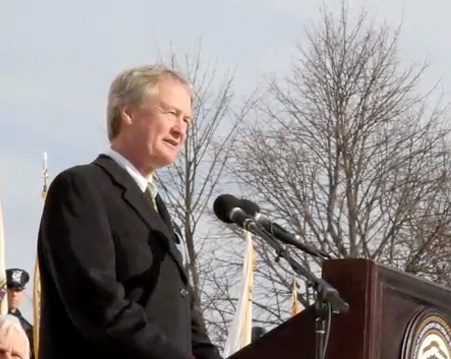
In an interview with GoLocalProv, Governor Lincoln Chafee said all options are on the table. But asked what his top priorities are, he pointed to a section of the report that states that the unfunded pension liability is the “lion’s share of the problem.”

Chafee said his immediate priority is to push for passage of two aspects of pension reform in his proposed budget. One is the MAST program, which gives local communities incentives—in the form of more state aid—to fully fund their local pension funds. Chafee also said he will continue to press for his proposal to have state employees contribute the money they would have received from a 3 percent raise this summer into their pensions.
State leaders praise report
Raimondo’s report drew widespread praise from a spectrum of political, business, and labor leaders yesterday.
In a joint news release House Speaker Gordon Fox and Senate President M. Teresa Paiva Weed said the General Assembly is ready to work on pension reform. “We certainly appreciate the complexity and financial implications of the pension issues facing the State, and we look forward to working with the Governor, the General Treasurer and all stakeholders to ensure we have a healthy pension system that is fair to employees and affordable to taxpayers,” Fox and Paiva Weed said.
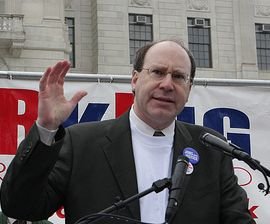
Laurie White, the head of the Greater Providence Chamber of Commerce, also praised Raimondo’s report. “It strikes me as a methodical, systematic approach to tackling a very complex is 30 years in the making—that is highly emotional and is sure to cause a great amount of distress in various quarters,” White said.
NEA chief: Some reforms better than others
Bob Walsh, Executive Director of the Rhode Island NEA, told GoLocalProv that the report was a “good start.”
He did not immediately rule out any of the options presented by Raimondo. “We’re going to go into this with an open mind and therefore everything is on the table,” Walsh said.
Although he admitted some options are certainly better than others: “It should come as no surprise to anyone that actions that impact those who are retired, those who are close to retirement are the least desirable options. … I’m sure my ordered priority list is different than other people’s ordered priority list,” Walsh said.
One thing he said the state should consider is buying the Twin River Casino. He said the state functionally owns 60 percent of it and could buy the rest for “relatively short money.” Walsh estimates Twin River is currently worth over $3 billion. He said its value could increase to $4 billion or $5 billion if Twin River is allowed to have table games. That value, he said, is almost equal to the entire unfunded liability in the state pension system for teachers.

Taxpayer group: ‘Looking for a sense of urgency’
The Rhode Island Statewide Coalition embraced all of the possible areas of reform that Raimondo outlined in her report.
“Proposing to suspend the COLAs, raise the retirement age to 67, and recognizing that we must end pensions which are 70 or 80 percent of a workers’ pay represent significant potential cost savings and the Treasurer should be commended for outlining these changes,” said RISC Executive Director Harriet Lloyd.
She added: “The critical question now is: Will the Legislative leadership—and the Governor—move forward together with the Treasurer, not erect roadblocks, and put her proposals on a fast track over the next few months. Taxpayers are looking for a sense of urgency now from the Legislature, and will also be watching to see that elected leaders stand up to any union opposition which emerges and move these proposals forward.”
If you valued this article, please LIKE GoLocalProv.com on Facebook by clicking HERE.