


Renehan: The Tangled Spirits of Exclusion, Tradition & History at Bailey's Beach
Guest MINDSETTER™ Edward Renehan
Renehan: The Tangled Spirits of Exclusion, Tradition & History at Bailey's Beach
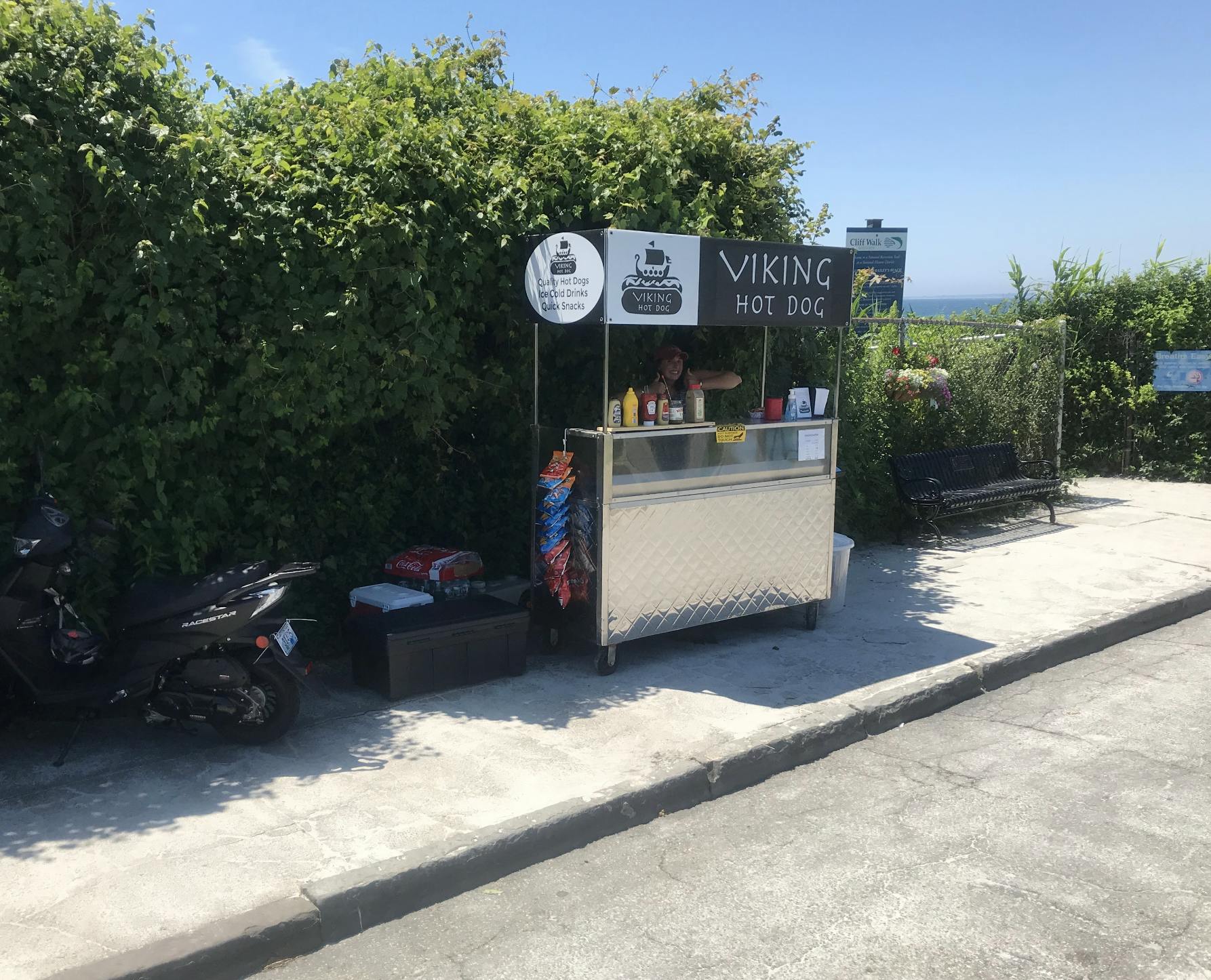
According to student Will Farley's father, the club’s man, Chris Gleason, demanded that they move and stated that the “people at Rejects are ruining Bailey’s for the members.” Police were called to the scene. The students’ paperwork was found to be in order. In the wake of this incident, the beach club – which generally hates receiving any kind of publicity at all – received a torrent of it, all negative. Thus, rather quickly, the Board of Governors at Bailey’s reversed course, issuing a statement in which they apologized for the “misunderstanding” and gave their endorsement to the energetic industry and ambition of the young people.
This is more than appropriate, and the members of Bailey’s are to be congratulated for their albeit tardy recognition of the free market from which they have all so greatly benefited through the past 140 years or more, for such is the age of the old money involved here.
GET THE LATEST BREAKING NEWS HERE -- SIGN UP FOR GOLOCAL FREE DAILY EBLASTLike the wealth behind it, Bailey’s itself is a most interesting anachronism.
One of the little-known facts about Bailey’s is the truth of just how lousy a beach it really is. The New York Times commented in 2003 that the beach itself is easily “among the least lovely on the coast of the Ocean State.” Years before that, Cleveland Amory in his 1952 book The Last Resorts noted that the beach was “by all odds, the worst.” In 1962, George Plimpton wrote of how the temperature of the water never gets into the seventies, “is commonly choked with long strands of kelp, and often sports a rich purple color which results from some bacteriological phenomenon – a true ‘wine dark’ sea.”
In a 1974 account of the typical ostentatious Newport Society summer, People Magazine had much fun with its portrait of “snobbish, kelp-choked Bailey’s Beach.” Sure, there are also some tennis courts and a salt-water pool, a rudimentary cafeteria-style eatery, and some cabanas and dressing rooms, but none of these accoutrements are in any way better or more luxurious than what you’d find elsewhere. So, what is the appeal?
People hit the nail on the head with its mocking description of “snobbish, kelp-choked Bailey’s.” When you get down to it, the only real attraction to Bailey’s (for those who love it) is its exclusiveness: the idea of “we belong, and you don’t.” This attitude is nothing new. Just like shares in the club, this outlook has been handed down through generations of some of the country’s richest families (richest in the sense of the term as it was before the advent of the new digital billionaires, when millions of dollars still seemed quite a lot).
The club’s tribal atmosphere has roots in the fact that nearly everyone’s great-grandfather seems to have founded a railroad or been a Standard Oil partner or some equivalent of these things. As well, nearly everyone has a long family tradition at Groton or St. George’s or some other aged Episcopalian prep school. In other words, what we have here are the remnants of America’s former ruling class. These are the scions of a lost age, the Gilded Age, clinging to the last vestige of that Society (with a capital S) which once dominated Newport – a pretentious culture which now, to most modern eyes, seems to have been absurd, laughable, and (quite obscenely) self-absorbed.
As noted previously, what the New York Times has called “a crescent of coarse gray sand off Ocean Drive at the terminus of the famous Cliff Walk” includes the Rejects Beach just off the property line of the club. Here peons of the rabble public can, when so inclined, sun themselves beside the same unappealing waters as club members and swim in the same kelp-swamped tide. All this happens in full view of the venerable Cushings, Slocums, Cuttings, and Drexels, thus “ruining Bailey’s for the members.”
It must, indeed, be tiring for some to have to view the huddled masses taking their leisure so close to the elite’s fortress of solitude. But such is America – even though one wonders just why anyone would swim anywhere near Bailey’s if not bound there by the tangled spirits of exclusion, tradition, and history. Nearby Easton’s Beach, after all, even has waves, not to mention a boardwalk, a carousel, an aquarium, and a grand ballroom available for events.
So, let us leave the membership of Bailey’s to their kelp and their illusions of isolated superiority. And let us congratulate them once more on their bold decision to leave three hot dog selling high schoolers alone.
*Edward Renehan has written more than 25 books and lives in Wickford. He has been a guest at Bailey’s on a number of occasions and does not expect to be invited back.
19 to Watch in 2019 - FULL LIST

Angie Armenise
Chef and co-owner of Blackie’s Bulldog Tavern in Smithfield, Angie Armenise has it all going. Expansion to a new and larger location, a wonderfully loyal customer base and a big stack of awards -- and more to come in the new year. READ MORE

Marcela Betancur
Marcela Betancur, the new head of Latino Policy Institute at Roger Williams University and will be the power behind Latinx think tank in 2019.
Betancur, a Central Falls native, most recently worked READ MORE

Brian Goldner
No one will influence the psyche of Rhode Island more this year than Hasbro CEO Brian Goldner. After the loss of the PawSox to Worcester and the closing of Rhode Island’s beloved Benny's in 2017, Rhode Islanders are a bit raw.
He is poised to announce that Hasbro is...READ MORE

Cortney Nicolato
New United Way of Rhode Island President and CEO Cortney Nicolato succeeded Anthony Maione in 2018 — and takes on her first full year at the helm of the social service organization in 2019.
She is a Rhode Islander turned Texan returned back to Rhode Island. The Pawtucket native is all about Rhode Island and is passionate about helping to improve issues of housing affordability and the quality of education in RI. She is the mother of two elementary school-aged children. READ MORE

Sabina Matos
It is the rise of the Phoenix in Providence. On Monday, Sabina Matos won back the Presidency of the Providence City Council and returns to the top legislative position in the City of Providence.
As Providence goes so goes Rhode Island. Matos will be faced with taking on some of the most difficult issues in the state. READ MORE

Jamie Bova
The Newport City Councilor At-Large lined up the votes to votes for Mayor after being elected to just her second term on the Newport City Council this past November.
Bova, an engineer who grew up in Middletown, attended URI, and moved to Newport in 2012, succeeds Harry Winthrop as the city faces major changes ahead for 2019, including the construction of a new hotel on Thames Street — and more hotel proposals in the pipeline — and READ MORE

Jennifer Wood
The former private practice attorney turned top government aide turned non-profit director might have her biggest — and most public — battle on her hands in 2019.
RI Center for Justice Executive Director Jennifer Wood joined GoLocal News Editor on GoLocal LIVE where she spoke to the next steps after filing a federal class-action lawsuit in late November on behalf of all Rhode Island public school students to establish the right, under the U.S. Constitution, to an adequate education to prepare young people for full civic education.

Catholic Church Sex Abuse Survivors
In 2018, Bishop Tobin with the Diocese of Providence landed on GoLocal's “18 to Watch” as the Catholic Church was — and continues to remain — at the center of lawsuits pertaining to the collapse of the St. Joseph pension fund.
He’ll remain squarely in the spotlight — and not for good — in 2019, when he has pledged to release a list of names of abusive priests “credibly accused” over the years in the Diocese, as pressure mounts nationally for how sexual abuse claims were handled around the country — READ MORE

Matt Voskuil
One of Newport’s most iconic — and upscale — dining locations has a new look, a new chef — and people are taking note not just in Newport, but beyond.
Executive Chef and Director of Food and Beverage, Matt Voskuil at the newly opened Cara at the Chanler READ MORE

David Torchiana
The most powerful person in healthcare in Rhode Island may soon be a man who rarely visits the state and few here know his name.
Dr. David Torchiana is the CEO of Partners HealthCare and he is poised to push through an acquisition of Rhode Island’s second largest hospital group, ending the local control over three of Rhode Island’s most important healthcare assets. And, the deal has the potential of putting in peril thousands of Rhode Island jobs through consolidation. READ MORE

RI GOP Party Chair
Rhode Island Republican Party Chair Brandon Bell was defeated in his run for the General Assembly in 2018.
Republican Cranston Mayor Allan Fung lost in his second attempt at the Rhode Island Governor’s office, after a bruising primary that saw former opponent and House Minority Leader opt to endorse former Republican-turned-independent (and honorary chair for President Donald Trump’s campaign in Rhode Island) Joe Trillo. READ MORE

Anthony Baro
Anthony Baro heads Newport-based PowerDocks — one of Rhode Island’s most interesting startups. It is a market-making green tech company that, in many ways, combines the best of Rhode Island.
The emerging maritime renewal energy company is having an impact in the U.S. and globally. READ MORE

Blake Filippi
Blake Filippi is the new House Minority leader and is a fresh-faced leader for the GOP in Rhode Island. But, he faces a number of challenges. READ MORE

Desmond Cambridge
Brown University sophomore basketball player Desmond Cambridge has been a human highlight film his first year and a half on College Hill. He won Ivy League Freshman of the Year and this year he is READ MORE

Sarah Markey
South Kingstown School Board member Sarah Markey has been at the center of controversy since her election in November.
Markey, a top labor leader for the RI National Education Association, has drawn criticism by Democrats, Republicans and multiple municipal attorneys because READ MORE

Peter Neronha
Peter Neronha, the new Attorney General, takes over for the controversial Peter Kilmartin. The former U.S. Attorney for Providence now faces a far busier assignment than his federal one. READ MORE

Dylan Conley
Dylan Conley seems to be everywhere. Recently, GoLocal featured the attorney as one of Rhode Island's "Emerging Leaders."
He is the chairman of the Providence Board of Licenses and is in a hotbed READ MORE

Mike McGovern
Chef Mike McGovern -- formerly the chef at Red Stripe -- is taking the helm at East Greenwich's Kai Bar -- and now 241 Main Sports Bar and Grill.
Kai Bar is a combination of small plates and big drinks, “Kai offers a rotating small plates menu from an award-winning Chef and Craft Cocktails READ MORE

BIg Tourism Voids
Tourism is one of the most important sectors of the Rhode Island economy and two of the most important positions in the state are now vacant. READ MORE


