Rescue One Responding: Forward Through 0230 Hours, a Book by Michael Morse
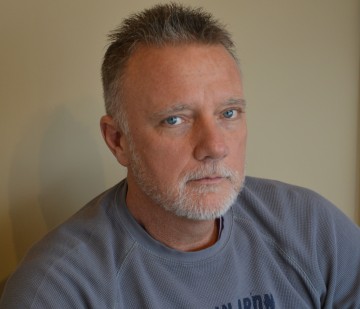
Michael Morse, Author
Rescue One Responding: Forward Through 0230 Hours, a Book by Michael Morse
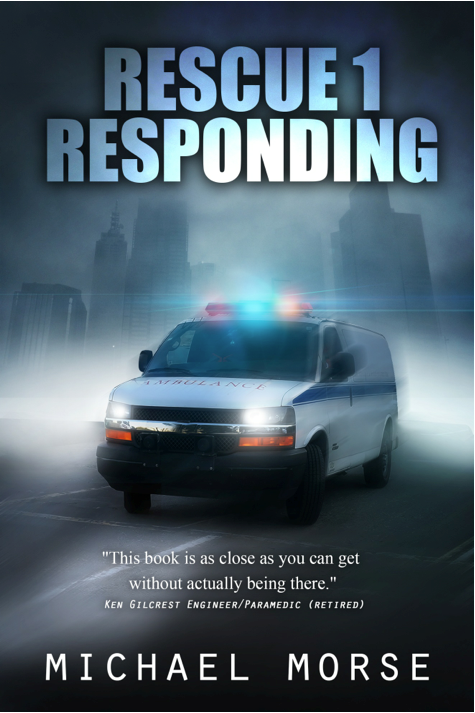
I’m glad I took the time to document what happens during a typical tour on an advanced life support rig in Rhode Island’s capitol city. Looking back, I can hardly believe I lived it. But I did, and now you can too. Many thanks to GoLocalProv.com for publishing the chapters of my books on a weekly basis from now until they are through. I hope that people come away from the experience with a better understanding of what their first responders do, who they are and how we do our best to hold it all together,
Enjoy the ride, and stay safe!
GET THE LATEST BREAKING NEWS HERE -- SIGN UP FOR GOLOCAL FREE DAILY EBLASTCaptain Michael Morse (ret.)
Providence Fire Department
The book is available at local bookstores and can be found HERE.
Note From the Author
I dedicated Rescue 1, Responding to Kellie and John. During the time frame that I was writing these books thousands of people entered my life, and quickly left. I remember most of them, but none more than Kellie and John. Both were college aged when I met them at Providence College. Both needed somebody to help them, and I was fortunate to be available.
John did not make it. Kellie did. The memory of John haunted me until Kellie came along. When a critical patient pulls through perspectives change, heartbreaking memories become a little less so and the desire to carry on when I thought I had enough resurges, and everything is put back where it was before the crisis.
Until the next one.
Kellie nearly died. My desire to continue my career on one of the busiest ALS vehicles in the country nearly died with her. When she pulled through things didn’t seem so grim, and I worked for another ten years, saved a few lives and managed to keep things in their proper perspective. Her family invited me to her graduation. They thought I had a big part in saving their daughter. I appreciated the gesture, but was well aware of exactly who saved who.
Life is funny. Thanks for reading.
Rescue One Responding
"Never in the history of human conflict, has so much been owed by so many, to so few."
— Winston S. Churchill
Forward
I am the rescue guy. People call me during their worst moments. When things go badly I take them in, patch their wounds, calm their fears and help them breathe. I stop their bleeding and keep them alive. At least I try. My time with them is short, usually ten minutes or less. In that period of time I learn a lot, and sometimes teach a little, but always leave with a better understanding of the human condition
They think I help them, and I do to some degree, but more often than not it is they who help me. Every person who crosses my path teaches me a little more about things, some great, others small, but always something.
The Beginning
Daylight. The blinds obscure sun’s rays, but the dawn of a new day is impossible to hide. I think it’s about nine. If that is true, I’ve been out for ten hours. From the look of the covers, I haven’t moved much. There’s nothing like a thirty-four hour shift to put you into death sleep.
Last night, Cheryl made dinner for us, I remember eating, forcing myself to stay awake. I failed miserably at pleasantry; she must have put me back to bed after a little while. I tried to stay up when I got home but fell asleep sitting on the couch. I snored for a few hours according to all reports, but I’m sure the nature of the noises emanating from me is grossly exaggerated.
For five years I’ve worked the overtime between shifts making a great schedule nearly impossible. Rather than two ten hour days followed with two fourteen hour nights, I now do two marathons, a thirty-four, twenty-four off followed by a thirty-eight. I’m headed for the thirty-eight in a few hours.
Why?
It started as a challenge. I enjoyed the chaos, the sleep deprivation, pushing my mind and body to the extreme, yet still performing. I think it was my ego that started the whole thing; I did it because I could. It’s difficult, and not many thrive, but I was one of the few that did. Or so I thought. It’s a simple thing to go to work, put everything else away and worry about only yourself. It has taken a while, but slowly I’ve learned that without everybody else, myself just ain’t that great.
Now, I’m stuck with the overtime. Circumstances change, needs arise, one thing leads to another and before you know it what once was a challenge becomes business as usual.
Nobody in bed with me, no cats, no dogs, no wife. Alone again. You get used to it. I’ve got Friday and Saturday night in the city to look forward to, and Saturday all day as a bonus. Thirty-eight straight, and I’m going in with one eye open. And leaving my family alone again. Easter Sunday is coming, lots to do, not enough time to do it. As the day approaches the tension mounts. I know that somehow we’ll pull it all together, and we’ll have our holiday, and a great dinner, and somehow the manicotti will appear along with the ham and potato croquettes. I just hope I’m awake to enjoy it.
You take all of your experience and memories with you on every call. What we present is the culmination of every one. The learning never stops, the growing never ends. My twenty-four hours is up, time to get back at it.
Part I
1630 hrs (4:30 p.m.)
“Bye, babe, see you in a couple of days.”
“Be careful.”
I smile and walk out the door. “Be careful” is the last thing I like to hear before heading into the city. It’s been that way going on sixteen years now. Maybe I’m superstitious, but I worry if I don’t hear those words.
My bag is filled with the necessities; a few changes of clothes, a big bag of peanut M&M’s, a book, a few magazines and the usual assortment of overnight things. I hang my spare uniform, still warm from the iron and smelling faintly of starch onto the hook in the backseat, open the door and get in. With any luck in forty hours I’ll be home again, worn out but satisfied, with four days of peace and quiet ahead.
I wave to Brittany as she speeds past me as I pull onto the pavement. “Slow down,” I say out loud to the empty car. It’s chilly, she’s wearing a winter hat, the kind that ties on the bottom and has earflaps to keep you warm. She doesn’t have a care in the world, and that makes me happy. I long for those days but for me they are gone forever. That’s probably a good thing, without worries we would have no experience of things to worry about and go through life thinking everything is fair and safe. It’s not, but at least for my kids it will be for a little while longer.
Traffic is slow and heavy, the streets and roads full of people coming home after a long week at work. As I approach Providence the traffic clears a little, at least on my side of the road. Most people are leaving the city. I’m going in.
About 180,000 people officially live in Providence, a lot more if you count the undocumented immigrants. Thousands more commute from the neighboring cities and towns, spend their time in the Capitol City then leave for their suburban retreats. I turn on the radio and check in on the local talk shows. Nothing new, the same talk of high taxes, corrupt politicians, failing schools and on and on. Today, there is no mention of the firefighters, who have been a hot topic lately. The FM dial is a little more interesting, Blue Sky by the Allman Brothers sticks, I take my finger off the seek button and settle in.
It’s staying light later now, as winter loosens its icy grasp on Rhode Island. Loosens, but doesn’t let go.
I like to drive. I find the routine, mechanical movements relaxing. I know the road to work so well the car could drive itself. It gives me time to think. An incident from last week comes to mind, though I try to push it away.
It had been quiet for about an hour, the only sounds I could hear came from the open window of my office as the late night bar crowd straggled past the station on their way home. A few drunken shouts, tires squealing, bottles breaking on the pavement as people cleared out their pre-club empties before heading home. I turned the portable off, hoping to sneak a few hours sleep in before the next run. It had been a long shift, thirty or so calls so far with six hours to go. At one time most of my time was spent being on call, now, it seems all of my time is spent on calls. Almost, but not all. I hit the bunk and was out cold before my head touched the pillow.
0230 hrs (2:30 a.m.)
“Rescue 5 and Ladder 4, Respond to 1 Providence Place for a woman who has fallen.”
Ladder 4 was out of the building before I made it to the rescue. Tim waited for me, the engine running. He saw me from the rear view mirrors and turned the engine over. The piercing wail from the truck’s siren scattered the people lingering in front of the station as we rolled pat them, closing the overhead door behind us. As we passed Water Place Park, the officer of Ladder 4 gave his report.
“Ladder 4 to Rescue 5, twenty-five year old female, fell approximately forty feet, massive head injury.”
“Rescue 5, received.”
I hung the mike back in it's cradle and put on some gloves. One Providence Place is an enormous shopping mall located in Downtown Providence. The building takes up four blocks of real estate, big enough to warrant its own zip code. Tim made his approach, stopping behind the ladder truck, in front of the north entryway. Most of the stores were closed at this hour. A movie theater and restaurant occupied the upper levels and stayed open late. We loaded the stretcher with a long spine board and med bag and made our way into the mall. A lone security guard stood outside the entrance. I asked if he knew anything about the incident.
“Somebody fell.”
We walked past him, up the ramp toward the elevators. The mall is a confusing place when shopping, worse when seconds count. Overlooking the balcony next to the elevators I saw the guys from Ladder 4 two floors below me, working on a young woman. A dark shadow outlined her head. We walked into the elevator car, stopped and looked at the buttons.
“LL, 1, 1M, GF, 2, 2M, 3L, 3, 4.”
“Which floor?” I asked Tim.
“First.”
I hit the 1 button and slammed my fist into the panel when the elevator started going up. I was a little more tense than I thought. The elevator wouldn’t stop until it made it to the first floor no matter how many times I pushed the LL button. After an eternity it did stop, then reverse direction. At 1M the elevator stopped again, the doors opening to an empty floor. Gaining control of my emotions I pushed LL and felt the box begin its decent, agonizingly slow. Finally, the doors opened on the proper floor.
John Morgan, a truck mate of mine from another part of my career held the girl’s head in his hands while I tried to apply a cervical collar.
“It’s soft,” he said, cradling the back of her head while I wrapped the hard plastic around her neck. I reached around back and felt the crushed skull, like jelly where there should have been bone. I checked her pupils, shining light into her eyes hoping to see a reaction. There was a reaction, though not in her eyes. A sick feeling started in the middle of my chest and worked its way through my body. “She’s my daughter’s age,” I said out loud.
“Fixed and dilated.” I stood and stepped back while the crew from Ladder 4 and Tim immobilized her, assisted ventilations and put her on the stretcher. They had all been around long enough to know the girl’s chances for survival were none and none. Off to the side a young couple and a solitary young man stood watching, ashen faced.
“Will she be all right?” asked the young guy who stood alone.
“We’re doing everything we can,” I replied, again, knowing that all we could do would never be enough. The girl was gone; the best we could do was keep her heart pumping and hope for a miracle. Somewhere, somebody waiting for a kidney or a liver just hit the lottery. The thought made me sick so I pushed it aside.
“What happened?” I asked.
He pointed up to an area of escalators, three stories above us.
“She fell.”
The stretcher was moving now, a group of firefighters pushing the stretcher toward the elevator, bagging and picking up the mess we made with our equipment. We all fit into the elevator. As the doors closed the only thing that remained was a little Spider Man doll, tossed to the side of the floor, and a dark red stain on the mall’s new carpet.
“Slow down,” I said again, as much to myself as to Brittany. I found out a few days later that the girl had planned on being married next month. She was a single mother and was about to get a degree from a local community college. She was out celebrating her birthday. She won the Spider Man doll at the nightclub where she spent her last night on this earth and planned on giving it to her four-year old son in the morning. I hope somebody picked the doll up from the mall floor and gave it to its rightful owner. Reading the obituary is worse than living through the experience, there is nothing to do but read about the person who died on your watch, and think about what could have been.
The rescue is not in the bay. “D” group is working today, I’ll be relieving Tim, who just started his own four day war. Some of the guys from D group are still waiting to be relived and are sitting around the day room with the oncoming shift.
“Hey, Shakespeare!” says Greg, one of the D-group guys as I walk into the room.
“Nice job on that article.”
“What article?” I ask. He hands me the morning’s Providence Journal, opened to the letters to the editor section. A letter that I sent to the paper was printed in the morning edition. My heart sinks a little when I see my words printed for anybody to read. I wrote the letter in response to increasing criticism firefighters have been getting in the press and the talk shows. Last week, during my days off I was heading to the store to get some lettuce for a salad I was making and happened to turn on the radio. A local Mayor was on the talk radio station I was tuned to and asked the question, “Why should firefighters get full healthcare coverage when millions of Americans can barely afford to get by?” I only tuned into the end of the show but could only imagine the topic. This particular mayor and his fire department have been at odds for years. His city’s firefighter contract is due to expire soon and the mayor has taken to the airwaves and editorials to discredit the fire service. As revenue shrinks cities and towns, strapped for cash are desperate to save money, at times recklessly endangering the public by under funding public safety.
I called the talk show when I got home and talked to the host for about ten minutes. I was pleasantly surprised that he let me state my side of the issue, and he seemed genuinely impressed by our side of things. However, when I hung up the phone, I felt I needed to say more. The salad waited and I wrote down my feelings. The letter took me all night to write. Angry callers reacting to the words I had spoken on the radio filled the room from the radio speaker as I typed. I was not a big hit with the audience.
I take the paper from Greg and get a weird feeling as I read my own words:
Dear Editor,
I do not know the salaries of my friends in the private sector. It is not my business to scrutinize their benefit package. I do know that they work as hard as I do making a living. Some of them are doing better, some not as well. We are all getting by.
The struggling economy has made us all aware of our financial vulnerability. As salaries and benefits stagnate, resentment grows. Through the ups and downs, my financial situation remains steady. For years I watched as others reaped the rewards of a strong economy. Nobody noticed or cared about my pay and benefits. My modest income paled in comparison to those in the private sector.
Now, my pay and benefits are front-page news. Cities and towns are facing budget deficits: the unions are to blame. Headlines and letters scream, “The party is over! The bleeding must stop!” If I didn’t know better, I would think the state is full of impoverished workers with no benefits at all!
I am a firefighter. I have a good salary, great benefits and an exciting job. I will not apologize for it or willingly give it up. Thirteen years ago I was accepted into the Providence Fire Department’s 42nd Training Academy. The competition was fierce; thousands applied for a few positions. I never considered myself better than the thousands that didn’t make it. Throughout the rigorous testing procedures it was found that some of us have the potential to be better firefighters than the rest. We were hired; the others went about their lives. I know some great people that did not get hired. They are leading productive lives in other pursuits.
I knew I would never get rich being a firefighter but the benefits provide my family with security. Had I not become a firefighter, I’m sure whatever vocation I chose would provide a good life for my wife and kids. I certainly wouldn’t worry about my neighbor’s paycheck.
The promise of security and the nature of the job are what draw so many to apply. The public is well served by the men and women that make it through the process. If the pay and benefits were average, the pool of applicants would be smaller, and less qualified people would be responding to the calls for help from the community.
I never ask thanks for the job that I do. I read and hear others in my profession justify our compensation because of our bravery. I disagree. Bravery resides in all of us. I see true courage daily. An eighty-year old woman watching quietly as CPR is performed on her husband shows real bravery. I see from glancing at the pictures on the wall images of their life together. Their kids and grandchildren are proudly displayed. The dinner dishes still dry in the sink. Two easy chairs placed in front of the television. The books and papers they have shared. She maintains her composure as we wheel him for the last time out their door and into the night.
I see teenaged kids playing in the streets where their childhood friends were gunned down. They are streetwise beyond their years. They hang around and look tough. Some carry guns. They didn’t choose the life they have. They live in a world of violence and chaos. Somehow, if they are hurt, or shot, or sick and make it to the back of my rescue and we are alone, they become kids again. Nice kids too. To live in their world is brave. To visit it and help when we are called is my job.
At times I bring the job home. Years of experience have provided me with ways to cope with the horrors I witness. My family knows when “something’s wrong”. Tragedy in other people’s lives has a way of making its way into ours. I try not to bring it home and mostly am successful. Unfortunately, some incidents can never be left at work and will be a part of me forever. I never know when I will be called to respond to one of these incidents. I know I can always count on my wife. She watches me walk out our door, dressed in the uniform never knowing if it will be for the last time. Too many times I have left happy and returned distant. She tells me I die a little after every shift. I think she may be right. Being a firefighter’s wife takes bravery, being a firefighter is our duty.
I am exposed to infectious diseases on a daily basis. My body has been punished countless times battling the fires that burn throughout the city. When I retire, I will have healthcare for life. This knowledge helps when considering if the job is worth the risk. AIDS, the fear of SARS, hepatitis, TB and increasingly violent patients all contribute to my dangerous work environment. I don’t think good healthcare is too high a price for the taxpayers to bear.
I am fortunate to have the greatest job in the world. I understand that there are some that are envious - the job is worthy of envy. My profession has enabled me to experience life to the fullest. To perform deeds that help lessen humanity’s suffering is priceless. I hope that the people of Providence understand what our contribution is worth.
Sincerely,
Michael Morse, Providence Firefighter
It feels strange exposing my thoughts for the world to read. I’m not sure I like it, but I feel strongly about the issue and felt I had to say what needed to be said. I have opened the door for some serious ridicule from the guys. I hope they don’t take it too far.
Tim enters the room as I’m finishing the letter, hands me the radio and simply says,
“You’ve got a run.”