


Rhode Island Experts on Implications of Sony Pictures Losing Cyberwar
Kate Nagle, GoLocal Contributor
Rhode Island Experts on Implications of Sony Pictures Losing Cyberwar
"Cyber attacks - whether it's killer drones or company crippling hacks - will define warfare and business in the 21st century," said Gary Glassman, head of Providence Pictures, a Rhode Island-based independent production company.
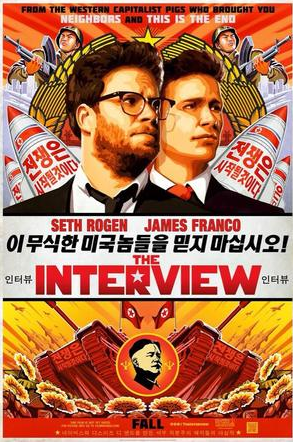
On Wednesday, Time Magazine wrote Everything We Know about Sony, The Interview, and North Korea. "People who may or may not have been tied to the hackers posted a vague message Tuesday threatening 9/11-style attacks against theaters that chose to play the film. The U.S. Department of Homeland Security said there wasn’t any evidence of a credible threat against American movie theaters, but several major chains, including AMC and Regal, decided to play it safe—all told, chains that control about half of the country’s movie screens decided against playing The Interview. Sony then followed suit, pulling the movie entirely," wrote Alex Altman and Alex Fitzpatrick.
GET THE LATEST BREAKING NEWS HERE -- SIGN UP FOR GOLOCAL FREE DAILY EBLAST"I’m not convinced this attack on Sony was orchestrated by North Korea, although that’s a great story considering the plot of the film being targeted. But this story may be more like Diehard where a terror attack was a smokescreen for essentially a bank robbery," continued Glassman. "So in this Sony story, I’m more inclined to follow the money. Someone or some company is benefiting from Sony’s loss. Cyber attacks may be just another way of doing business."
Rhode Island resident Dr. Mackubin Thomas Owens, Senior Fellow with the Foreign Policy Research Institute and Editor of Orbis, said he "wished Sony had stood its ground" to the suspected North Korean attack.
"I believe it will have a chilling effect on some commerce, but that’s not altogether new. We already know that western companies defer to autocratic governments, as Google did in China," said Dr. Owens. "The real problem is that by caving in to North Korea, Sony makes it likely that other similar event will occur, just as ransoming hostages makes it more likely that subsequent hostage taking will occur. I wish Sony had stood its ground."
Cyber-Terror or Hackers?
"We have a First Amendment in the U.S. but this is not a privilege that is afforded through a constitution in other countries. This a great reminder of how considerate and thoughtful our system of justice is, that we protect speech we hate, whether or not you like North Korea or their government, we have a constitutional right to speak out." said Dr. Prado. "What we have at play is the juxtaposition of a authoritarian society that has been known to crack down in dissent, they don't have a First Amendment -- this could have never been made thre."
"The issue here transcends the First Amendment. It goes to the chilling effect we see aggravated by the consolidation of corporations in the media sphere," said Prado. "We now have companies line Sony and other behemoths that are globalized companies, that have to deal with the consequences of international markets of the content they produce."
Forbes noted on Wednesday that the movie was slated to bring in $15 million opening weekend.
"This is not cyber-terrorism but a combination of cyber-warfare and “hacktivism," noted Owens. "We have seen the Russians use much more sophisticated cyber-attacks against Georgia and, I believe, Estonia, and the Chinese against us. The North Korea attack on Sony is new in the sense that it is a state-sponsored cyber attack against a commercial entity."
First Amendment Questions?
Glassman thought that Sony could possibly rebound from the series of incidents.
"The situation that Sony is in, maybe it's going to force them to release [the movie] digitally and make it available for people to download. it is conceivable that out of the tragedy that they'll turn it into something profitable or open another avenue," said Glassman, who added that he didn't foresee there being an issue in making films through Providence Pictures.
"When it comes to taking on certain political or economic interests it's always been a challenge for documentary maker. Energy, or food, are great examples. Those kinds of documentaries are not easy to fund," said Glassman. "We don't avoid controversy or avoid taking on difficult subjects. Our three films coming out next are on ancient buildings. There's not a lot of relevant political issue around that, although someone could make one if they wanted, I'm sure."
25 Movies Filmed in Rhode Island

Moonrise Kingdom
2012
Director: Wes Anderson
Cast: Bruce Willis, Edward Norton, Bill Murray Frances McDormand
This Oscar nominated film features many local landmarks including Fort Wetherill State Park, Bayfield Farm, and the Conanicut Lighthouse.

Mr. North
1988
Director: Danny Huston
Cast: Anthony Edwards, Robert Mitchum, Lauren Bacall
Shot in Newport, this comedy-drama features Anthony Edwards as a con man attempting to break into the 1920s Newport social scene.

There's Something About Mary
1998
Directors: Peter and Bobby Farrelly
Cast: Cameron Diaz, Matt Dillon, Ben Stiller
Filmed partly in Providence, this movie was the highest-grossing comedy in 1998.

Federal Hill
1994
Director: Michael Corrente
Cast: Nicholas Turturro, Anthony DeSando, Libby Langdon
Set in Providence's Federal Hill neighborhood, the movie marks the directorial debut of Pawtucket native Michael Corrente.

Age of Innocence
1993
Director: Martin Scorsese
Cast: Daniel Day-Lewis, Michelle Pfeiffer, Winona Ryder
This Oscar winning drama was partly filmed in Portsmouth.

True Lies
1994
Director: James Cameron
Cast: Arnold Schwarzenegger, Jamie Lee Curtis, Tom Arnold
The ballroom scenes in the movie were filmed at the Rosecliff Mansion in Newport.

High Society
1956
Director: Charles Walters
Cast: Bing Crosby, Grace Kelly, Frank Sinatra
Nominated for two Academy Awards, the movie's opening shot features a flyover of Newport’s oceanfront mansions.

Thirteen Days
2000
Director: Roger Donaldson
Cast: Kevin Costner, Bruce Greenwood, Steven Culp
This docudrama about the Cuban Missile Crisis was partly shot in Newport.

Little Children
2006
Director: Todd Field
Cast: Kate Winslet, Patrick Wilson, Jennifer Connelly, Jackie Earle Haley
Shot partly in Providence, this critically acclaimed drama received three Academy Award nominations, including a Best Lead Actress nod for Kate Winslet.
RIPD
2013
Director: Peter M. Lenkov
Cast: Ryan Reynolds, Jeff Bridges, Kevin Bacon
A car chase for this action-comedy was filmed in downtown Providence.

Amistad
1997
Director: Steven Spielberg
Cast: Morgan Freeman, Anthony Hopkins, Dijimon Hounsou, Matthew McConaughey
Shot at the Rosecliff Mansion in Newport and the State House in Providence, this drama received four Academy Award nominations in 1998.

Outside Providence
1999
Director: Michael Corrente
Cast: Shawn Hatosy, Amy Smart, Alec Baldwin
Filmed in multiple locations throughout Rhode Island, this movie is an adaptation of Peter Farrelly's 1988 novel of the same name.
Me, Myself & Irene
2000
Directors: Peter and Bobby Farrelly
Cast: Jim Carrey, Renée Zellweger. Chris Cooper, Robert Forster, Richard Jenkins
Filmed in Newport, Narragansett, Jamestown, and Galilee, this comedy centers on a Rhode Island State Trooper played by Jim Carrey.

Evening
2007
Director: Lajos Koltai
Cast: Vanessa Redgrave, Claire Danes, Toni Collette, Meryl Streep
The film was primarily set in Newport and included large portions shot at Gooseberry Beach.

The Great Gatsby
1974
Director: Jack Clayton
Cast: Robert Redford, Mia Farrow, Sam Waterston, Bruce Dern
This Academy Award-winning drama was filmed in Newport at the Rosecliff Mansion on Bellevue Ave.

Self Storage
2013
Director: Tom DeNucci
Cast: Eric Roberts, Jonathan Silverman, Michael Berryman, Tom DeNucci
Filmed in a self storage facility in East Greenwich, this horror-comedy marks the directorial debut of Cranston native Tom DeNucci.

27 Dresses
2008
Director: Anne Fletcher
Cast: Katherine Heigl, James Marsden, Malin Åkerman, Ed Burns
Shot throughout Rhode Island, locations included the Rosecliff and Marble House mansions in Newport and a beach in Charlestown.

Dan in Real Life
2007
Director: Anne Fletcher
Cast: Steve Carell, Juliette Binoche, Dane Cook, Alison Pill
Filmed primarily in Jamestown, the movie also features the Point Judith Lighthouse in Narragansett.

Hachi: A Dog's Tale
2009
Director: Lasse Hallström
Cast: Richard Gere, Joan Allen, Jason Alexander
Filmed primarily in Bristol and Woonsocket, other locations included the Columbus Theater in Providence and the University of Rhode Island in Kingston.

The Education of Charlie Banks
2007
Director: Fred Durst
Cast: Jesse Eisenberg, Jason Ritter, Eva Amurri
Shot partially in Brown University in Providence, the movie marks the directorial debut of Limp Bizkit frontman Fred Durst.

Meet Joe Black
1998
Director: Martin Brest
Cast: Brad Pitt, Anthony Hopkins, Claire Forlani
Warwick's Aldrich Mansion served as the residence of Anthony Hopkins' character in the film.

Reversal of Fortune
1990
Director: Barbet Schroeder
Cast: Jeremy Irons, Glenn Close, Ron Silver
Jeremy Irons took home the Oscar for Best Actor for this drama, which was partly shot in Newport.

Underdog
2007
Director: Frederik Du Chau
Cast: Jason Lee, Peter Dinklage, Patrick Warburton, Amy Adams
Shot entirely in Rhode Island, filming locations included Hope High School on the East Side of Providence.

Tanner Hall
2009
Directors: Francesca Gregorini, Tatiana von Furstenberg
Cast: Rooney Mara, Georgia King, Brie Larson
Shot in Providence and Newport, the film marks the the directorial debut of Brown University graduates Francesca Gregorini and Tatiana von Furstenberg.

Dumb and Dumber
1994
Directors: Peter and Bobby Farrelly
Cast: Jim Carrey, Jeff Daniels, Lauren Holly
Scenes from the beginning of this comedy were filmed on location in Providence, including a shot of the Big Blue Bug.


